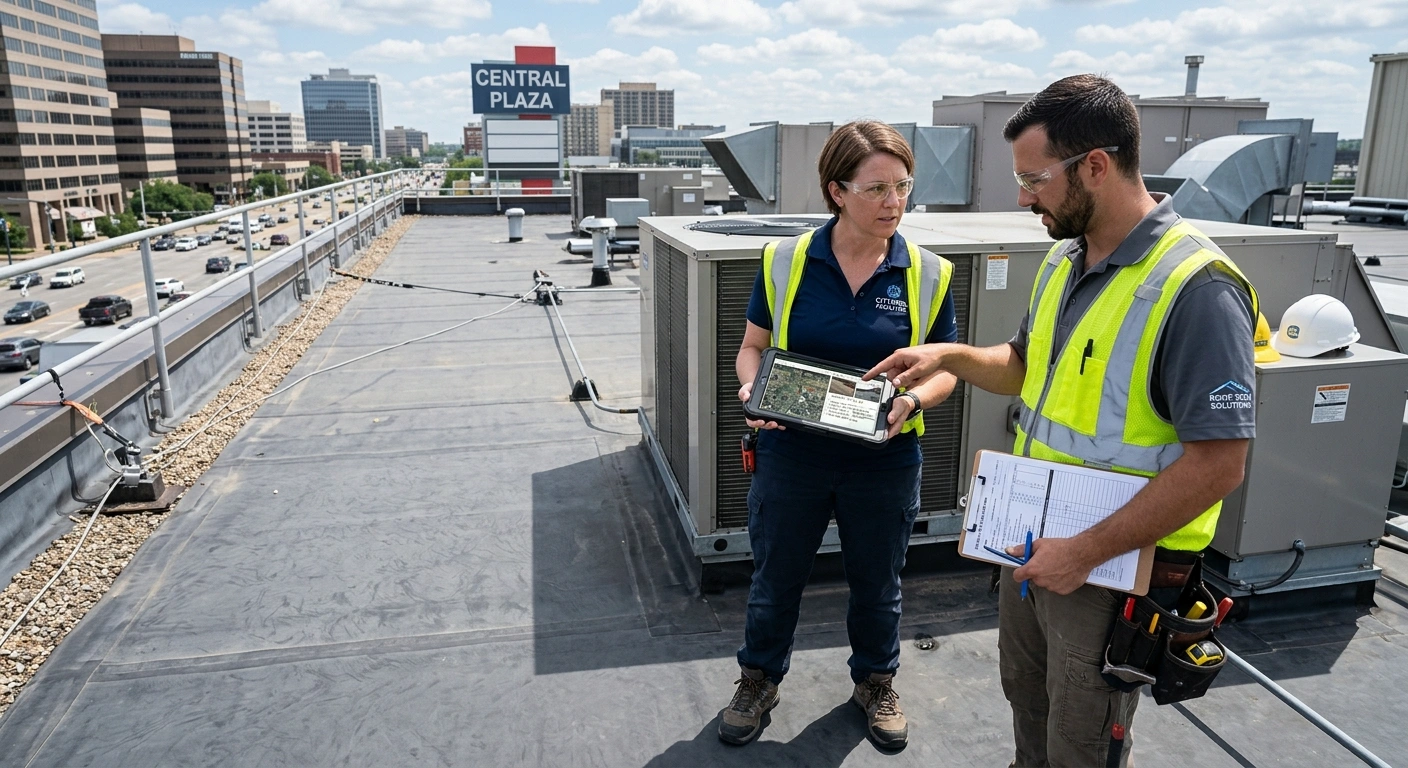
According to the Association of British Insurers, weather-related business claims reached £124 million between April and June 2025 alone, part of a wider £1.6 billion paid out in UK property claims that quarter. For facilities managers responsible for a commercial flat roof, that figure is a reminder that a leaking or deteriorating roof is a real business continuity risk. The question that follows almost every roof survey is the same one: repair it, or replace it?
Commercial flat roof repair addresses specific, localised defects in an otherwise sound roof, while commercial flat roof replacement removes and renews the entire covering. Getting this decision right matters financially and operationally, since choosing wrong can mean paying for a repair that fails within a year, or replacing a roof that had years of useful life left. This guide covers how to tell which one your building needs, what drives the decision, and why the access method behind either job affects cost as much as the roofing work itself.
How Do You Know Whether to Repair or Replace a Flat Roof?
The decision to repair or replace a flat roof comes down to the extent of the damage, the roof's age relative to its expected lifespan, and whether the underlying structure is still sound. A single leak on a roof with years of life left is a repair; recurring leaks across an ageing membrane usually mean replacement.
Signs That Point Toward Repair
- An isolated leak or blister in an otherwise intact membrane, with no widespread wear elsewhere on the roof
- A roof under roughly 15 years old, where the membrane still has useful life remaining
- Localised damage from a specific event, such as storm impact or a puncture, rather than general deterioration
- A recent survey confirming the deck and insulation are still sound beneath the surface defect
Signs That Point Toward Replacement
- Multiple leak points across different areas of the roof, suggesting the membrane has failed generally rather than in one spot
- A roof at or beyond its expected design life, typically 15-25 years depending on the material
- Recurring repairs on the same sections that keep failing again within months of being fixed
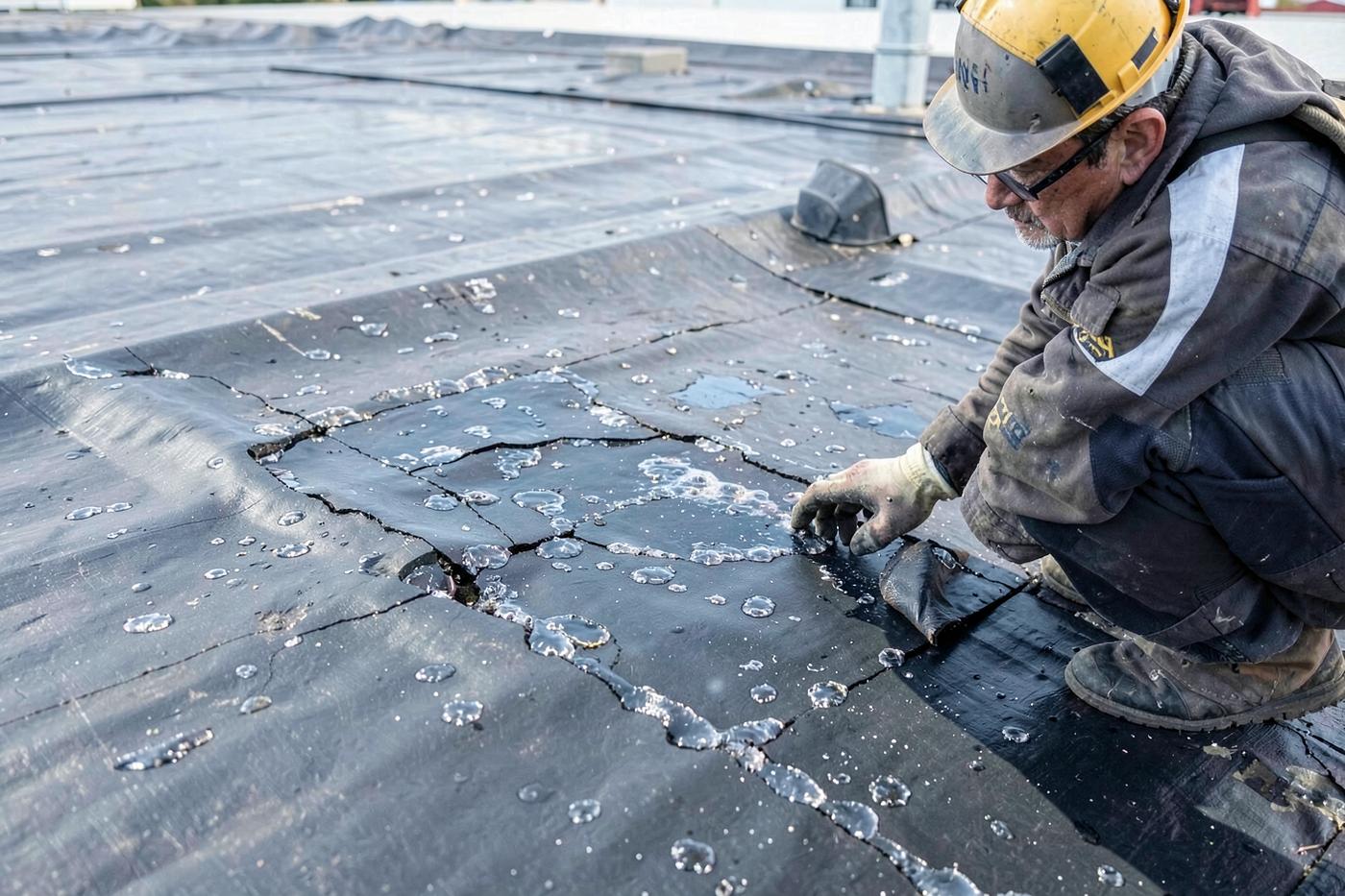
- Ponding water, membrane cracking, or visible deck deterioration found during inspection
What Do Flat Roof Repairs and Replacements Actually Cost?
Flat roof repairs typically cost a fraction of full replacement, but that gap narrows quickly once repairs become frequent or extensive. A repair that costs 10-20% of a full replacement makes financial sense once; the same repair recurring three or four times a year no longer does.
| Factor | Repair | Full Replacement |
|---|---|---|
| Typical cost relative to replacement | 10-30% | Full project cost |
| Lifespan gained | 2-5 years | 15-25+ years |
| Best suited to | Isolated defects, younger roofs | Widespread failure, ageing roofs |
| Disruption to operations | Usually minimal | Requires planning, often phased |
When Repeated Repairs Cost More Than Replacement
Running the numbers over a 3-5 year window is the clearest way to settle a decision that feels marginal. If a roof has needed three or more repairs in two years, the cumulative cost, plus the ongoing risk of water ingress between fixes, usually tips the balance toward replacement even if a single repair quote looks cheaper.
Why Does Access Method Affect the Repair or Replace Decision?
Access method affects the decision because reaching a commercial flat roof safely often costs as much as the work itself, whether the job is a small repair or a full replacement. A repair that needs full scaffolding to reach one leak can quickly become uneconomical compared to a slightly larger job done while access is already in place.
Rope Access for Targeted Repairs and Surveys
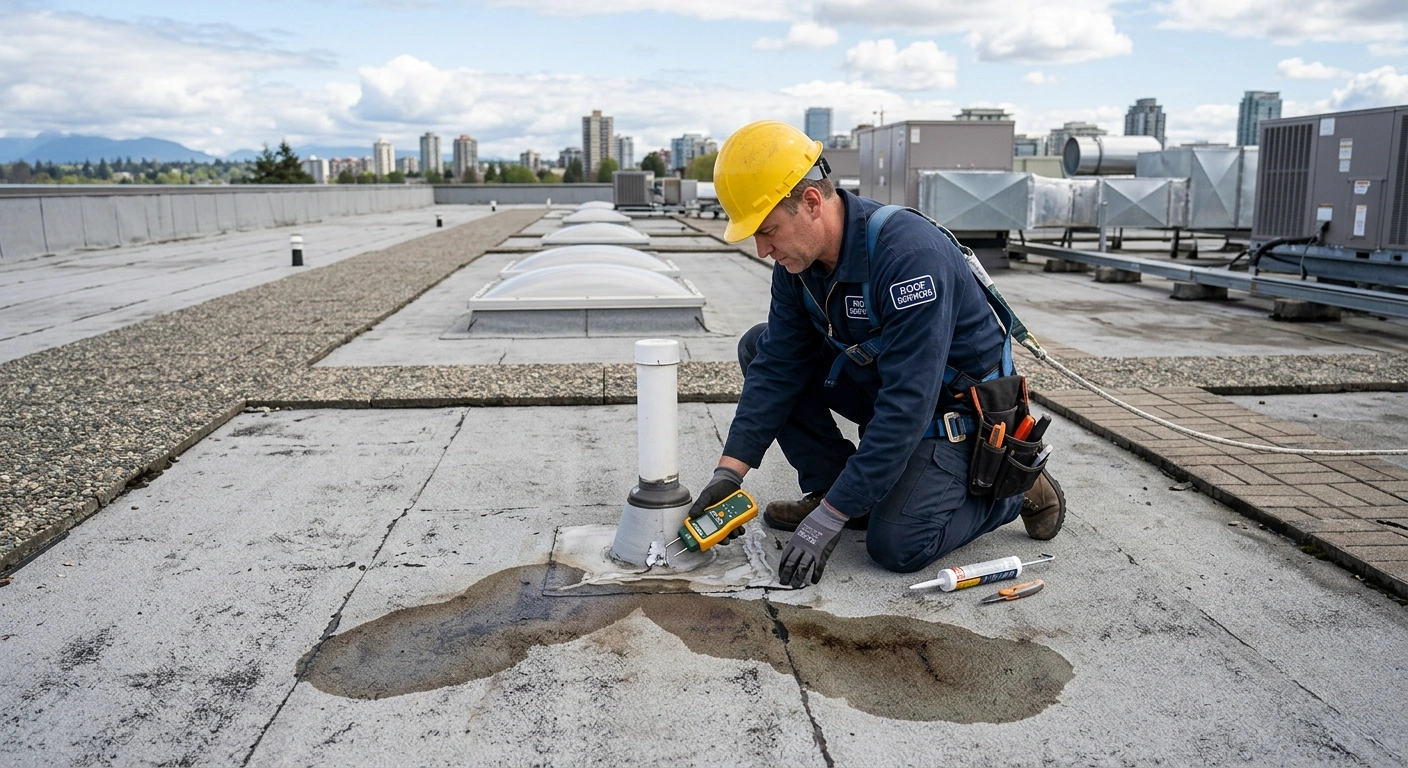
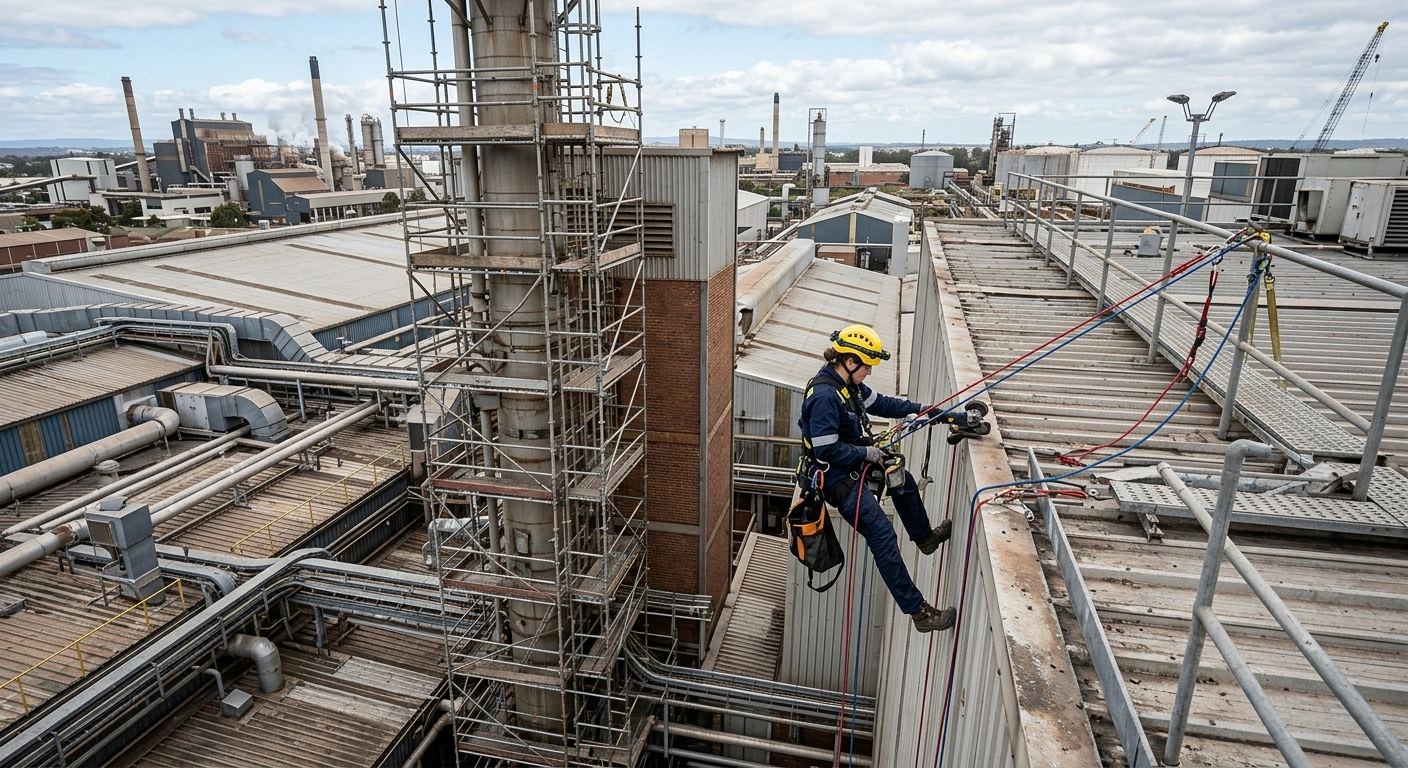
For a single leak, blister, or localised repair, rope access is often the more cost-effective route onto a commercial flat roof, avoiding the time and expense of erecting scaffolding for a small job. It's particularly useful for pre-repair surveys and repairs on tall or difficult-to-reach industrial buildings.
Scaffolding for Full Replacement Projects
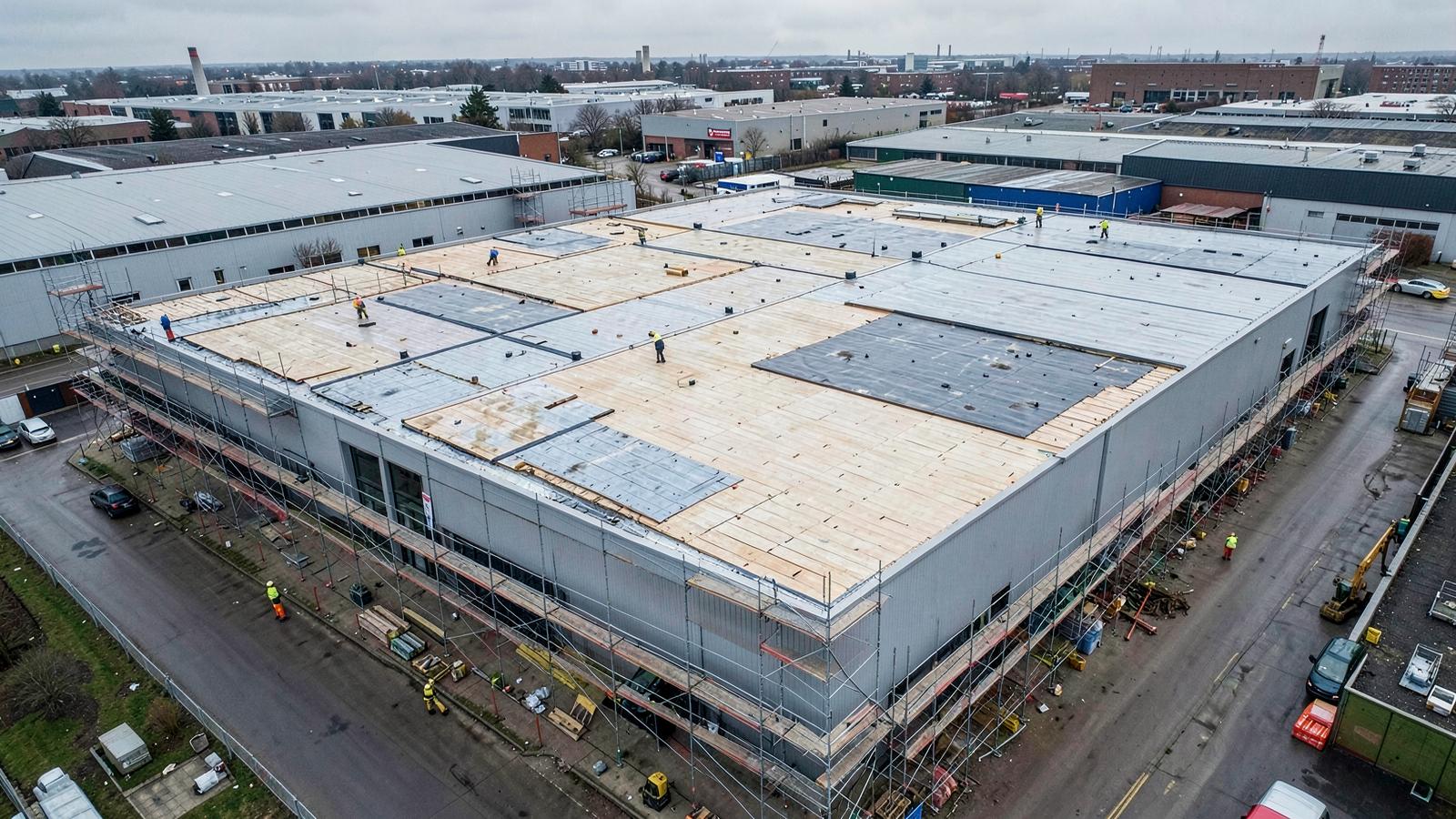
Full flat roof replacement on a large commercial or industrial building typically justifies scaffolding, since the volume of material movement and project duration make a comprehensive access solution more practical than repeated rope access visits.
When Should a Steeplejack Team Be Involved in Flat Roof Work?
A steeplejack or certified rope access team should be involved whenever a flat roof job, repair or replacement, involves height, structural uncertainty, or a building type that a standard roofing contractor isn't equipped to access safely. The value is combining that access with the judgement to correctly diagnose whether repair or replacement is the right call.
Where Certified Access Makes the Biggest Difference
- Initial condition surveys on tall or complex industrial roofs, where an accurate assessment prevents costly guesswork later
- Fragile roof sections, particularly on older buildings where the deck or covering may not safely bear weight without proper precautions
- Repairs on buildings where scaffolding isn't proportionate to the job, keeping smaller fixes cost-effective
- Ongoing monitoring between repair and replacement decisions, especially where a roof is being watched over several months before a capital decision is made
A steeplejack team holding IRATA, PASMA and IPAF certification can move between rope access and scaffold-based methods depending on what each stage needs, rather than a facilities manager commissioning separate contractors for a survey, a repair, and eventually a replacement.
The Pattern That Makes This Decision Straightforward
The repair-or-replace decision on a commercial flat roof rarely comes down to a single factor, but the pattern is consistent: isolated, recent damage on a younger roof favours repair, while widespread failure on an ageing roof favours replacement. An accurate survey before committing either way avoids the two most common mistakes: over-repairing a roof that needs replacing, or replacing one that had life left in it.
Get a free, no-obligation flat roof survey from our IRATA, PASMA and IPAF-certified team covering Greater Manchester.