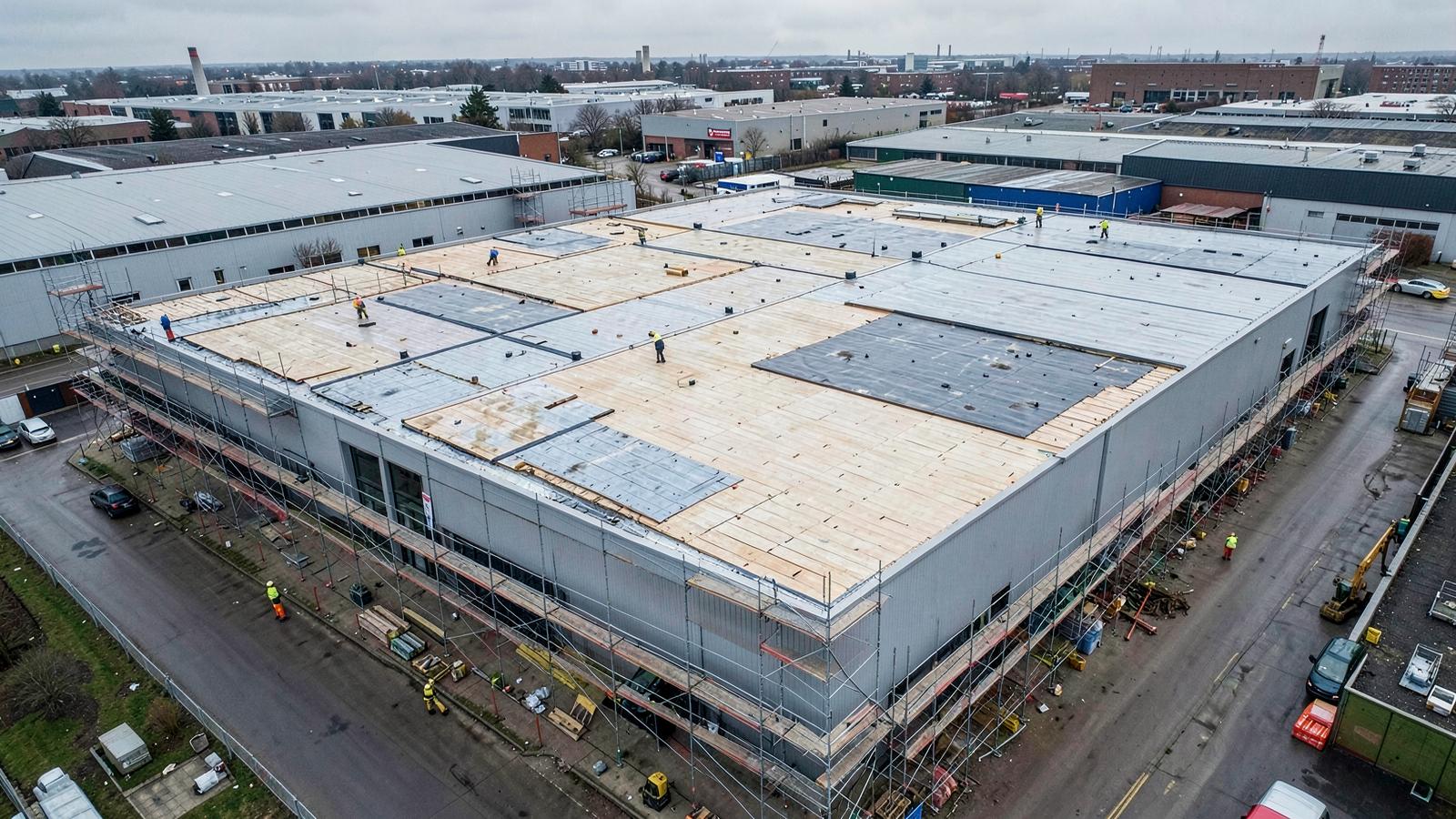
According to theHealth and Safety Executive's Work-Related Fatal Injuries in Great Britain report, 2024/25, falls from height accounted for over half of all construction fatalities recorded in the five years to 2024/25, with roof work identified as one of the highest-risk activities in the sector. For a facilities manager weighing up a commercial roof replacement, that statistic is exactly why access planning deserves as much attention as the roofing system itself. A £500,000 re-roof that goes wrong on safety grounds costs far more than the roof.
Commercial roof replacement is the process of removing an existing roof covering, and often its supporting structure or insulation, and installing a new system built to current performance and safety standards. It differs from repair or refurbishment in scope: replacement means the existing covering has reached the end of its usable life and patch repairs are no longer a sound investment. This guide covers when replacement is the right call, what drives cost on projects in the £500k-£1m range, how the process runs on an occupied site, and why the access strategy behind a commercial roofing replacement matters as much as the materials chosen.
When Does a Commercial Building Need a Roof Replacement Rather Than a Repair?
A commercial building needs a roof replacement when the covering has reached the end of its design life, when repeated repairs no longer resolve the underlying problem, or when the roof no longer meets current insulation and safety standards. Repair extends a roof's life; replacement resets the clock entirely, and the decision usually comes down to whether the membrane, deck or insulation has failed structurally rather than superficially.
Common Indicators It's Time to Replace
Common indicators it's time to replace commercial building roof coverings rather than repair them:
- Widespread membrane failure, with multiple leak points across the roof rather than one isolated area
- Recurring repair costs that no longer make financial sense against a full replacement over a 3-5 year horizon
- Roof age exceeding its expected design life, typically 20-25 years for many built-up felt and single-ply systems
- Structural deck deterioration, particularly on older steel or timber-deck industrial buildings
- Insurance or lender requirements following a survey that flags the roof as a liability
Repair vs Replace: A Quick Comparison
| Factor | Repair | Full Replacement |
|---|---|---|
| Best suited to | Isolated defects, roof under 15 years old | Widespread failure, roof at or past design life |
| Typical lifespan gained | 2-5 years | 20-25+ years |
| Disruption to operations | Minimal, often localised | Significant, needs phased planning |
| Cost relative to replacement | 10-30% of full replacement cost | Full capital outlay |
| Insurance/compliance impact | Limited, doesn't reset roof age | Resets roof condition rating |
What Does a Commercial Roof Replacement Cost?
Commercial roof replacement in the UK typically costs between £90 and £180 per square metre, depending on the roofing system, building height and access complexity. On a large warehouse or factory roof, that per-square-metre rate is exactly what puts many projects into the £500,000-£1,000,000 range, since industrial buildings commonly run to several thousand square metres of roof area.
What Pushes a Project Toward the Top of That Range
Factors that move a project toward the top of that cost range:
- Roof area and building footprint. Larger warehouse and distribution centre roofs mean more material and labour, even at a stable per-metre rate.
- Access difficulty. Height, pitch, and whether scaffolding, rope access or mobile platforms are needed all affect labour cost significantly.
- System specification. Insulation upgrades, fire-rated membranes, and rooflight replacement add cost beyond the base covering.
- Phased working requirements. Replacing a roof in sections to keep a facility operational costs more than a single continuous programme.
- Existing roof condition. Asbestos cement sheeting, common on pre-1980s industrial buildings, requires licensed removal that adds materially to project cost.
How Does a Commercial Roof Replacement Project Actually Run?
A commercial roof replacement follows a structured sequence designed to minimise disruption to an occupied building, from initial survey through to handover. The single biggest factor in project smoothness is how well the access and phasing plan is worked out before work starts.
The Six-Stage Replacement Process
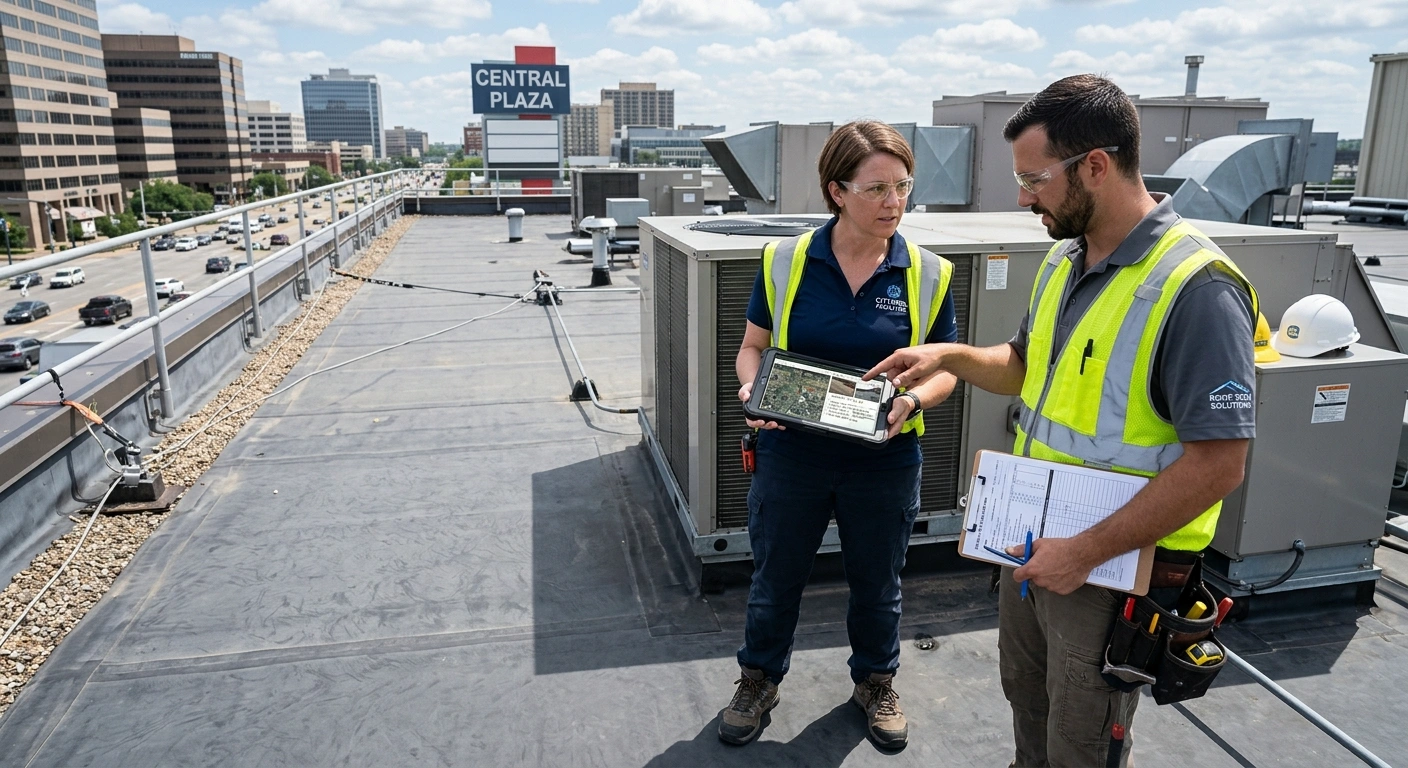
- Survey and condition report. A full roof survey identifies the extent of failure, structural condition, and any hazardous materials such as asbestos cement sheeting.
- Design and specification. The replacement system is specified to meet current Building Regulations, insulation standards, and client requirements.
- Access and phasing plan. For occupied buildings, this determines whether the roof can be replaced in one programme or needs sectioning to keep operations running.
- Strip out and disposal. The existing covering is removed, with licensed handling for any asbestos-containing materials.
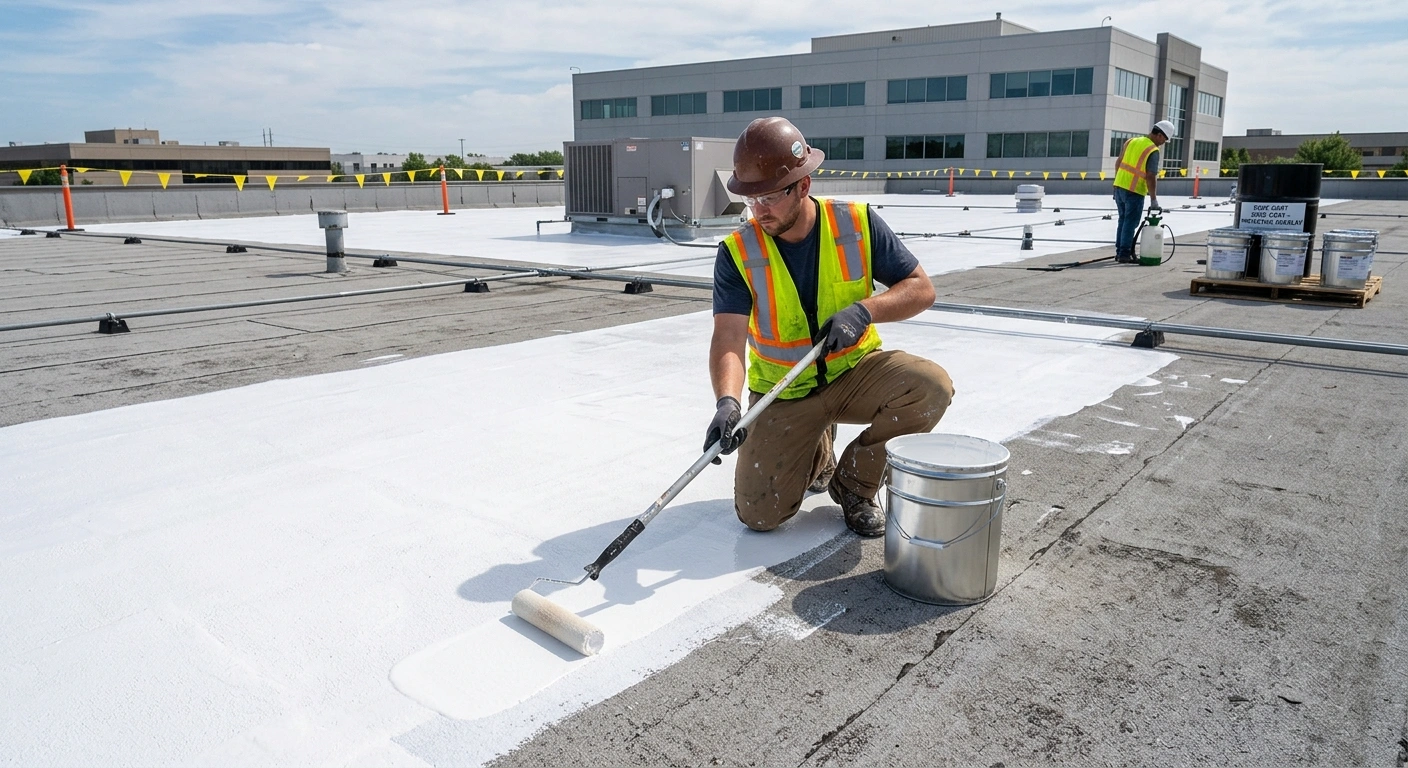
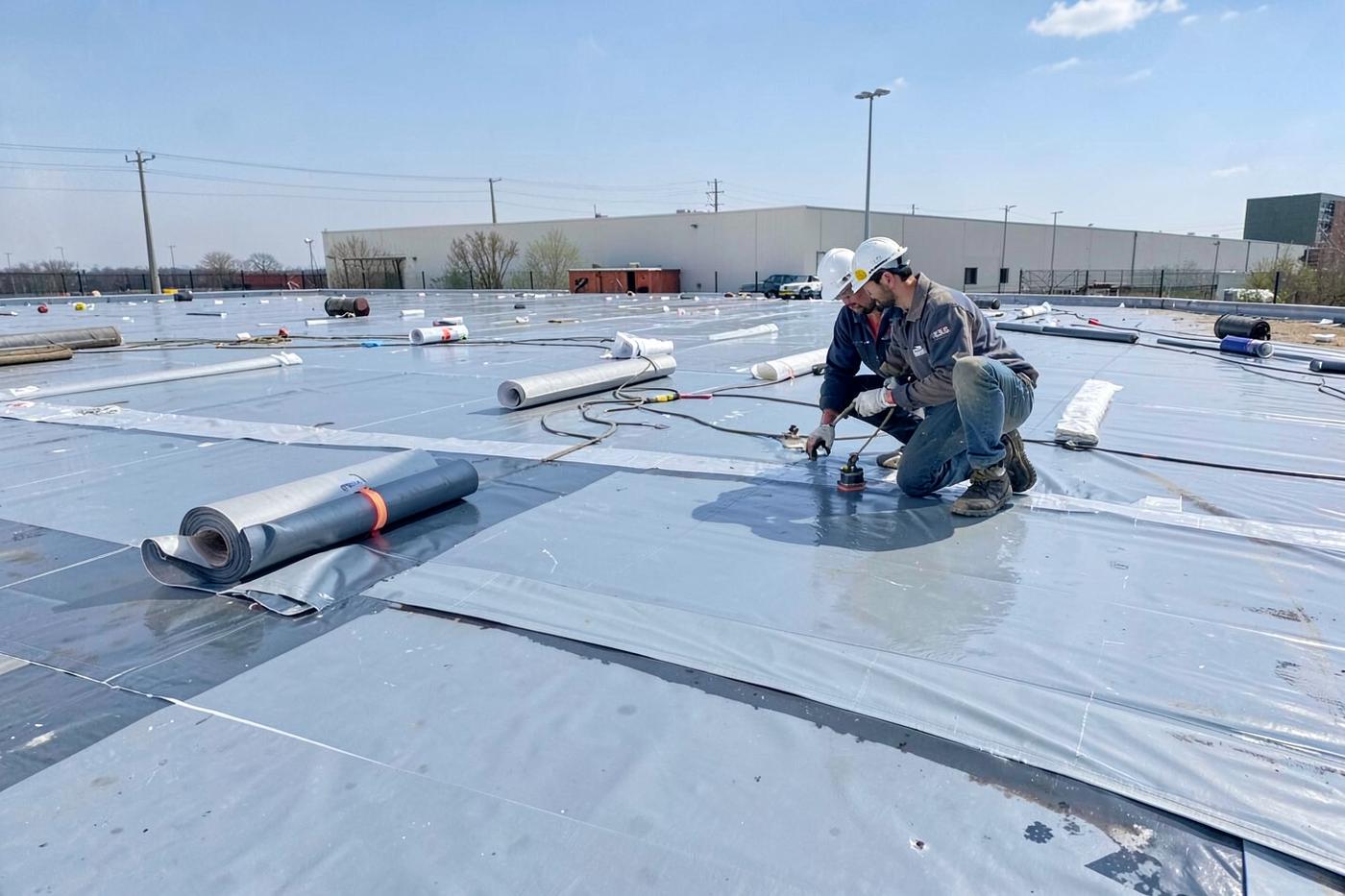
- Install new deck, insulation and covering. Work proceeds section by section, weatherproofing each area before moving to the next.
- Sign-off and certification. Completion documentation, warranties and compliance certificates are issued for insurance and lender purposes.
Keeping a Facility Operational During Replacement
Facilities managers rarely have the luxury of closing a site for a re-roof, which is why phased replacement has become the default for occupied warehouses and factories. Splitting the roof into manageable sections, each fully weatherproofed before the next begins, keeps the building watertight throughout the project. This extends the overall programme, but it avoids the operational cost of a full shutdown, which is usually far higher than the extra weeks on site.
Why Does Access Strategy Matter as Much as the Roofing System?
Access strategy matters because the method used to reach and work on a commercial roof directly affects programme length, cost, and the safety risk profile of the entire project. On a large industrial roof, the access method is often the single biggest variable in both budget and timeline.
Scaffolding vs Rope Access: The Two Dominant Approaches
The two dominant access approaches for commercial roof replacement:
- Scaffolding, which provides comprehensive perimeter access and is often required by insurers or specified for extensive structural work, but takes time to erect and adds cost on tall or large buildings.
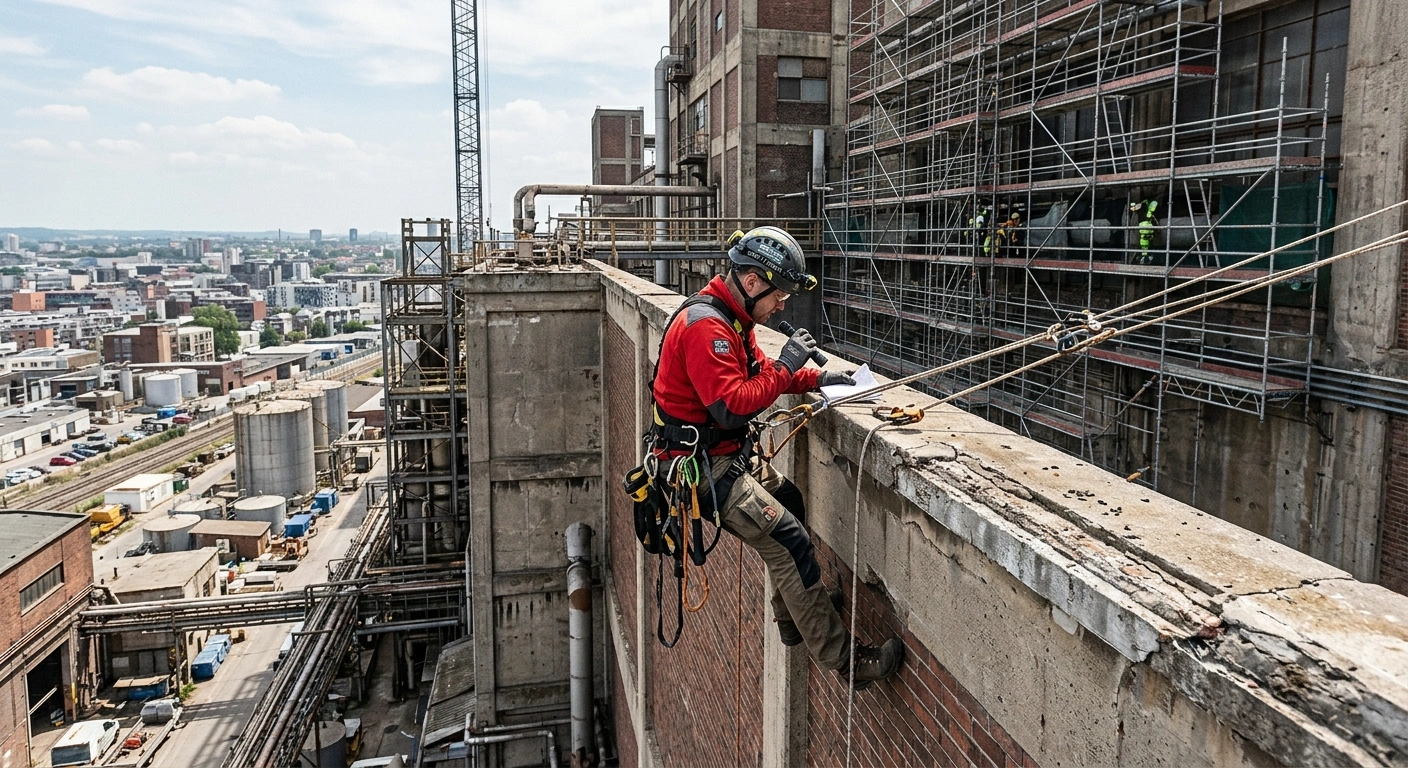
- Rope access, which can reach specific areas of a roof, parapet or upstand quickly without a full scaffold build, useful for surveys, targeted repairs, and inspection ahead of a full replacement.
For a full replacement, scaffolding is usually the primary access method for the bulk of the work, but rope access frequently plays a supporting role, particularly for pre-project condition surveys, ongoing inspection during the works, and hard-to-reach detailing such as parapets, upstands and rooflight surrounds.
When Should a Facilities Manager Bring in a Specialist Access or Steeplejack Team?
A facilities manager should bring in a specialist access or steeplejack team whenever a commercial roof replacement involves height, structure, or access challenges beyond what a standard roofing crew is equipped to handle safely. Roofing contractors are skilled at the covering itself, but not every roofing firm holds the certified rope access and structural competence that complex industrial buildings demand.
Where Steeplejacks Add Real Value on a Commercial Roof Project
Situations where a steeplejack or certified rope access team adds real value on a commercial roof project:
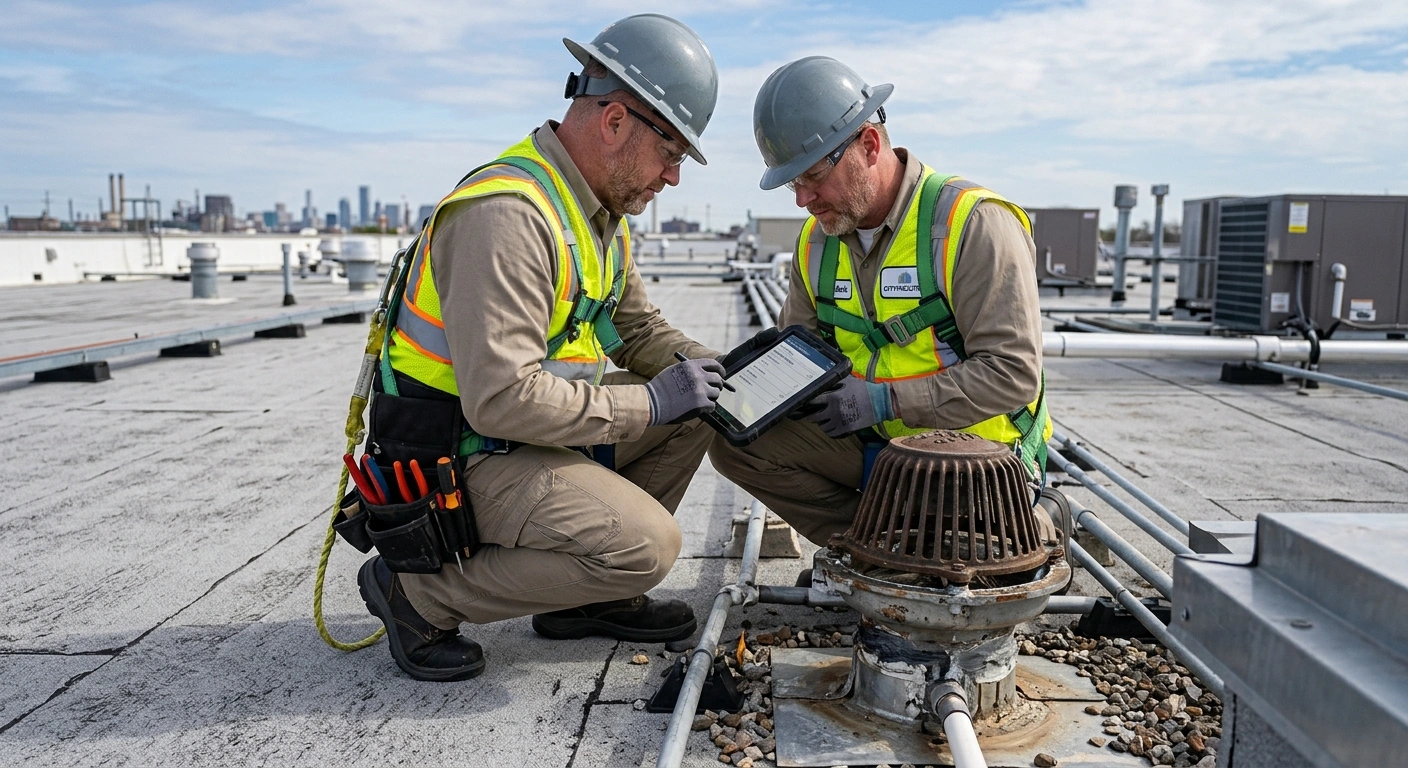
- Pre-replacement condition surveys on tall or difficult-to-access roofs, where rope access gets an accurate assessment without the cost of full scaffolding
- Fragile roof assessments, particularly on older asbestos cement or fibre cement sheeted buildings, where the HSE specifically flags non-roofing-trained workers as being at elevated risk
- Parapet, upstand and rooflight detailing, where targeted access is more efficient than extending scaffolding to reach small, specific areas
- Ongoing inspection during a phased replacement, checking completed sections remain weatherproof while work continues elsewhere
- Emergency or interim repairs identified mid-project that need addressing before the main replacement reaches that section
A steeplejack team holding IRATA, PASMA and IPAF certification brings genuine flexibility to a commercial roof project, moving between rope access, tower and scaffold-based work depending on what each task needs, rather than being locked into a single access method for the whole job.
Risks and Considerations for Facilities Managers
The biggest risk in a commercial roof replacement is underestimating the access and safety planning the project actually requires. A contractor without the right certification working on a fragile or complex industrial roof is a genuine safety and liability exposure for the building owner.
Key Risk Factors Facilities Managers Should Watch For
- Fragile roof surfaces are a leading cause of fall fatalities, and the HSE notes that many victims are not trained roofers but general contractors or maintenance staff unaware of the risk.
- Undocumented asbestos cement sheeting on older industrial buildings requires licensed removal; using an unlicensed contractor creates significant legal exposure.
- Underestimating access costs at quote stage is one of the most common causes of budget overruns once work is underway.
- Choosing the cheapest quote without checking certification can mean a lower headline price but a much higher risk of delays, defects or safety incidents.
Access Planning Decides Whether a Replacement Project Succeeds
Commercial roof replacement is a significant capital project, and the access strategy behind it deserves the same scrutiny as the roofing system itself. Getting the survey, phasing and access planning right up front is what keeps a £500k-£1m project on time, on budget, and safe for everyone working on and below the roof. Where a project involves fragile surfaces, difficult access, or ongoing inspection alongside the main works, a certified steeplejack or rope access team is often the difference between a smooth programme and a costly one.
Get a free, no-obligation commercial roof replacement assessment from our IRATA, PASMA and IPAF-certified team covering Greater Manchester.