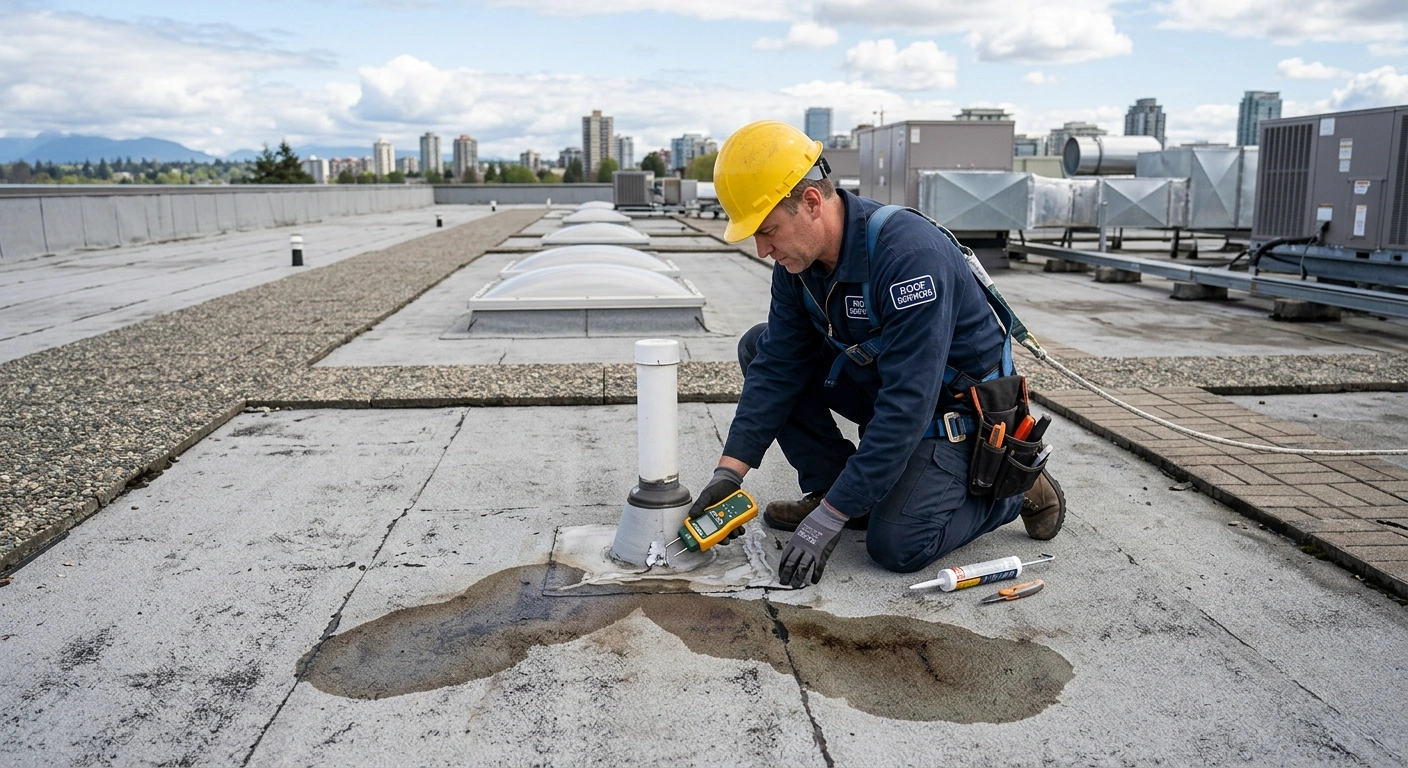
According to the Met Office, winter rainfall across England between December 2025 and February 2026 was 42% above the long-term average, with several regions recording their wettest winter since records began in 1836. For any building with an ageing or poorly maintained roof, that kind of sustained rainfall is exactly when small weaknesses turn into active leaks. A commercial roof leak repair often starts with a call made under pressure: water is already inside, and the priority shifts from prevention to fast, accurate diagnosis.
Commercial roof leak repair is the process of locating the source of water ingress and fixing it at the roof, rather than just addressing the visible damage inside the building. The two aren't always the same thing, since water can travel a considerable distance before it drips through a ceiling. This guide covers how industrial roof leaks are typically found, what the repair process involves, and where certified access changes what's realistically achievable.
Why Are Industrial Roof Leaks So Difficult to Locate?
Industrial roof leaks are difficult to locate because water rarely travels straight down; it tracks along structural members, insulation layers and roof decking before finding a way through the ceiling. The visible drip inside the building is often metres away from the actual point of failure on the roof.
Common Reasons a Leak's Source Isn't Obvious
- Water travels laterally along the roof deck before finding a weak point to drip through, especially on large flat roof areas
- Multiple potential entry points exist on most industrial roofs, including rooflights, flashing details, penetrations and ageing membrane seams
- Intermittent leaks only appear under specific wind or rain direction, making them hard to reproduce during a dry-weather inspection
- Ceiling voids mask the true travel path, especially in warehouses with extensive services running above the ceiling line
How Does Commercial Roof Leak Detection Actually Work?
Commercial roof leak detection works by systematically ruling out potential entry points, starting at the highest likely source and working outward, rather than guessing based on where the leak appears inside. A leak repaired without proper detection has a high chance of recurring, often in a different spot, within the same rainy season.
The Standard Detection Process
- Map the internal leak point against the roof plan, accounting for the fact that water travel isn't necessarily straight down.
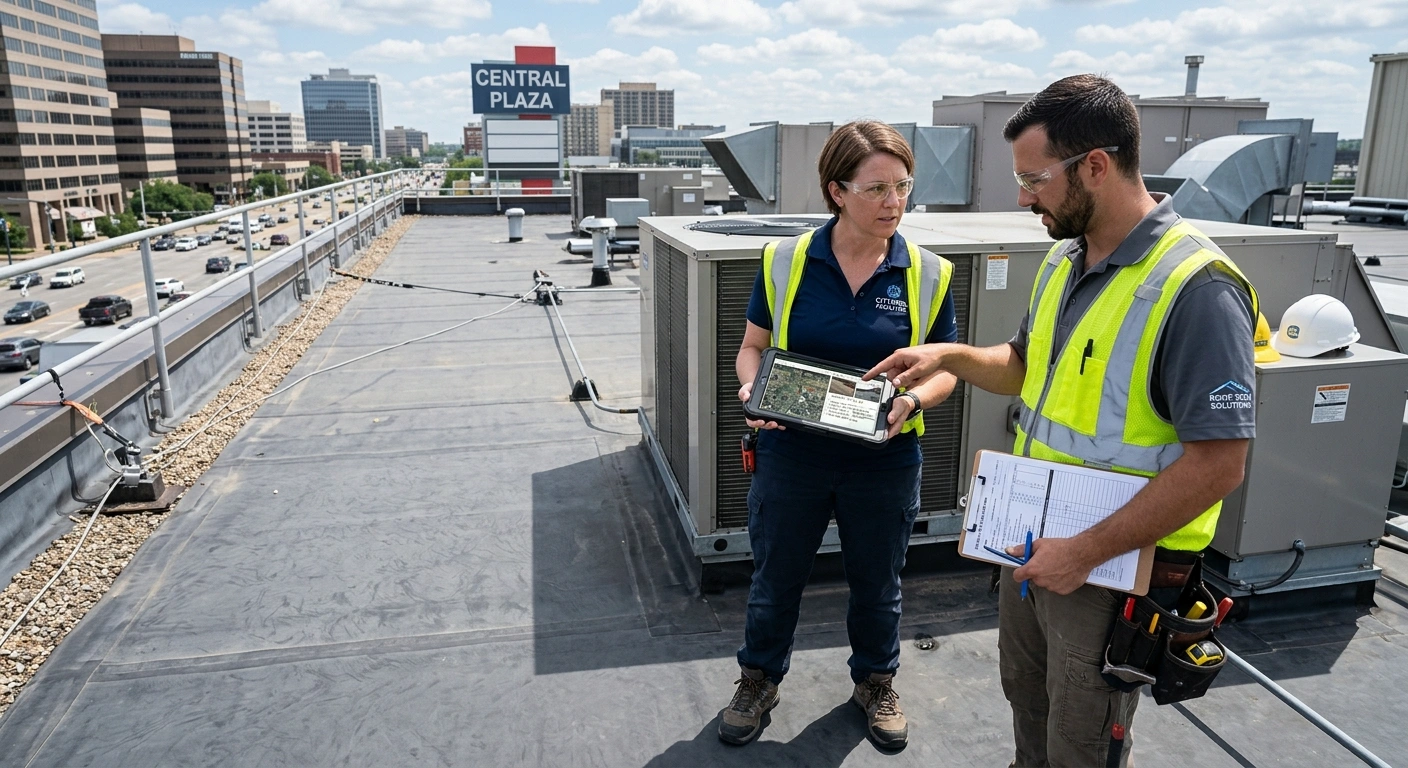
- Inspect likely external sources first, prioritising flashing, rooflights, penetrations and any recent repair work above the internal leak.
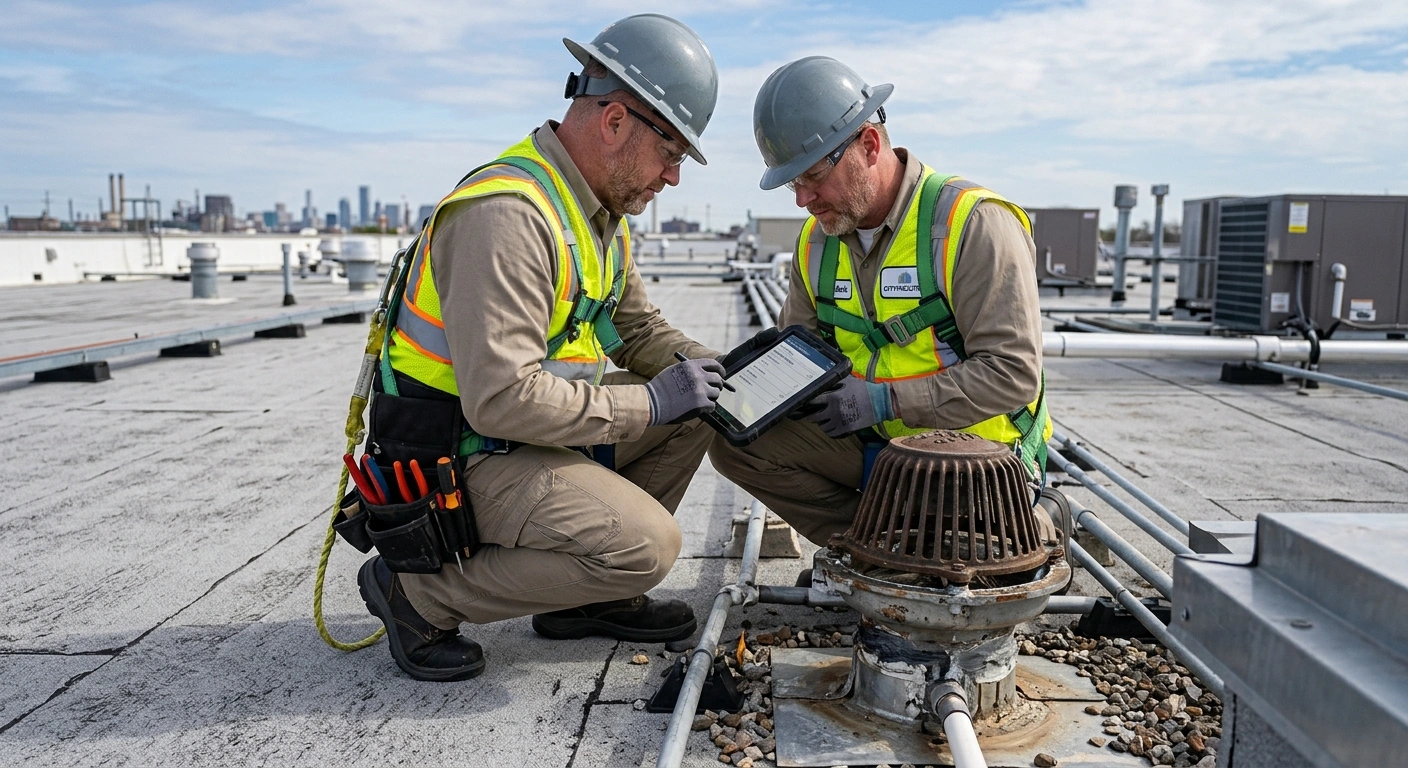
- Check drainage and standing water, since ponding is one of the most common causes of membrane failure.
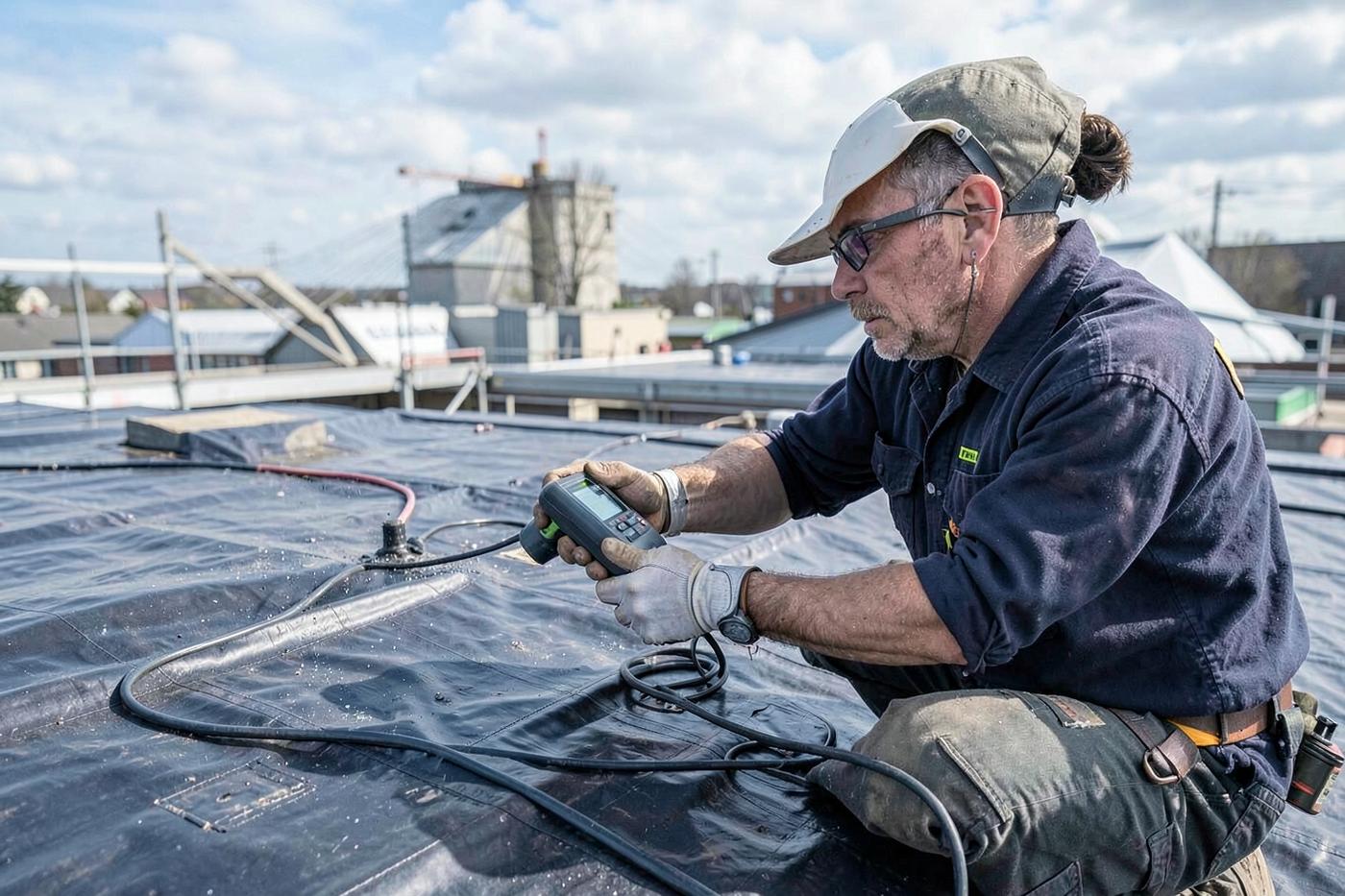
- Use moisture detection where the source isn't visually obvious, identifying saturated insulation beneath an intact-looking membrane.
- Confirm the fix resolves the issue, ideally observed during or shortly after rainfall rather than assumed from a dry inspection.
What Does a Commercial Roof Leak Repair Typically Involve?
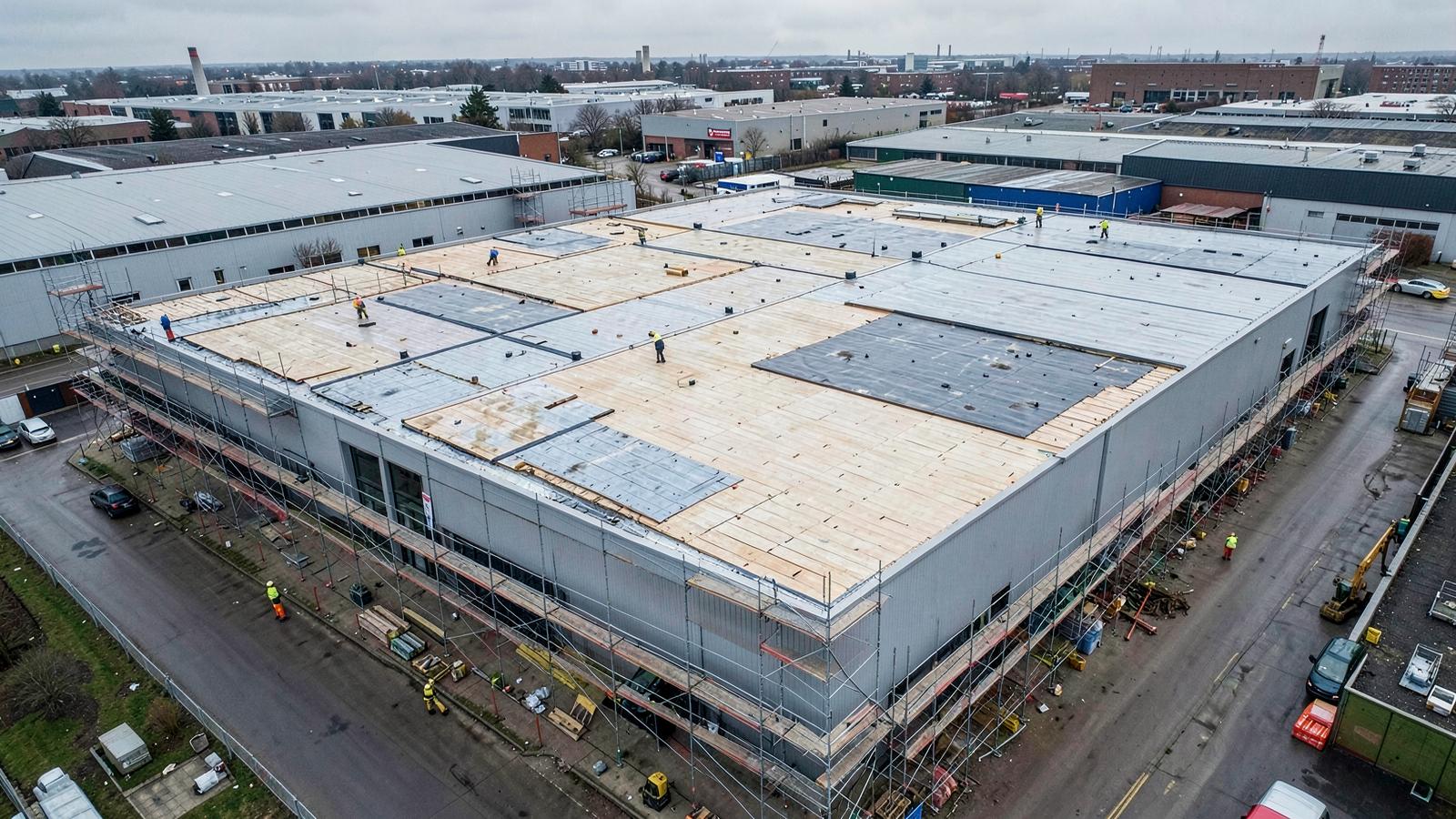
A commercial roof leak repair typically involves sealing or replacing the failed detail once correctly identified, ranging from a simple sealant application to localised membrane replacement. The repair itself is often straightforward; the detection work beforehand is where the real skill and time investment sits.
| Leak Cause | Typical Repair |
|---|---|
| Failed flashing or upstand seal | Reseal or replace the flashing detail |
| Cracked or split membrane | Localised membrane patch or section replacement |
| Blocked or overflowing drainage | Clear drainage, address the resulting ponding damage |
| Failed rooflight seal | Reseal or replace the rooflight unit |
| Penetration seal failure | Reseal around pipes, ducts or structural penetrations |
Why a Quick Fix Isn't Always the Right Fix
Sealing over a visible crack without addressing why it failed is a common shortcut that doesn't hold. If the underlying cause is ponding water, structural movement or a membrane at the end of its life, the same repair will likely fail again, often in a slightly different spot on the next heavy rainfall.
Why Does Access Affect How Thoroughly a Commercial Roof Leak Can Be Investigated?
Access affects leak investigation because a detection process that can't safely reach every potential source will inevitably miss some of them. A leak search limited to the easily walkable parts of a roof is only half a search on many industrial buildings.
Areas That Often Get Skipped During a Standard Leak Search
Tall stacks, plant enclosures, steep roof sections and awkward parapets are frequently excluded from a standard roofer's leak investigation, simply because reaching them safely requires more than a walk-round survey. On older industrial buildings, fragile roof sheeting adds a further layer of access difficulty a general contractor may not be equipped to handle.
When Should a Steeplejack Be Called for a Commercial Roof Leak?
A steeplejack should be called for a commercial roof leak whenever the likely source sits beyond safe reach for a standard roofing contractor, or when the leak has resisted a first repair attempt. A repeat leak after a first fix is often a sign the true source was never actually reached during the original investigation.
Situations Where Certified Access Changes the Outcome
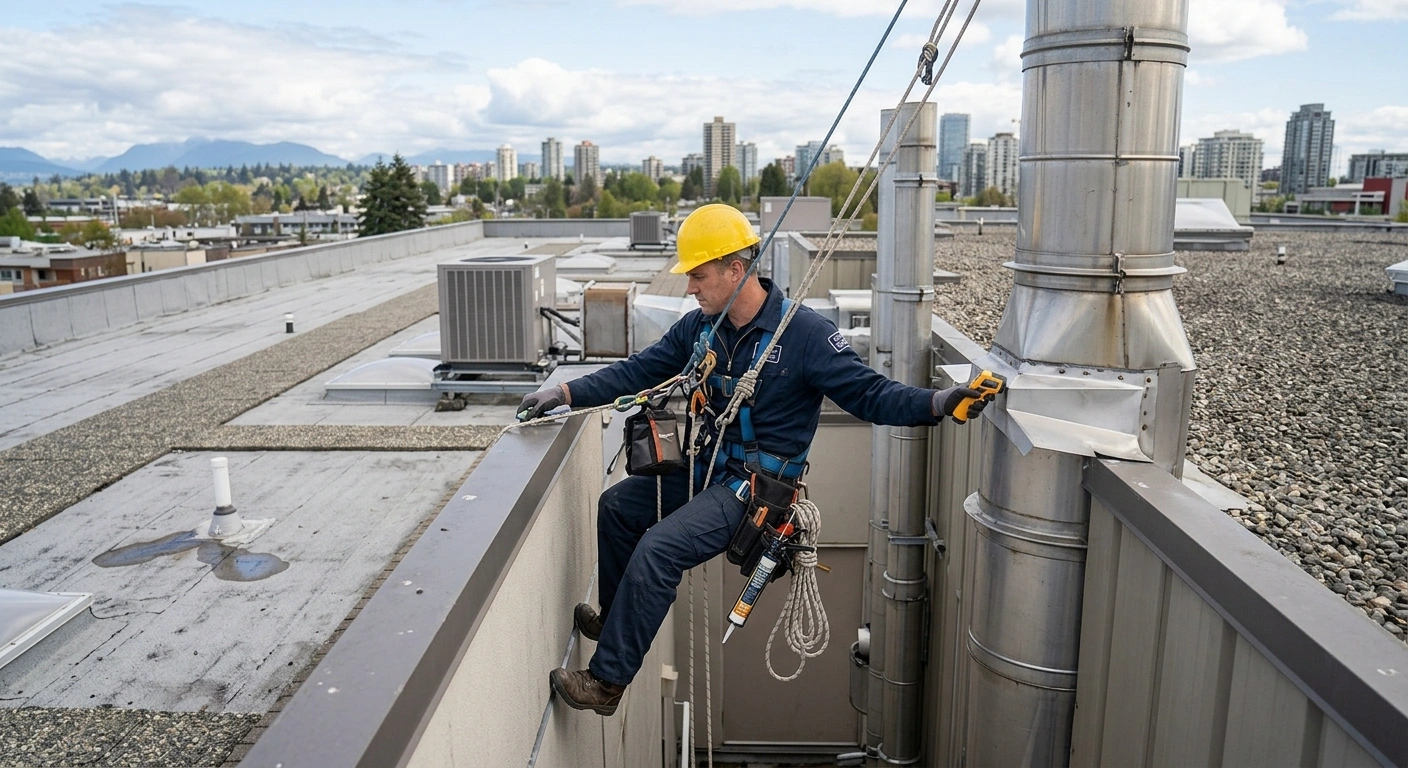
- Leaks near tall stacks or plant structures, where the source often sits outside a general roofer's practical access range
- Fragile roof sections on older industrial buildings, where standard access methods may not be safe
- Leaks that have recurred after a previous repair, suggesting the original detection missed the actual source
- Large industrial roofs with multiple potential sources, where an efficient, systematic search saves significant time
A steeplejack team holding IRATA, PASMA and IPAF certification can reach and inspect areas a standard roofing crew might have to work around, turning a partial investigation into a genuinely complete one.
Getting to the Actual Source Is What Stops a Leak Coming Back
A commercial roof leak repair that lasts starts with detection that actually covers the whole roof. Where a leak has recurred, or the building includes tall stacks, plant structures or fragile sections, bringing in certified access from the detection stage is what turns a repeat callout into a repair that holds.
Get a free, no-obligation commercial roof leak inspection from our IRATA, PASMA and IPAF-certified team covering Greater Manchester.