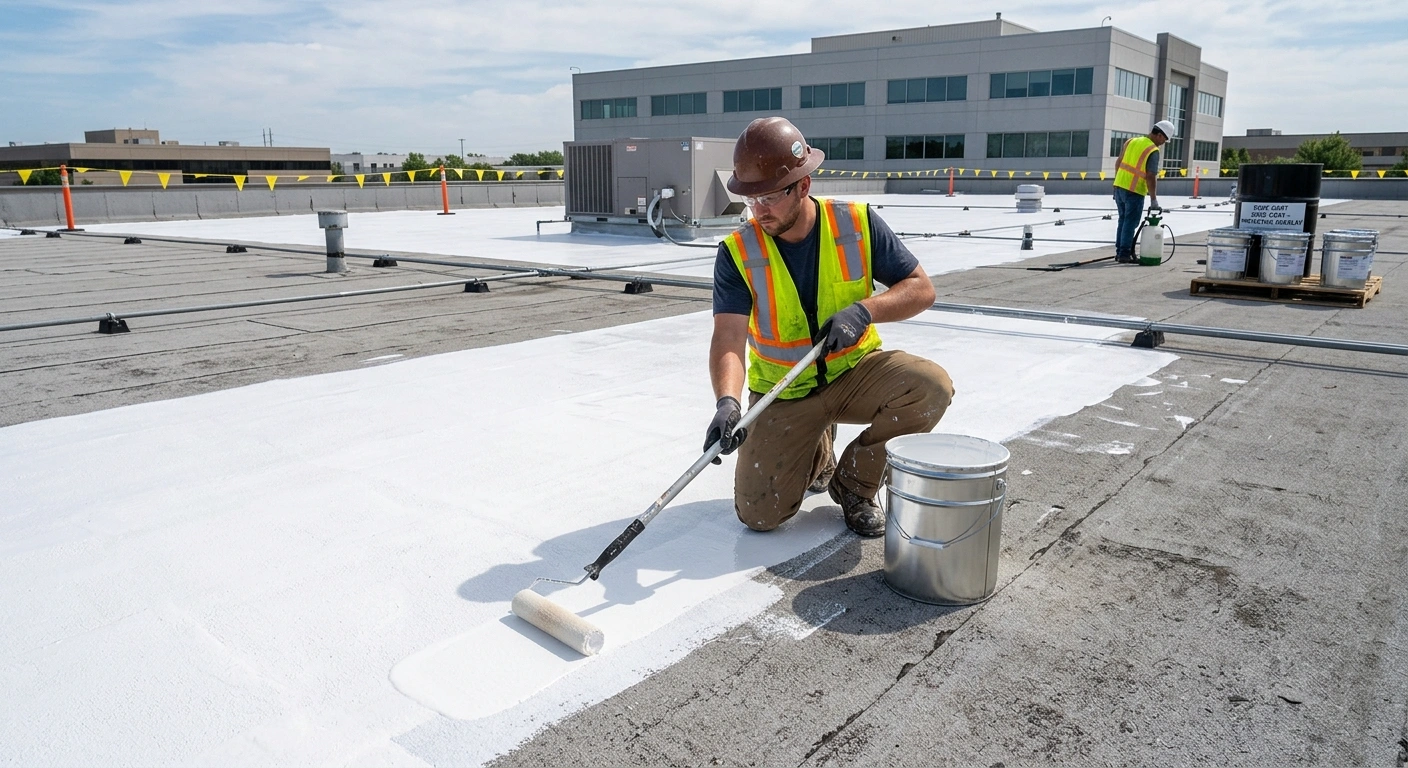
According to RICS, whose Whole Life Carbon Assessment framework, 2nd edition, took effect in July 2024, refurbishment, repair and replacement must now be compared on a like-for-like basis across a building's whole life cycle, rather than treating demolition and rebuild as a neutral default. For facilities managers, that shift reflects something many already knew from experience: a roof at the end of its warranty period isn't necessarily a roof at the end of its useful life. Commercial roof refurbishments are increasingly the option worth ruling in, or out, before committing to full replacement.
Commercial roof refurbishment is the process of renewing, overlaying or upgrading an existing roof system to extend its service life, without the cost and disruption of a full strip-and-rebuild. It sits between routine maintenance and full replacement, and getting the scope right depends entirely on the condition of what's underneath the surface. This guide covers when refurbishment is the right call, what the process involves, and where certified access changes what's achievable on a commercial flat roof refurbishment project.
When Does Refurbishment Make Sense Instead of Full Replacement?
Refurbishment makes sense when the roof's structure, deck and insulation are still sound, and the failure is limited to the surface membrane or specific details rather than the system as a whole. Refurbishment only works if what's underneath is worth preserving; it's not a way to avoid diagnosing a genuinely failing roof.
Conditions That Favour Refurbishment Over Replacement
- A structurally sound deck and dry insulation, confirmed by survey rather than assumed
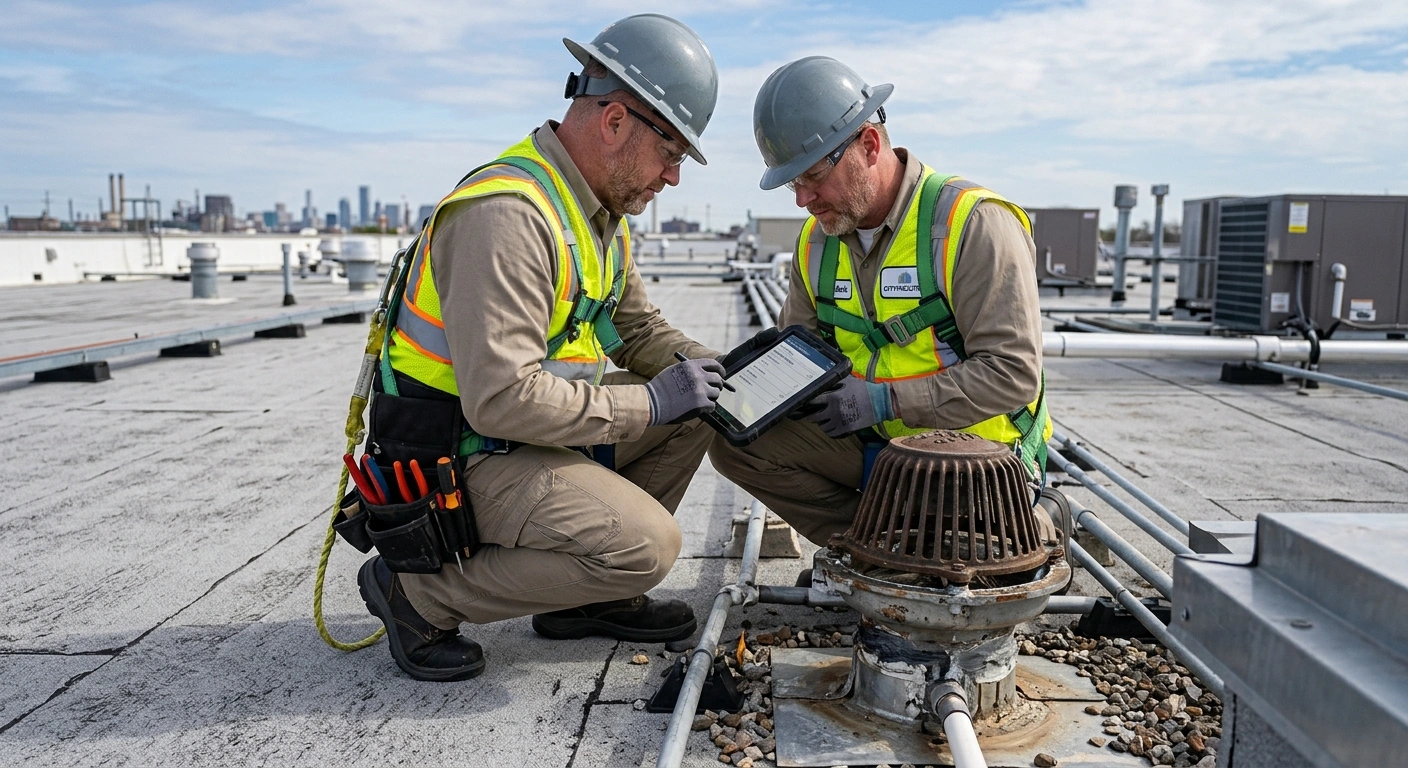
- Isolated moisture ingress at details like upstands, outlets or penetrations, rather than widespread saturation
- A roof nearing the end of its membrane life but with sound layers beneath, suited to an overlay system
- Access or disruption constraints that make a controlled, phased refurbishment more practical than a full strip-out
Conditions That Point Toward Replacement Instead
Refurbishment risks locking in unseen problems if the roof is failing as a system rather than at isolated details. Widespread saturated insulation, structural deck deterioration, or repeated refurbishment attempts on the same areas all signal that replacement is the more honest long-term decision.
What Does a Commercial Flat Roof Refurbishment Actually Involve?
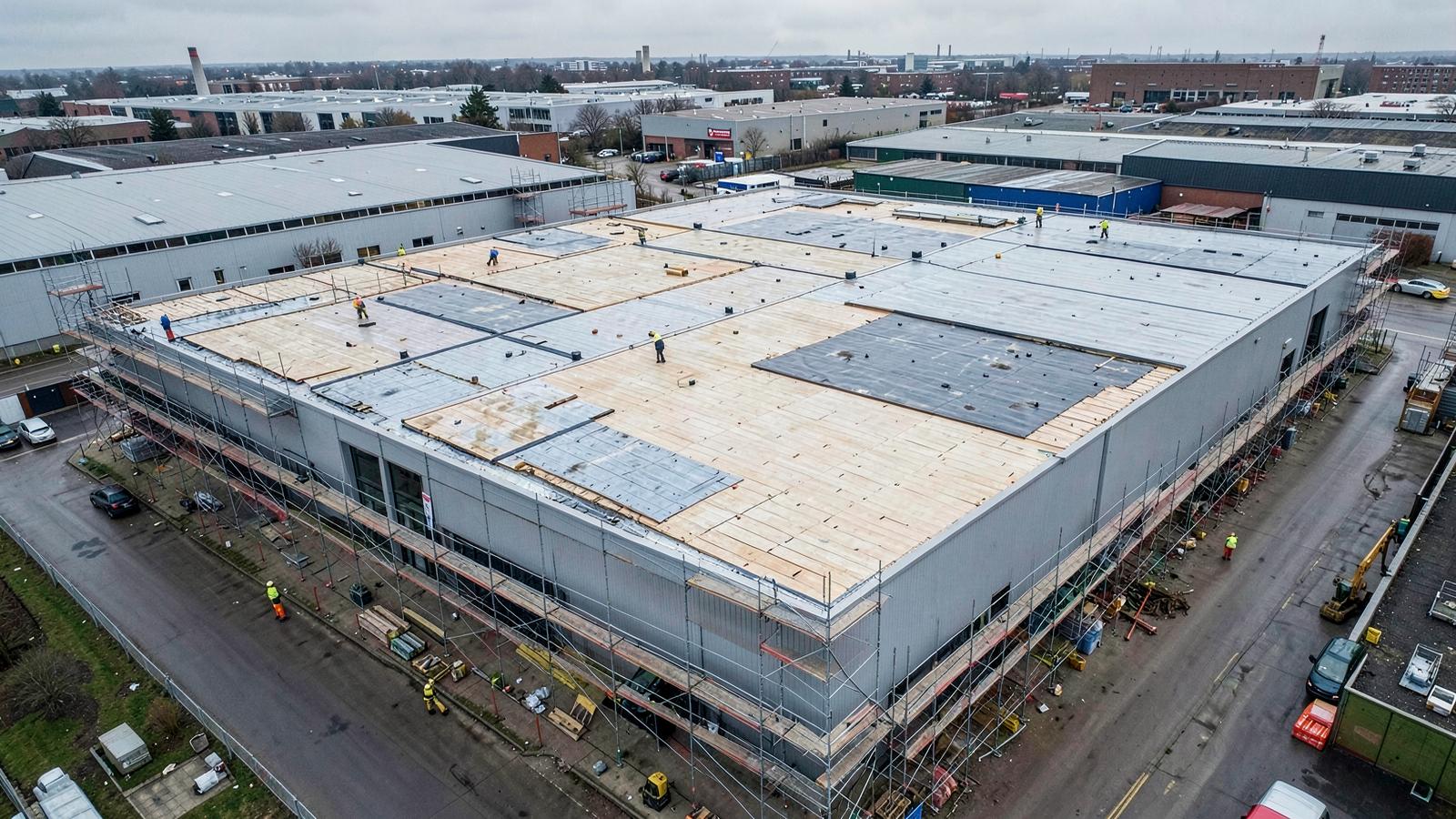
A flat roof refurbishment for a commercial building typically involves one of three approaches: overlay, coating, or targeted partial renewal, depending on what the survey finds. Choosing the wrong approach for the roof's actual condition is the single most common cause of refurbishment failure.
The Three Main Refurbishment Approaches
| Approach | What It Involves | Best Suited To |
|---|---|---|
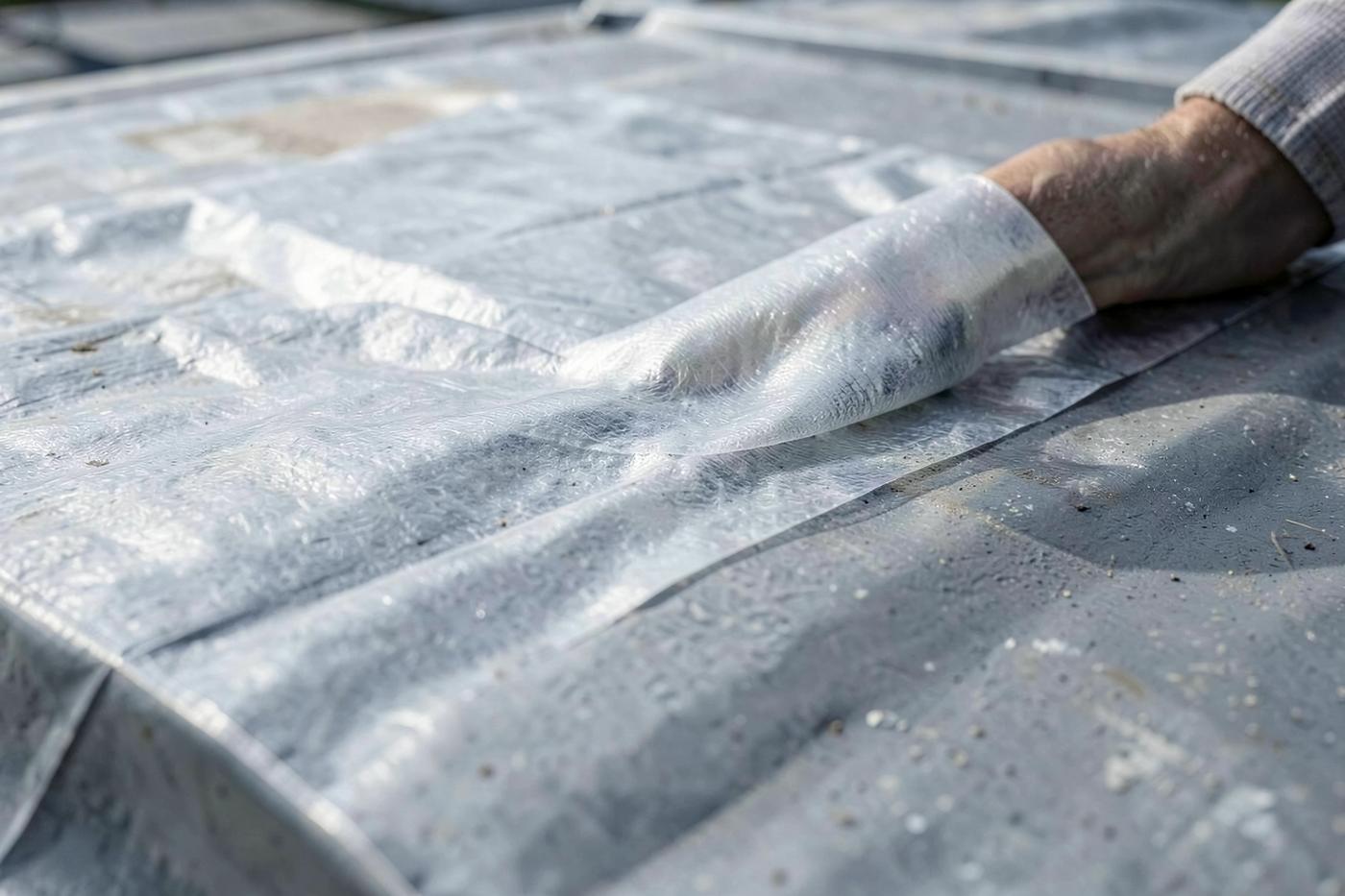
| Overlay systems | Adding a new waterproof layer over a prepared substrate, often alongside an insulation upgrade where the build-up allows it | Roofs with a sound structure but a membrane nearing the end of its life |
| Protective coatings | A protective layer applied where the roof is fundamentally stable but needs extended weathering protection | Roofs that are structurally stable, not a fix for saturated insulation beneath |
| Partial renewal | Replacing problem areas such as upstands, outlets and local deck sections while leaving the sound majority untouched | Isolated defects on an otherwise healthy roof |
Why a Proper Survey Has to Come Before Scope Is Fixed
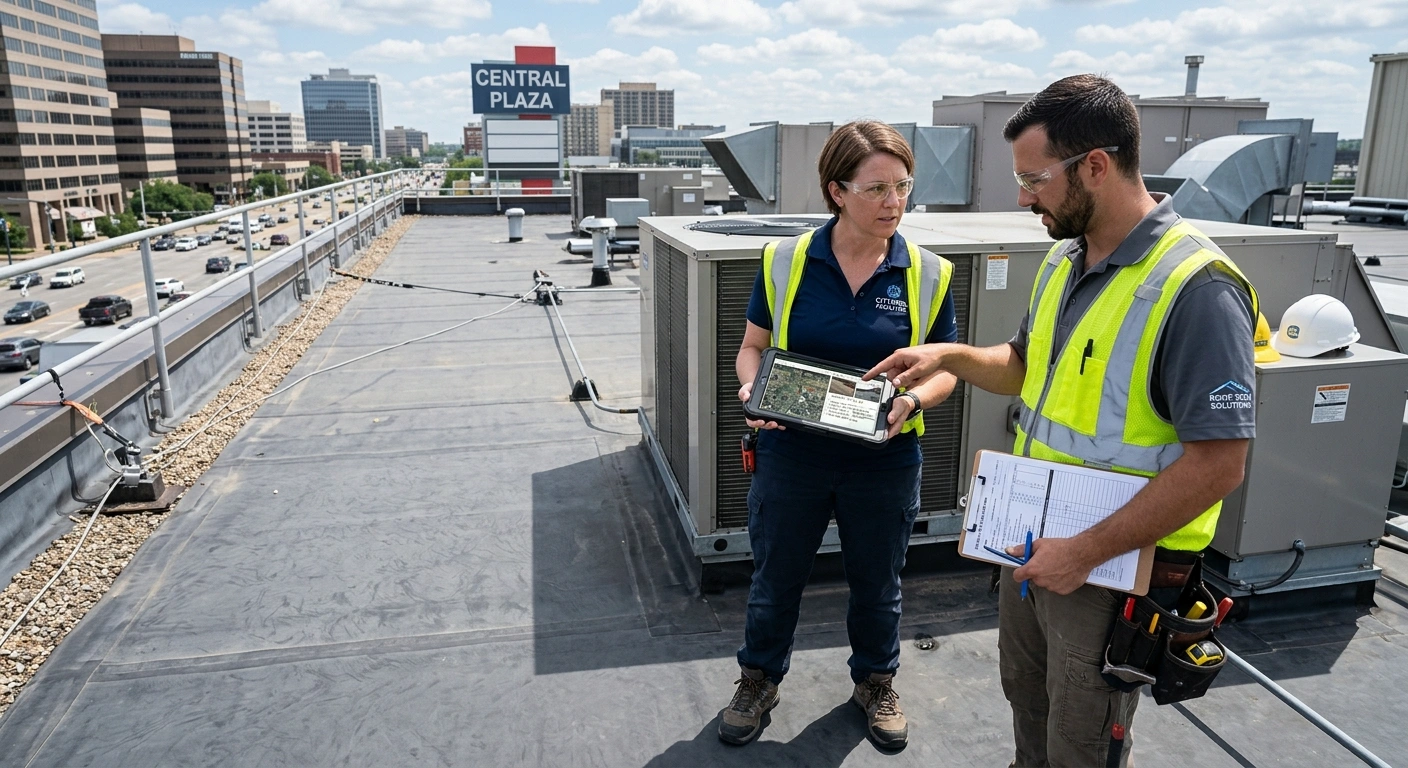
A refurbishment scope should never be set without first confirming the existing build-up, identifying where moisture is present, and establishing which details genuinely need renewal. Skipping this step is how a seemingly straightforward overlay ends up trapping moisture beneath a new membrane, turning a cost-saving refurbishment into an expensive failure within a few years.
Why Does Access Capability Shape What a Refurbishment Project Can Achieve?
Access capability shapes a refurbishment project because a survey or repair that can't safely reach every part of the roof risks missing exactly the detail that later fails. A refurbishment scope is only as reliable as the survey behind it, and a survey is only as complete as the access used to carry it out.
The Cost of an Incomplete Survey
On buildings with tall stacks, plant enclosures, steep sections or difficult parapets, a standard walk-round survey may simply not cover the areas most likely to need attention. This is where the case for commercial roofing refurbishments benefits from a contractor who can genuinely reach and assess every part of the roof.
When Should a Steeplejack Be Involved in a Roof Refurbishment Project?
A steeplejack should be involved in a roof refurbishment project whenever the survey, repair or ongoing monitoring requires reaching areas beyond what a standard roofing crew can safely access. The judgement calls that make or break a refurbishment, whether a detail needs full renewal or a coating will do, depend on actually being able to inspect it properly.
Where Certified Access Strengthens a Refurbishment Programme
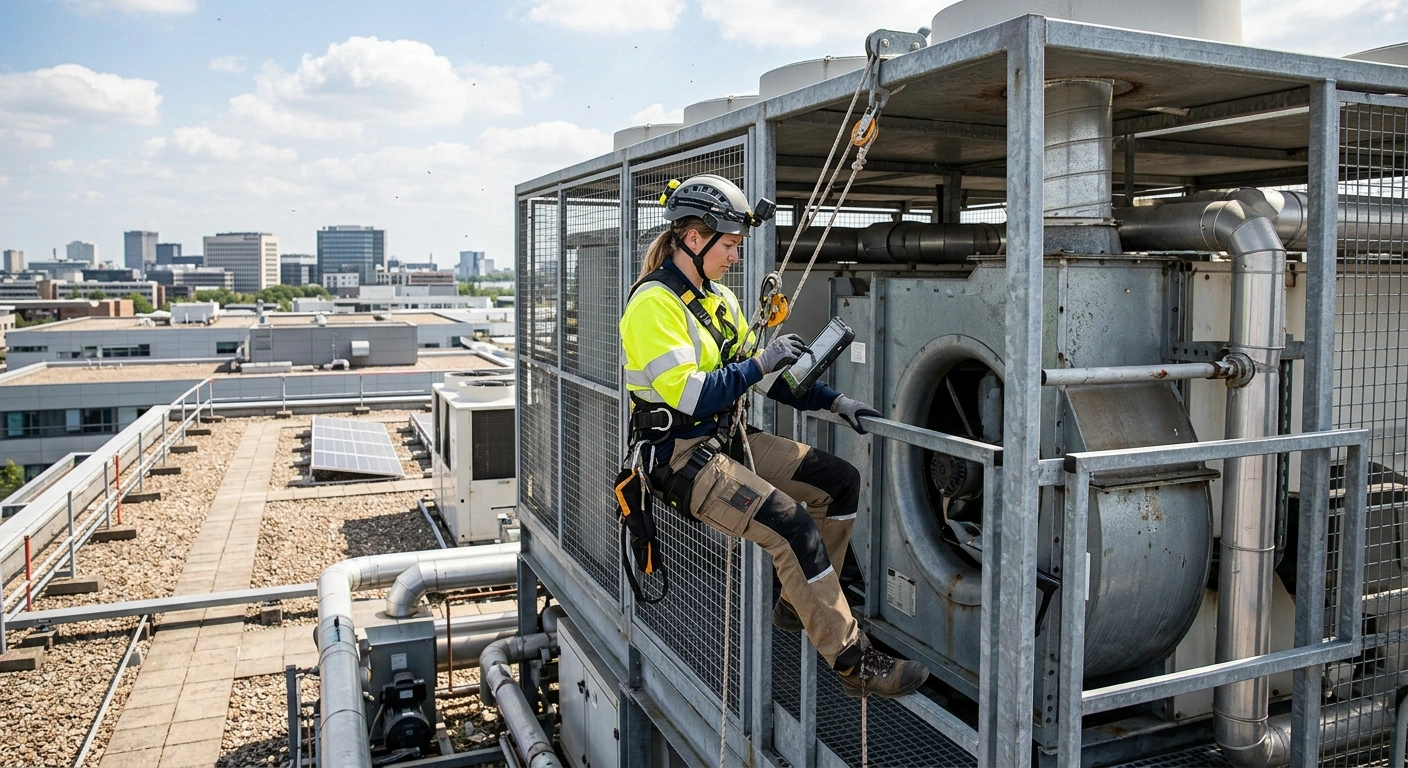
- Pre-refurbishment condition surveys, particularly on tall or complex industrial roofs where a comprehensive assessment prevents scope errors later
- Fragile roof sections, where standard access methods may not be safe without specialist precautions
- Tall stacks, parapets and plant structures, often excluded from a general roofer's survey but frequently the source of the leaks that prompted the refurbishment
- Ongoing monitoring during a phased refurbishment, confirming completed sections are performing as expected before work moves on
A steeplejack team holding IRATA, PASMA and IPAF certification can carry out the full survey, often the difference between a scope that actually solves the problem and one that misses a detail that fails again within a year.
Getting the Scope Right Is What Makes Refurbishment Worth It
Commercial roof refurbishments genuinely can extend a roof's working life at a fraction of full replacement cost, but only when the scope is based on a survey that covered the whole roof. Where a building includes tall stacks, plant structures or fragile sections, bringing in certified access from the survey stage onward is what keeps a refurbishment decision honest.
Get a free, no-obligation commercial roof refurbishment survey from our IRATA, PASMA and IPAF-certified team covering Greater Manchester.