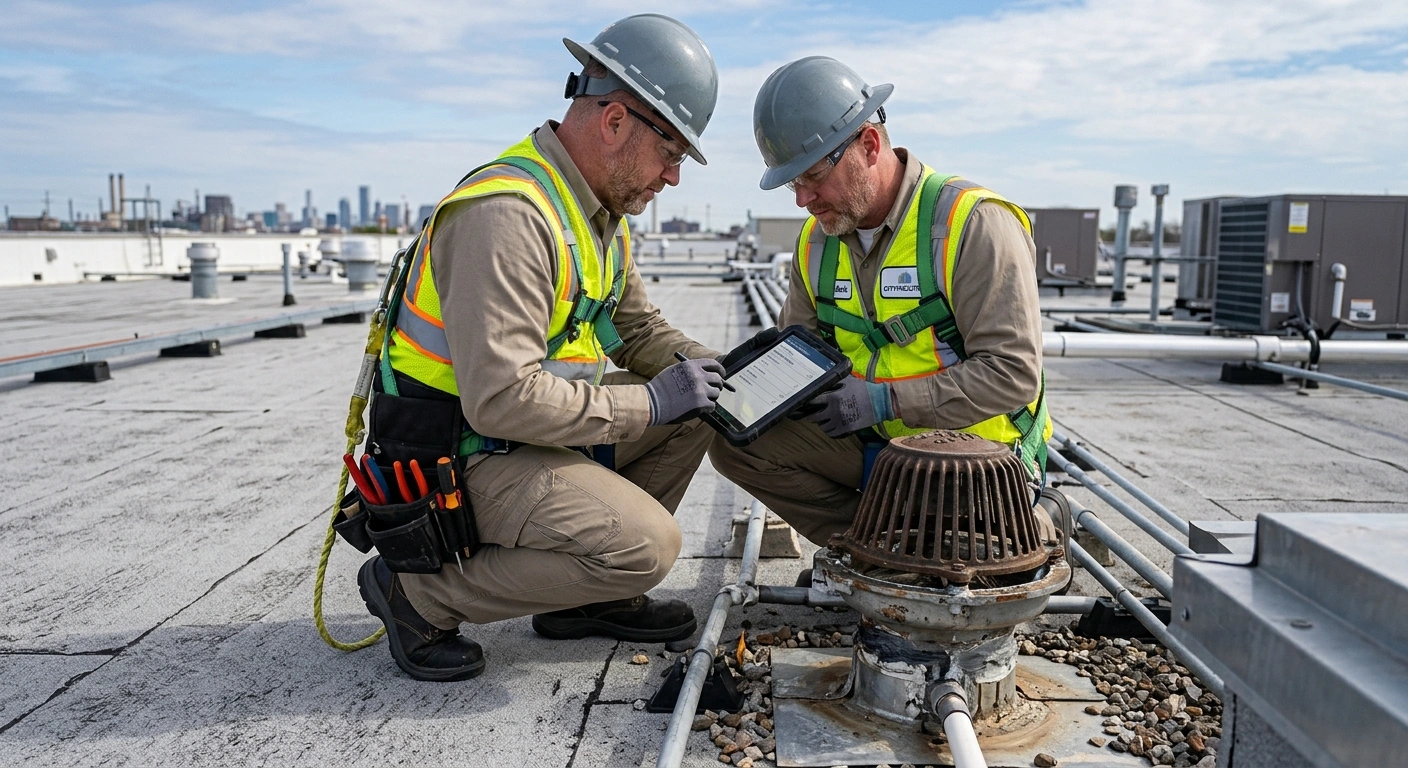
According to RICS, whose Planned Preventative Maintenance of Commercial and Residential Property standard took effect on 1 May 2022, the guidance was introduced partly in response to Storm Doris in 2017, where a fatality was linked in part to gaps in a building's maintenance regime, including a roof area that had never actually been inspected because of access difficulty. That's the core problem this article addresses: a maintenance plan is only as good as the parts of the roof it can actually reach. This guide sets out a practical commercial roof maintenance checklist for facilities managers, and explains where certified access changes what a maintenance plan can realistically cover.
Commercial roof maintenance is the ongoing programme of inspection, cleaning and preventative repair that keeps a commercial roof performing and extends its working life. Done properly, it's the difference between a roof that reaches 25 years of service and one that fails prematurely and expensively. This guide covers what a commercial roof maintenance checklist should include, how maintenance plans should be structured, and why access capability is often the limiting factor in how thorough a maintenance programme can actually be.
What Should a Commercial Roof Maintenance Checklist Include?
A commercial roof maintenance checklist should cover drainage, membrane condition, flashing, rooflights and structural penetrations, inspected on a set schedule rather than only after a leak appears. The roofs that fail expensively are almost always the ones where inspection stopped being routine and became reactive instead.
Core Inspection Points for Every Commercial Roof
- Drainage and outlets, checked for blockages, debris buildup and correct fall to prevent standing water
- Membrane condition, looking for blistering, cracking, splits or areas of wear ahead of visible leaking
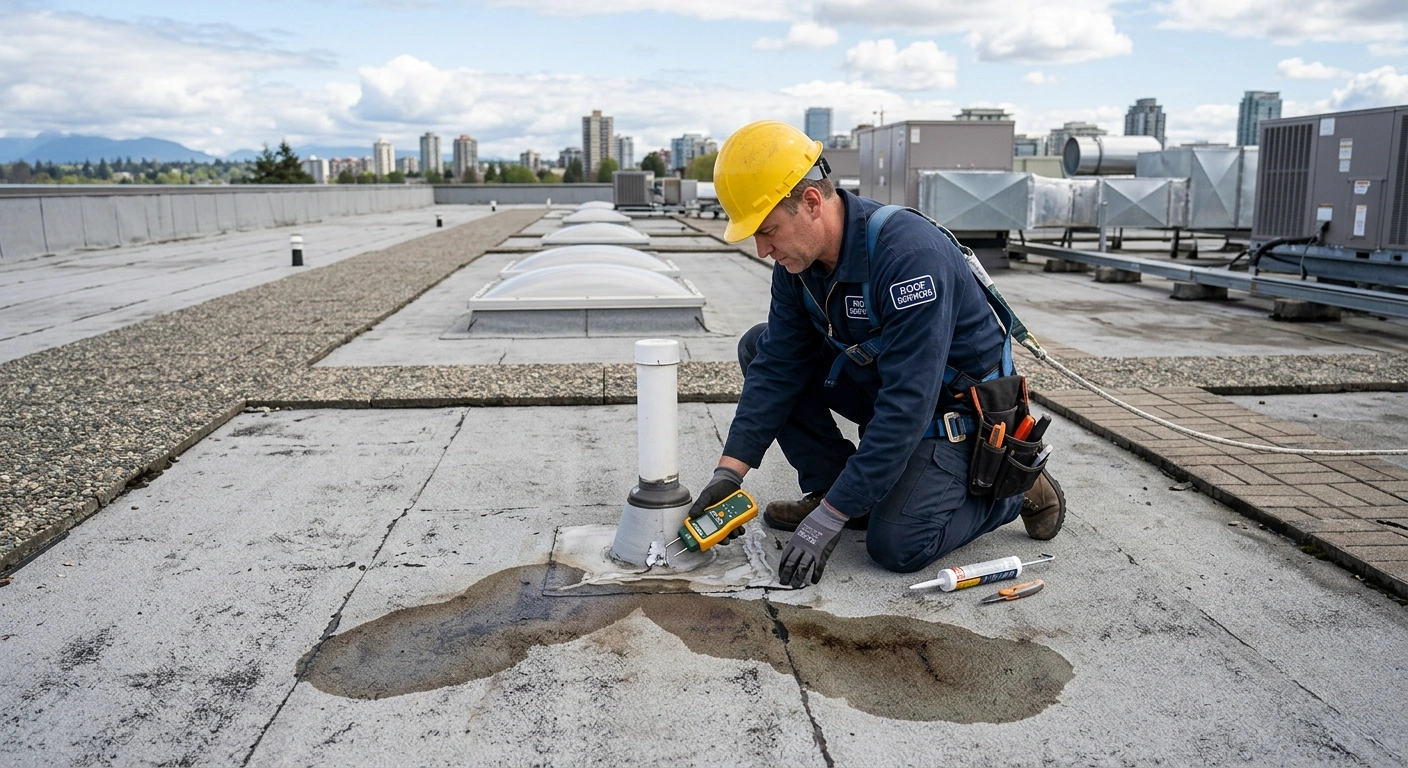
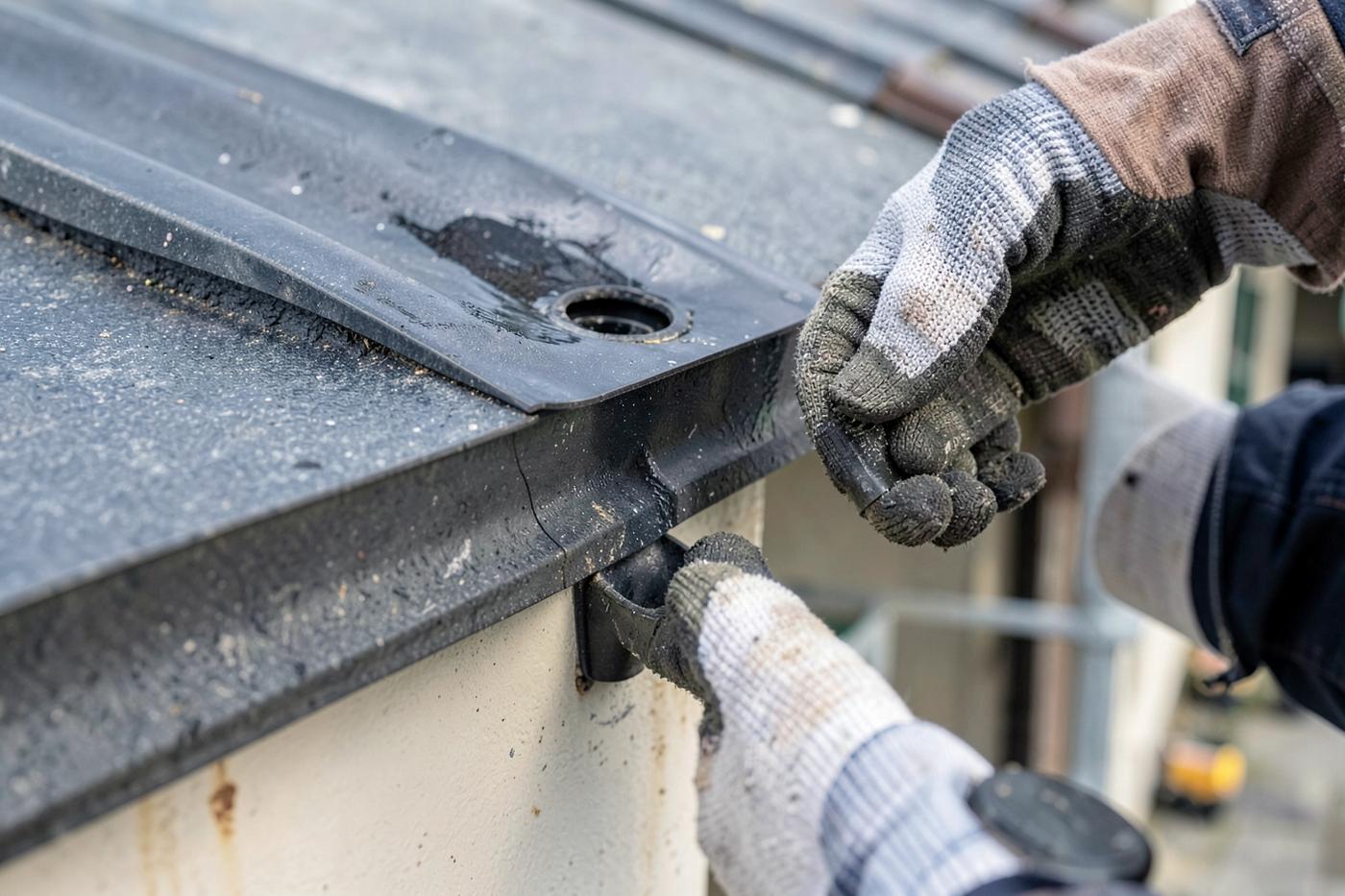
- Flashing and upstands, particularly around rooflights, plant equipment and parapet walls, where most leaks originate
- Rooflights and penetrations, checked for seal failure and, on older buildings, correctly identified as fragile or non-fragile
- General debris and vegetation, removed before it retains moisture or blocks drainage paths
Seasonal Priorities Worth Building Into the Schedule
Autumn inspections should prioritise drainage, clearing debris before winter rainfall arrives. Spring inspections are the point to assess any damage from winter freeze-thaw cycles and high winds before it develops further.
Building these seasonal checkpoints into the annual schedule catches most problems well before they become urgent.
How Should Commercial Roof Maintenance Plans Be Structured?
Commercial roof maintenance plans should be structured around a fixed inspection schedule, a documented condition record, and a clear escalation path for issues found. A maintenance plan that exists only as an informal arrangement with a roofing contractor isn't a plan, it's a hope.
The Three Components Every Maintenance Plan Needs
- A defined inspection frequency, typically twice yearly as a baseline, with additional checks after severe weather events.
- Written condition reporting, documenting findings at each visit so deterioration can be tracked over time rather than assessed fresh each visit.
- A prioritised action list, separating urgent safety issues from planned preventative work that can be scheduled into the next budget cycle.
Why Documentation Matters as Much as the Inspection Itself
A maintenance plan without a paper trail creates exactly the kind of gap RICS guidance was introduced to close: an inspection regime that looks adequate on paper but never actually covered the area that eventually failed. Keeping dated, photographed condition records for every roof area, including the hard-to-reach ones, protects both the building and the facilities manager if a defect is later challenged by insurers or lenders.
Why Do Commercial Roofing Maintenance Programmes Often Miss Certain Areas?
Commercial roofing maintenance programmes often miss certain areas because those areas are genuinely difficult to reach, and a standard roofing contractor's inspection routine doesn't always extend to them. The parts of a roof most likely to be skipped are exactly the parts most likely to cause problems: tall stacks, plant enclosures, steep pitches and awkward parapets.
Areas Most Commonly Left Out of Routine Inspections
| Area | Why It Gets Missed |
|---|---|
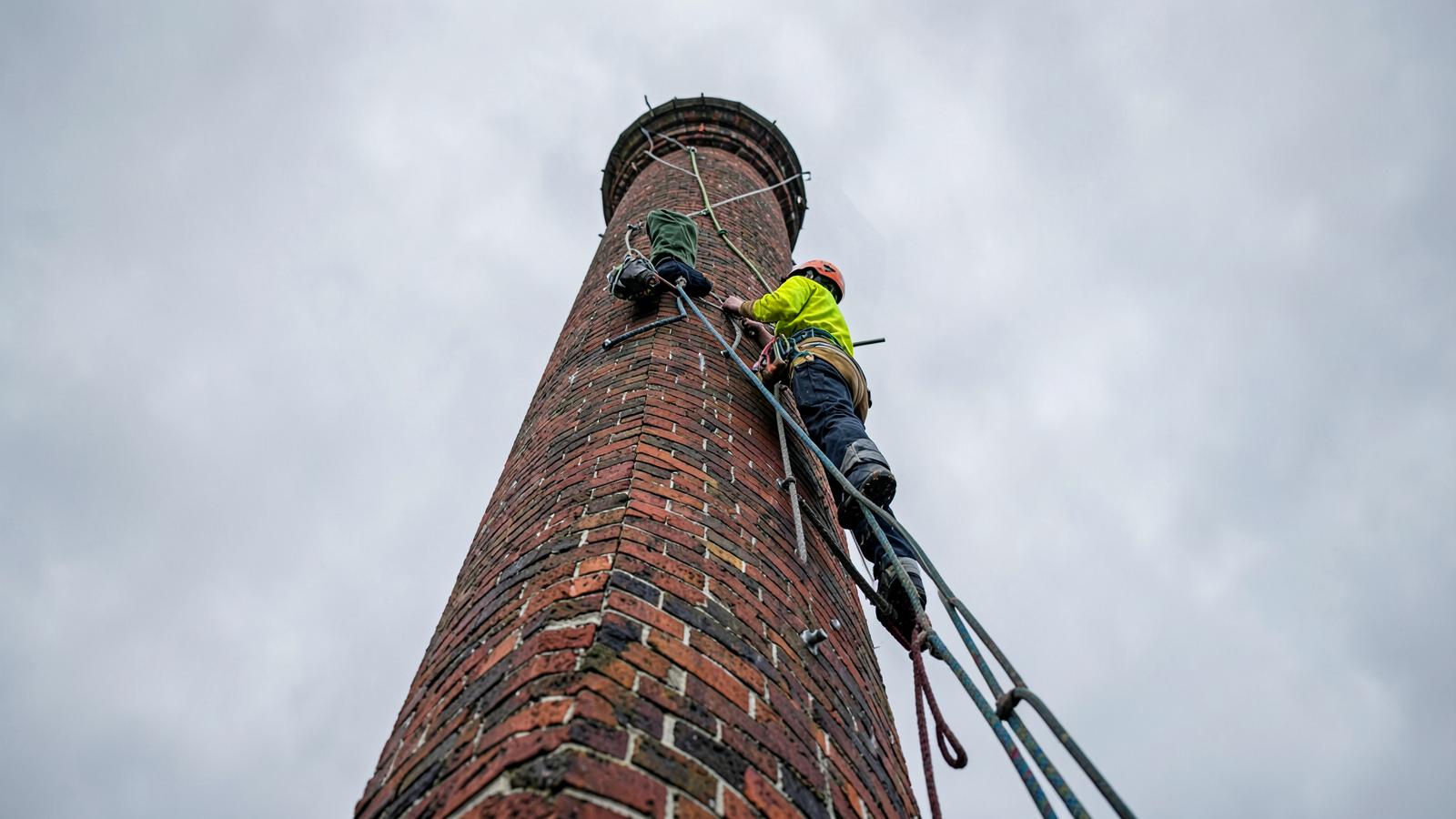
| Tall chimney or flue stacks | Rise above the main roof plane, often outside a general roofer's scope |
| Plant enclosures and rooftop equipment surrounds | Require careful access planning around live equipment |
| Steep or fragile roof sections | A standard walk-round inspection isn't safe without specialist precautions |
| Parapet walls and roof edges on tall buildings | Safe access requires more than a straightforward ladder or hatch |
When Does Commercial Roof Preventative Maintenance Need a Steeplejack?
Commercial roof preventative maintenance needs a steeplejack whenever the areas requiring inspection or repair sit beyond what a standard roofing contractor can safely and thoroughly access. A maintenance plan is only as complete as its weakest access point, and that's precisely where a certified access specialist adds genuine value.
Situations That Call for Certified Access
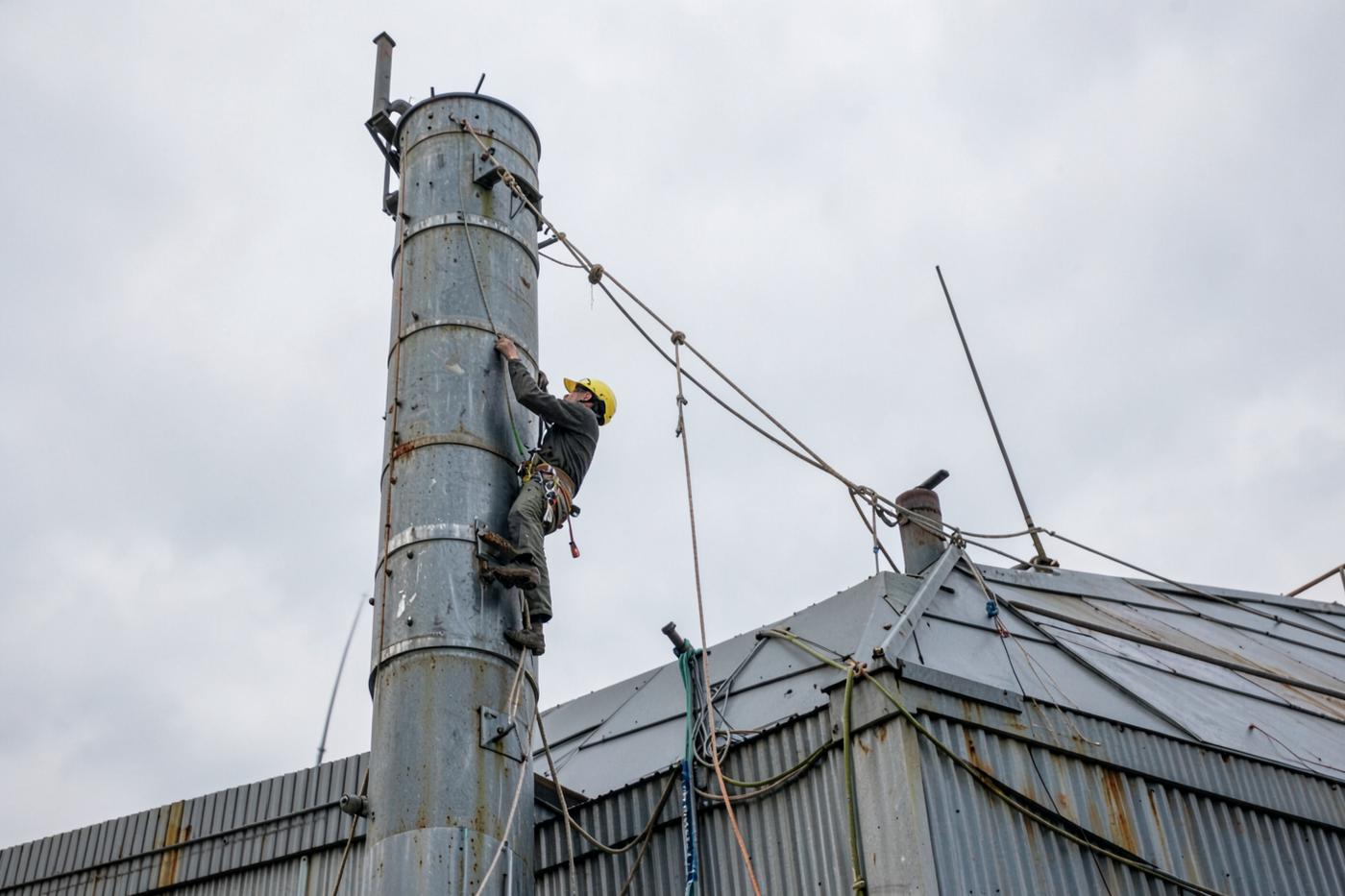
- Tall stacks, towers or plant structures rising above the main roofline, needing rope access or tower-based inspection
- Fragile roof assessments, particularly on older industrial buildings with asbestos cement or ageing fibre cement sheeting
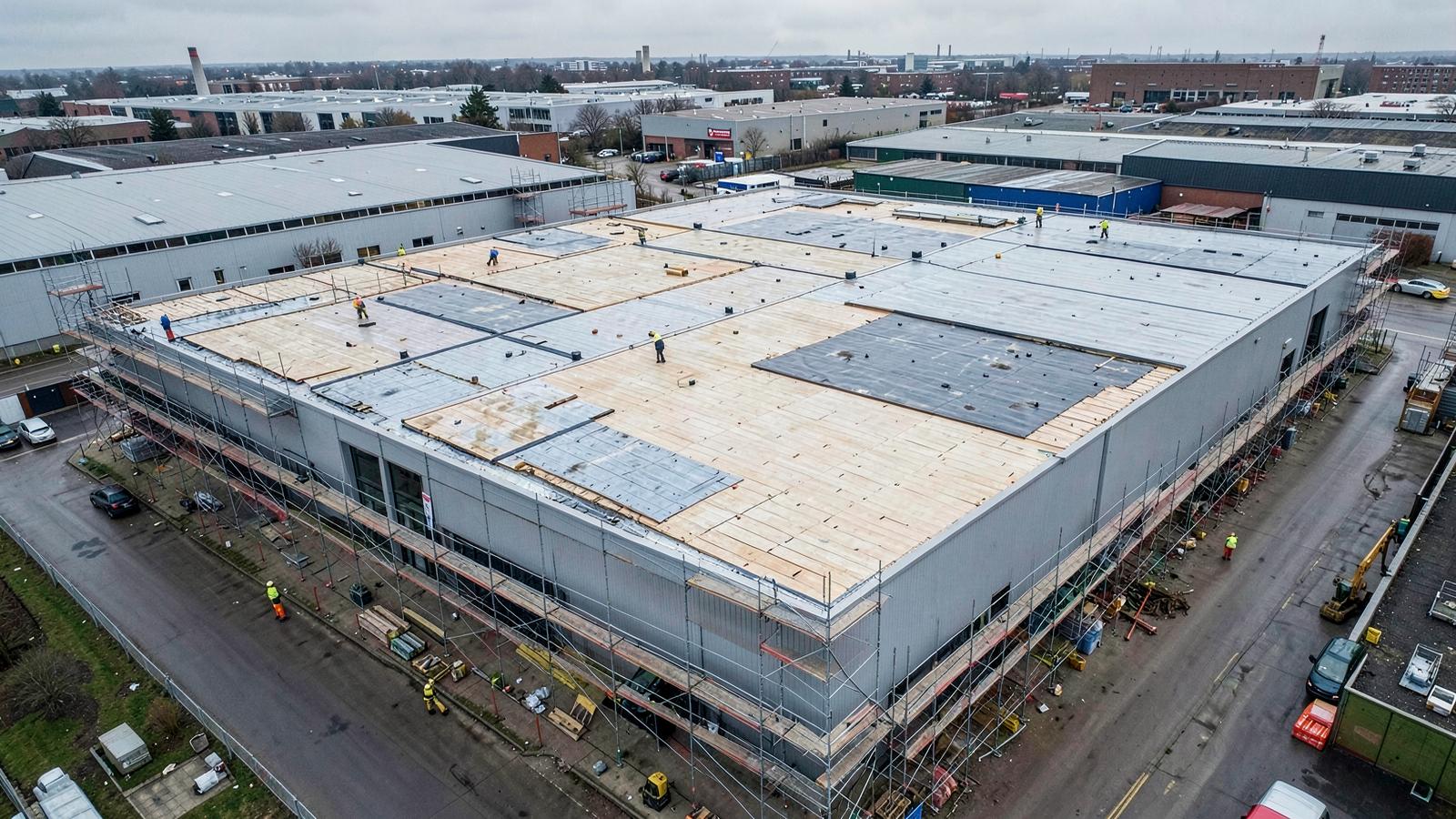
- Comprehensive condition surveys, where every area of the roof needs documenting
- Ongoing maintenance across multiple buildings on one site, where a certified team can move efficiently between access methods
A steeplejack team holding IRATA, PASMA and IPAF certification can fold these harder-to-reach elements into a single maintenance visit, rather than a facilities manager needing to commission a separate specialist every time an inaccessible area needs checking.
Building an Access Strategy Into the Maintenance Plan From the Start
The single biggest gap in most commercial roof maintenance programmes is the assumption that a standard roofing contractor can reach every area that needs inspecting. Building certified access into the maintenance plan from the outset, rather than treating it as an exception when something is found to be unreachable, is what keeps a maintenance programme genuinely comprehensive rather than adequate only on paper.
Get a free, no-obligation commercial roof maintenance assessment from our IRATA, PASMA and IPAF-certified team covering Greater Manchester.