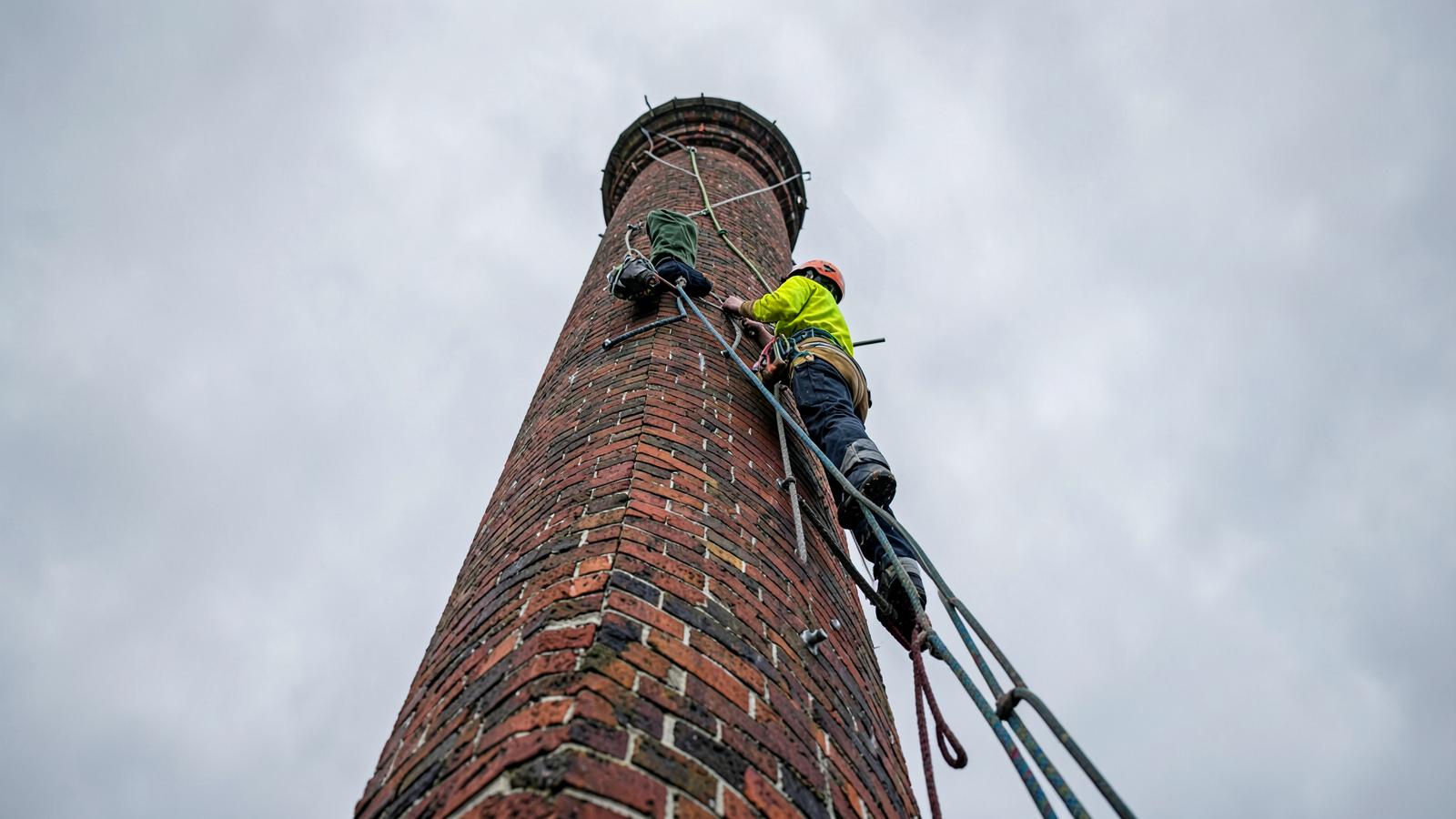
According to the Health and Safety Executive's Work-Related Fatal Injuries in Great Britain report, published July 2025, falls from height caused 35 worker deaths in Great Britain in 2024/25, remaining the single leading cause of workplace fatalities for more than two decades. That statistic alone explains why a niche trade most people rarely think about still matters so much today. When a chimney needs repointing forty metres up, or a church spire needs an urgent structural survey, someone has to be the person who climbs there safely, does the job properly, and comes back down again.
What Is a Steeplejack?
A steeplejack is a tradesperson who specialises in accessing, inspecting, repairing and maintaining tall structures such as chimneys, church spires, towers and industrial stacks, typically using rope access, ladders or scaffolding rather than cranes or cherry pickers. It's a trade that blends traditional masonry and building skills with modern rope access and safety certification. This article explains what a steeplejack actually does, whether the profession still exists today, what separates the best steeplejacks from the rest, and how steeplejack services protect both buildings and the public.
What Does a Steeplejack Do?
A steeplejack repairs, inspects and maintains structures at height that most contractors can't safely reach without specialist access equipment. The role combines hands-on building trade skills, such as brickwork, pointing and leadwork, with the technical discipline of working dozens or hundreds of feet above ground. It's a job that demands both a head for heights and a genuine trade skillset.
Typical steeplejack work includes:
- Chimney stack repair, rebuilding and repointing on domestic and industrial properties
- Church spire and tower restoration, including stonework and lead flashing repairs
- Rope access inspections of facades, roofs and structural elements
- Installing and testing lightning conductor and lightning protection systems
- High-level painting, rendering and cladding repair
- Emergency response to storm-damaged chimneys, parapets and unsafe structures
A Trade Rooted in Practical Skill
Steeplejacks aren't simply "people who work at height." Anyone can be trained to use a harness. What defines the trade is the combination of access competence with genuine building repair skill, so the person doing the climbing is also the person qualified to diagnose and fix what they find. A rope access technician without masonry training can inspect a cracked chimney crown; a steeplejack can inspect it, explain why it cracked, and rebuild it there and then.
Why the Role Still Exists in a World of Cherry Pickers and Drones
Cherry pickers can't reach a church spire on uneven consecrated ground, and drones can survey a structure but can't repoint it. Many of the buildings steeplejacks work on, listed churches, Victorian mill chimneys, terraced housing with no rear vehicle access, simply aren't compatible with mechanical plant. Rope access and traditional steeplejack methods remain the only practical, minimally invasive way to reach and repair these structures.
Are There Any Steeplejacks Left in the UK?
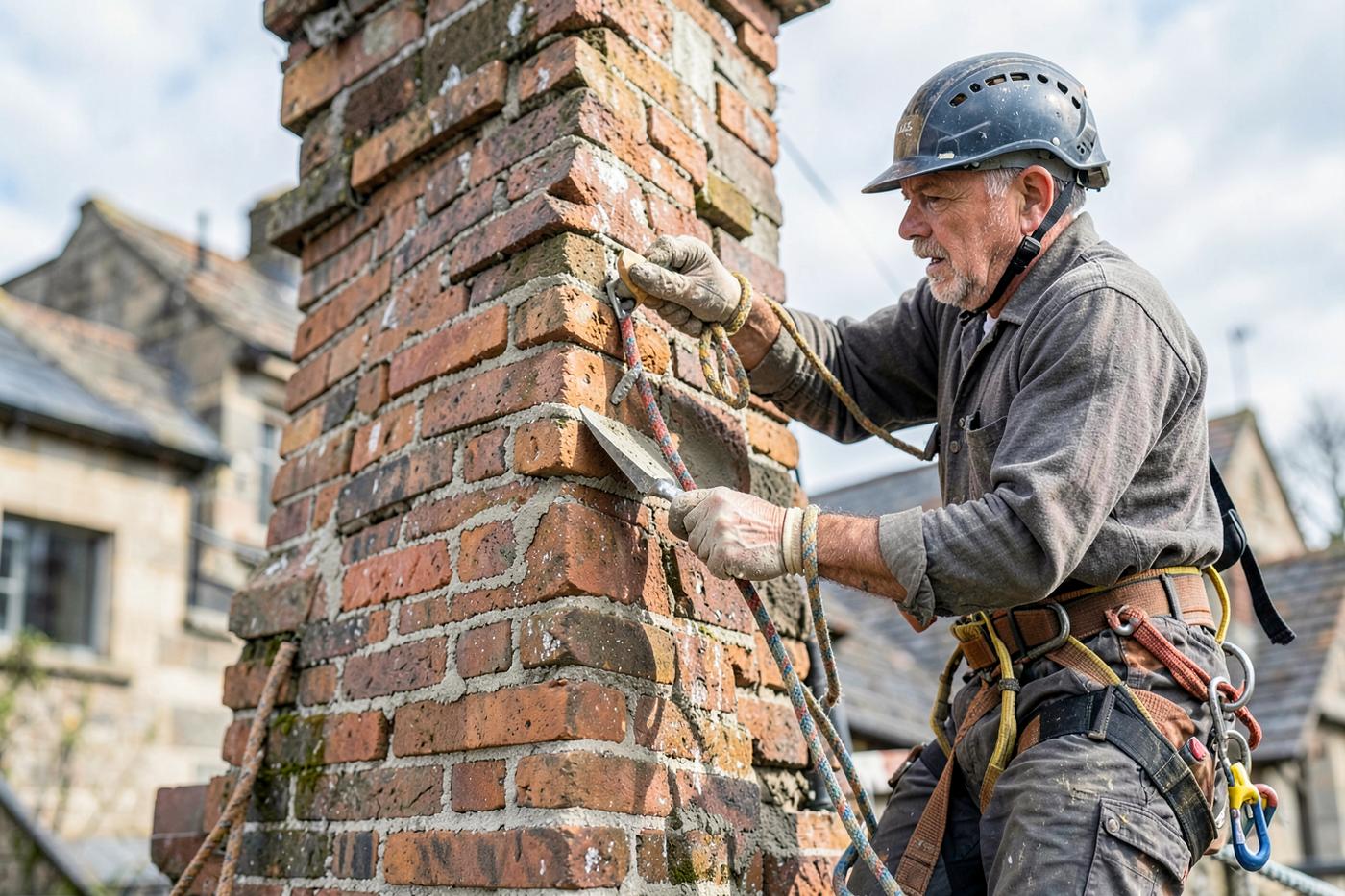
Yes, steeplejacks are still very much active across the UK, though the trade is smaller and more specialised than it was a generation ago. Industry bodies such as the Federation of Master Steeplejacks & Lightning Protection Engineers continue to represent and set standards for practising firms nationwide. In Greater Manchester specifically, with its dense stock of Victorian mill chimneys, terraced housing and church towers, demand for qualified steeplejacks has, if anything, grown alongside heritage restoration and storm-damage repair work.
What has changed is how the trade operates:
- Modern certification has replaced informal apprenticeship as the entry route. Technicians now typically train through IRATA rope access schemes rather than learning purely on the job.
- Rope access has largely replaced fixed scaffolding for inspection and lighter repair work, cutting cost, setup time and disruption for the client.
- Regulatory pressure under the Work at Height Regulations 2005 has pushed less rigorous operators out of the market, consolidating work with properly certified firms.
The trade hasn't disappeared. It's become more professional, more regulated, and in many ways safer than it was decades ago.
What Makes the Best Steeplejacks Different from the Rest?
The best steeplejacks combine recognised safety certification, genuine building repair expertise and a verifiable track record on comparable structures. Because working at height carries real consequences when things go wrong, the gap between a properly accredited team and an underqualified one isn't cosmetic, it's a matter of structural and personal safety.
Look for these markers when assessing a steeplejack contractor:
| Quality Marker | Why It Matters |
|---|---|
| IRATA rope access certification | Independently assessed competence in industrial rope access techniques and rescue procedures |
| PASMA certification | Confirms safe assembly and use of mobile access towers |
| IPAF certification | Covers safe operation of powered access platforms where used |
| Public liability insurance | Protects the client if something goes wrong on site |
| Experience with listed/heritage buildings | Essential for churches, mill chimneys and conservation-sensitive work |
| Written method statements and risk assessments | Shows the job has been properly planned |
| References or before/after project evidence | Demonstrates real-world results |
A steeplejack holding IRATA certification has been independently assessed against the IRATA International Code of Practice, one of the most rigorous safety frameworks in the working-at-height sector. Combined with PASMA and IPAF accreditation, this covers the full range of access methods a project might require, from rope access on a church spire to a tower on a domestic chimney job.
What Steeplejack Services Are Typically Available?
Professional steeplejack services cover the full lifecycle of a tall structure, from routine inspection through to emergency repair. Rather than being a single-skill trade, steeplejack firms are usually structured to handle whatever a building at height throws at them, planned or unplanned.
Core steeplejack services generally include:
- Chimney and masonry repair: repointing, rebuilding, crown repairs and structural stabilisation
- Rope access inspections: detailed visual and structural surveys of facades, roofs and towers
- Church spire and tower restoration: stonework, leadwork and conservation-sensitive repair
- Lightning protection systems: installation, testing and certification to current standards
- High-level painting and cladding: protective coatings and cladding repair on industrial and commercial buildings
- Emergency repairs: rapid-response work following storm damage or when a structure is identified as unsafe
How Steeplejack Services Ensure Build Safety
Steeplejack services protect building safety by catching structural problems early, using access methods matched to the risk, and following documented safety procedures on every job. Regular inspection is the single most cost-effective safety measure a building owner can take, since most chimney and masonry failures develop slowly and are cheap to fix early but expensive and dangerous once they fail suddenly.
- Assess the structure before choosing an access method. A competent steeplejack surveys the building first to decide whether rope access, a tower or scaffolding is the safest, least disruptive option.
- Follow a written risk assessment and method statement (RAMS) for every project, so hazards are identified and controlled before work starts, not discovered mid-job.
- Use certified equipment and rescue plans. IRATA-certified teams work to rescue procedures that mean a technician in difficulty can be reached and lowered safely within minutes.
- Report findings honestly, including issues beyond the original scope, such as a hidden crack found during a routine repointing job, so problems don't go unaddressed.
Considerations When Hiring a Steeplejack
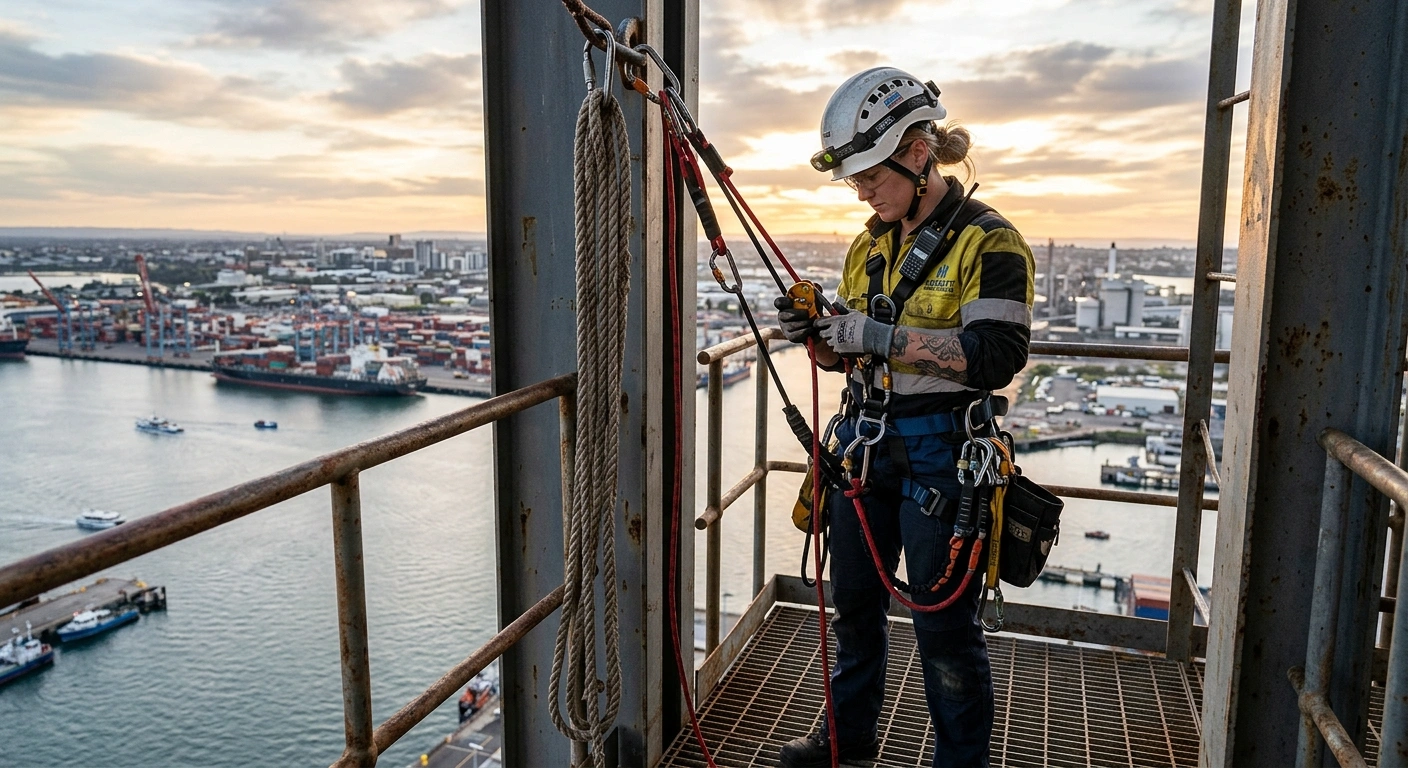
Not every business calling itself a steeplejack firm carries the certification or insurance the work actually demands, and the consequences of getting this wrong fall on the building owner as much as the contractor. An uninsured or uncertified operator working on your chimney or roofline can leave you liable if something goes wrong, from damage to neighbouring property to injury on site.
- Verify certification directly, not just a logo on a van. IRATA, PASMA and IPAF cards can be checked against the individual technician.
- Ask who supervises the job. A qualified Level 3 rope access supervisor should be present on any rope access project.
- Check insurance and RAMS before work starts, particularly for listed buildings, where unauthorised alteration can create legal as well as safety problems.
- Be cautious of unusually low quotes. Cutting corners on access equipment, insurance or certification is often where the savings come from, and it's the client who absorbs the risk later.
The Bottom Line
The steeplejack trade hasn't faded away, it has become more technical, more regulated and arguably more essential as building stock ages and heritage structures need ongoing care. A steeplejack combines genuine building repair skill with certified access competence, which is exactly why the certification behind the company matters as much as the quote itself. For chimney repairs, church tower restoration, rope access inspections or emergency storm damage, the safest and most cost-effective route is a fully certified team who can diagnose the problem and fix it in the same visit.
Get a free, no-obligation quote from our IRATA, PASMA and IPAF-certified steeplejack team covering Greater Manchester.