According toIDS-INDATA's Real Cost of Manufacturing Downtime report, 2026, unplanned downtime is projected to cost UK and European manufacturers over £120 billion in 2026. Most of that figure is the accumulation of smaller delays, deferred inspections and work packages that couldn't be completed in the time available. For anyone planning a plant shutdown, that context matters: the window is fixed, the work list is long, and every activity that can't be completed on schedule either gets deferred at real risk, or pushes the whole plant back online later than planned.
A plant shutdown is a planned period of downtime during which routine operations stop so that maintenance, inspection, repair and compliance work can be carried out safely, work that couldn't otherwise be done while the plant is running. It's a distinct discipline from day-to-day maintenance, since a shutdown compresses a year's worth of deferred tasks into a narrow window measured in days or weeks.
This guide looks at what plant shutdown maintenance typically involves, how shutdown activities get sequenced and managed, and why the physical access method behind certain tasks, particularly anything at height, ends up shaping how much of the work list actually gets completed in time.
What Does Industrial Plant Shutdown Maintenance Actually Cover?
Industrial plant shutdown maintenance covers the inspection, repair and compliance work that can only be safely carried out while equipment is offline, ranging from internal vessel inspection to structural and envelope work on the buildings and stacks around the process itself. A shutdown exists precisely because some work is impossible, or too dangerous, to attempt while the plant is running.
Categories of Work Typically Scheduled Into a Shutdown
- Process equipment maintenance, including vessel entry, internal inspection and mechanical overhaul
- Statutory and compliance inspections, such as pressure system testing and periodic structural checks
- Structural and building fabric work, including roof, cladding and stack inspection or repair unsafe or disruptive during normal operation
- Lightning protection testing and certification, often scheduled alongside other high-level work since it needs the same access
- Deferred repairs, items flagged during routine operation but held back specifically because they needed the plant stopped
Why Some Work Genuinely Can Only Happen During a Shutdown
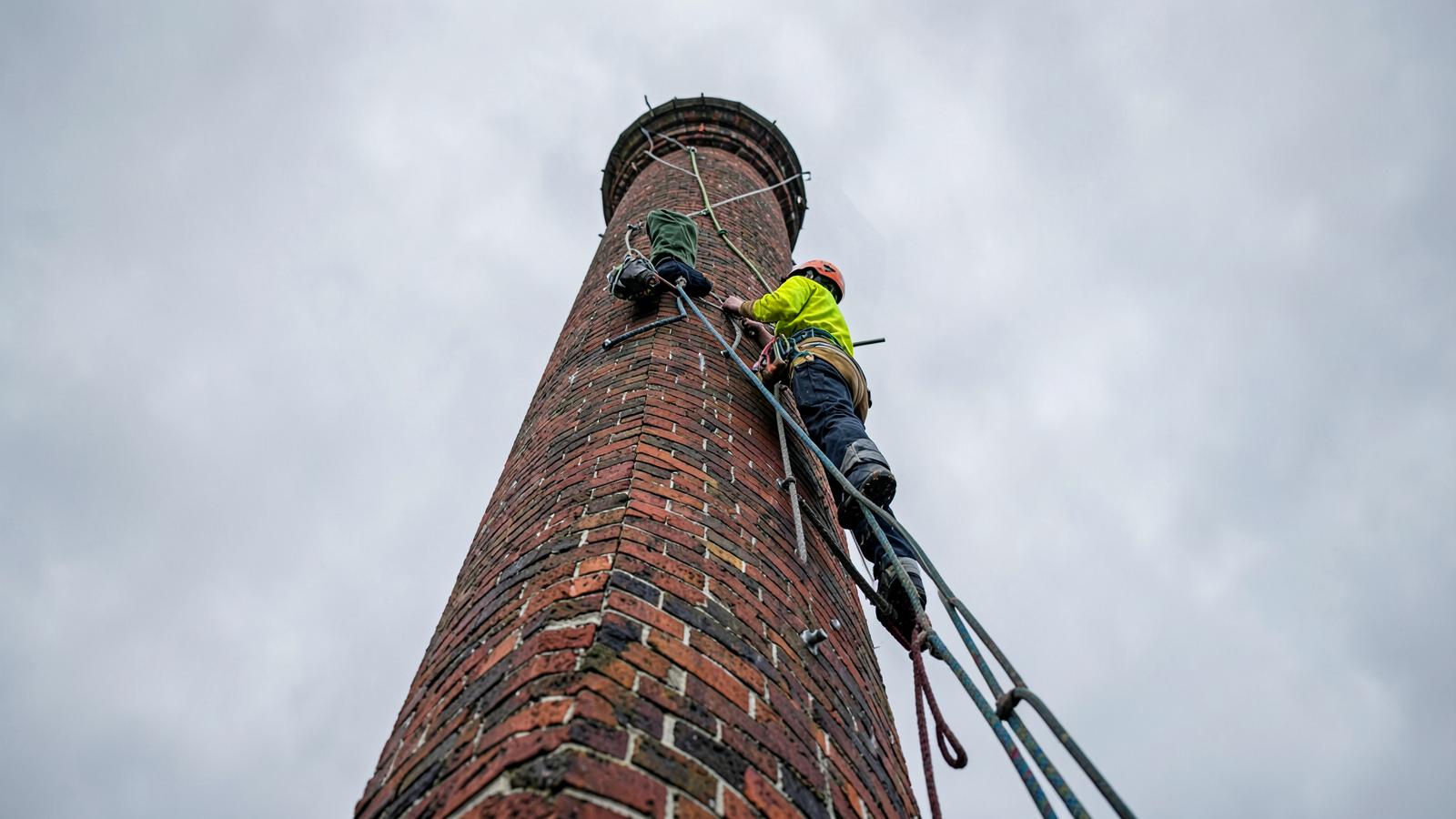
Certain tasks are deferred because doing them with the plant running would be unsafe, or because access to the relevant area simply isn't possible during normal operation. Stack and flue inspection is a common example: many industrial chimneys and process stacks can only be safely accessed once the associated equipment is cold and isolated, which by definition means during a shutdown.
How Is Plant Shutdown Management Typically Structured?
Plant shutdown management is typically structured around a fixed sequence of planning phases that run well ahead of the outage, since the margin for error during the shutdown itself is narrow. Industry benchmarks consistently show that plants starting formal planning further in advance experience fewer cost and schedule overruns than those that leave it late.
The General Planning Sequence
- Scope definition, identifying every task that needs to happen during the window and freezing that list as early as realistically possible.
- Resource and contractor planning, confirming who will carry out each work package and when they'll be on site.
- Sequencing against the critical path, identifying which tasks depend on others being completed first.
- Contingency planning, building in time for the unplanned defects that inspection work almost always uncovers.
- Execution and progress tracking, monitoring actual progress against the plan so slippage is caught early rather than at the next scheduled review.
Why Scope Discipline Matters More Than It First Appears
Late additions to the work list are one of the most consistent causes of shutdown overrun, since every new item competes for the same fixed pool of time, labour and access. A task discovered mid-shutdown, particularly one needing specialist access equipment not already mobilised on site, can push back everything scheduled after it on the critical path.
What Plant Shutdown Activities Depend Most on Access Planning?
The plant shutdown activities most dependent on access planning are the ones involving height, structure or confined space, since these can't simply be done faster by adding more people to the task. Adding labour speeds up many shutdown activities; it does very little for a job that's fundamentally limited by how quickly and safely a team can reach the work area.
Height-Dependent Activities Common in Industrial Shutdowns
| Activity | Typical Access Requirement |
|---|---|
| Stack or flue internal/external inspection | Rope access or tower, depending on stack height and structure |
| Roof and cladding inspection or repair | Scaffolding, rope access, or mobile platform depending on scope |
| Lightning protection testing | Roof and stack-level access to test conductors and earthing points |
| Structural steelwork inspection | Rope access for targeted checks, scaffolding for extensive work |
| Plant enclosure and gantry access | Varies by structure; often a combination of methods on one site |

Why These Activities Tend to Sit on the Critical Path
Height-dependent work often can't start until access has been mobilised, and can't be rushed once underway without compromising safety. On a shutdown with a fixed end date, an access delay at the start of one of these activities has knock-on effects for everything scheduled to follow it, which is why access planning tends to get built into the shutdown schedule as its own distinct line item rather than an assumed part of the wider work package.
Why Does the Choice of Access Method Affect Shutdown Timelines?
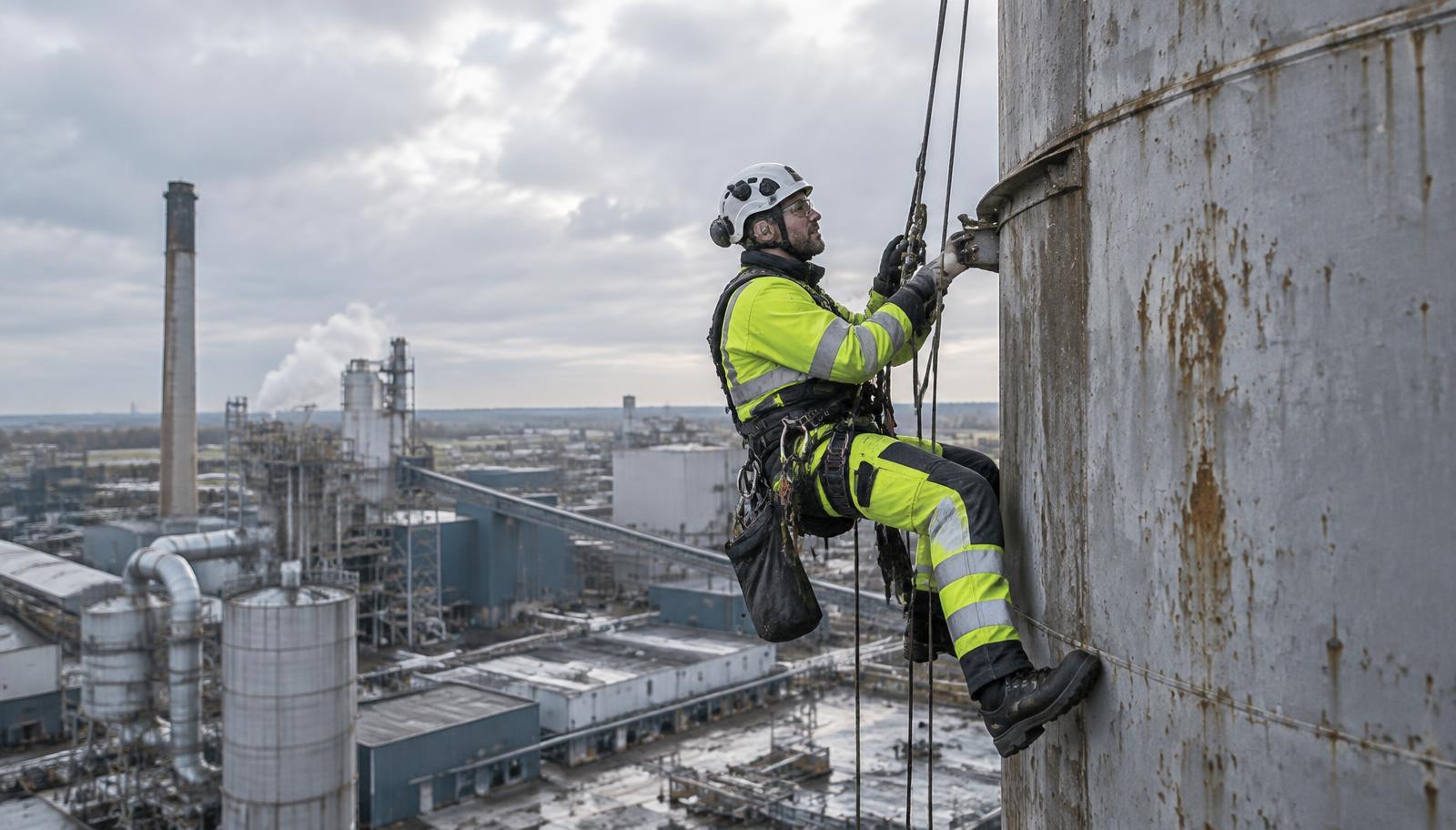
The choice of access method affects shutdown timelines because different methods have very different mobilisation times, and a shutdown window rarely has spare time to absorb a slow start. Scaffolding provides comprehensive, stable access but can take days to erect on a large or complex structure; rope access can often be on the job within hours of arrival, provided the task suits it.
When Rope Access Suits a Shutdown Better Than Scaffolding
Rope access tends to work well for shutdown tasks that are targeted rather than extensive, inspections, spot repairs, or work on a single stack or structure, where erecting full scaffolding would take longer than the task itself. It also suits sites where scaffolding isn't practical due to surrounding plant or restricted space.
When Scaffolding Remains the Better Choice
For extensive structural work, or where multiple trades need simultaneous access to the same area over several days, scaffolding often still makes more sense despite the longer setup time, since it removes the need to coordinate several separate mobilisations across the shutdown.
Where Does Specialist Access Competence Actually Matter During a Shutdown?
Specialist access competence matters most during a shutdown when the task involves height, an unfamiliar structure, or genuine time pressure, conditions where the margin for a slow or unsafe approach is smallest. A team with rope access certification can typically assess a stack, structure or roof area and begin work far faster than one that first needs to establish a conventional access solution from scratch.
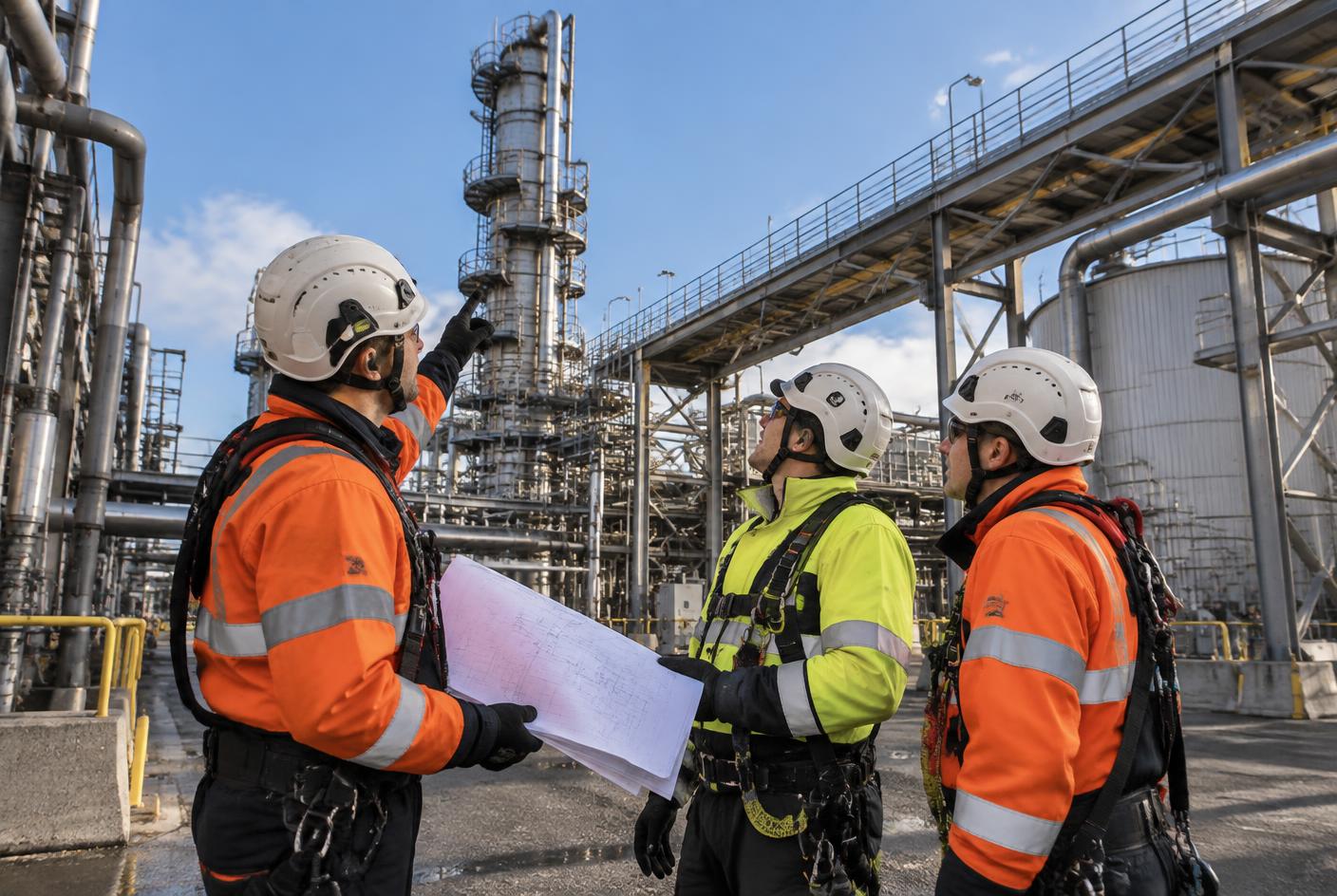
This is where certified steeplejack and rope access teams fit into a shutdown programme, as the practical answer to activities that were always going to depend on fast, safe, competent access at height. Industrial stacks, roof-level lightning protection systems and structural steelwork inspections all fall into this category: work that genuinely can't wait for a slower access solution without eating into the shutdown's fixed timeline.
What Goes Wrong When Access Isn't Planned Into the Shutdown Early
The most common access-related problems during a shutdown are smaller delays that compound as the window runs down. A task that could have started on day one sometimes doesn't get underway until day three, simply because the right access method wasn't confirmed or mobilised in advance.
Common Access Planning Gaps on Industrial Sites
- Assuming standard scaffolding will suit every height-dependent task, when a smaller or more targeted job would have been faster with rope access
- Leaving stack and roof-level inspections until access can be arranged mid-shutdown, rather than booking a specialist team into the schedule from the outset
- Underestimating how long certain structures take to survey properly, particularly on older industrial buildings with fragile or unfamiliar roof coverings
- Treating access as part of a wider contractor's scope, when the contractor's own competence may not actually cover certified rope access or complex structural access
Each of these is avoidable with earlier planning, but each becomes considerably harder to fix once the shutdown window has already opened and the schedule has no slack left to absorb a rethink.
Getting Height-Dependent Work Off the Critical Path
The activities most likely to derail a shutdown schedule are often the ones involving height and structure, because access to the work takes time that a fixed window doesn't have to spare. Building access planning into the shutdown schedule from the outset, rather than treating it as a detail to sort out once the window opens, is what keeps these activities from becoming the bottleneck the rest of the shutdown gets measured against.
If a shutdown on your site includes stacks, roofs or structural work at height, we can help plan the access around your schedule. Get in touch to discuss your next shutdown.