According toIRATA International's World Safety Analysis report, 2025, which reviews global rope access activity for 2024, 61% of all reported incidents on rope resulted in no injury at all, part of a broader safety record that has helped rope access become an established method across industrial and process sectors. That safety record is one reason rope access now appears so routinely on turnaround schedules, but it isn't the only one. Speed of mobilisation matters just as much on a plant turnaround, where every access method has to earn its place within a fixed window.
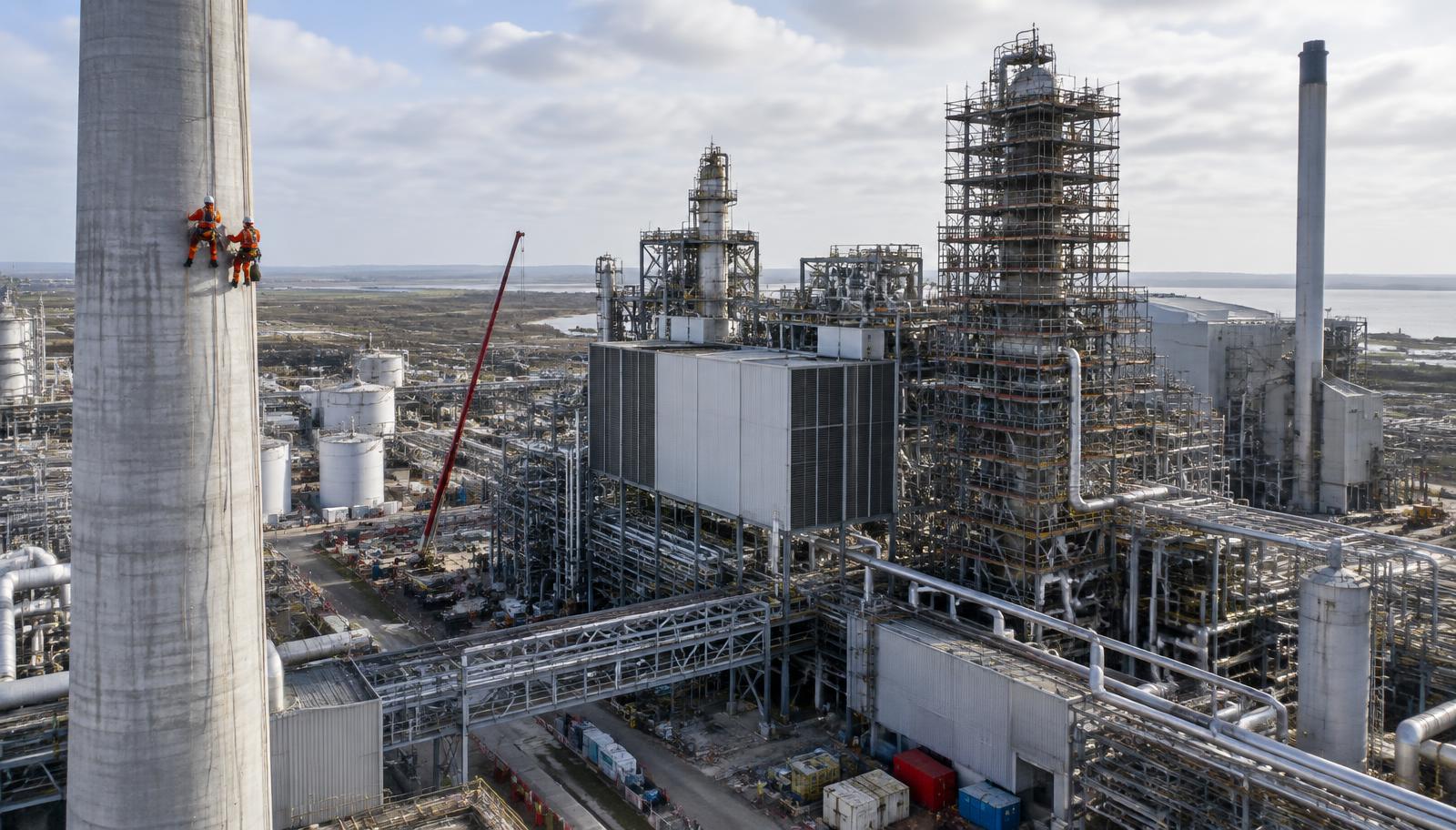
A plant turnaround is a scheduled, whole-unit shutdown, typically longer and broader in scope than a routine outage, during which a facility undergoes extensive maintenance, inspection and capital work before returning to production. Industrial turnarounds differ from smaller shutdowns mainly in scale: more work packages, more contractors, and a longer but still finite window in which everything has to be completed.
This guide looks at how turnaround planning is typically structured, what turnaround maintenance usually covers, and where rope access and other height-based work fit into the wider process.
How Is Turnaround Planning Typically Structured?
Turnaround planning is typically structured as a long-lead process that begins many months before the actual outage, since the work compressed into the turnaround window is far too extensive to plan reactively. The planning phase is where most of the decisions that determine a turnaround's success or failure actually get made.
The Core Phases of Turnaround Planning
- Scope development, drawing on inspection history and condition data to build the full list of work required.
- Scope freeze, locking the work list at a defined point so procurement, scheduling and contractor planning can proceed on stable information.
- Resource and contractor scheduling, confirming who does what and when, including any specialist access requirements.
- Critical path mapping, identifying which tasks determine the overall duration and which have flexibility around them.
- Execution and progress tracking, monitoring the plan against reality so deviations are caught and managed early.
Why the Scope Freeze Matters So Much
Work added after the scope freeze competes for time and resources that were already fully allocated, which is why late additions are one of the most reliable predictors of turnaround overrun. Anything requiring specialist access equipment is particularly exposed here, since that equipment and the certified team behind it usually needs booking well in advance rather than sourced at short notice.
What Does Industrial Turnaround Maintenance Actually Include?
Industrial turnaround maintenance includes the full range of work that can only, or can more safely, be carried out while the unit is offline, spanning internal equipment work through to the structural and envelope condition of the site around it. The list is broad by design, since a turnaround is the one point in the operating cycle where nearly everything becomes accessible at once.
| Work Category | Typical Scope |
|---|---|
| Process and mechanical | Vessel entry, internal inspection, equipment overhaul |
| Statutory and compliance | Pressure testing, periodic structural certification |
| Structural and envelope | Roof, cladding, stack and structural steelwork condition |
| Electrical and lightning protection | Testing, earthing checks, conductor inspection |
| Capital and improvement work | Upgrades or modifications timed to coincide with the outage |
Why Height and Structural Work Sits Alongside Process Work
It's easy to think of a turnaround purely in terms of the process equipment inside the plant, but the structures around and above it, stacks, roofs, gantries, are just as often on the work list, and for the same reason: certain inspections and repairs on these elements genuinely can't be done safely while the plant is running.
Where Does Rope Access Fit Into the Turnaround Schedule?
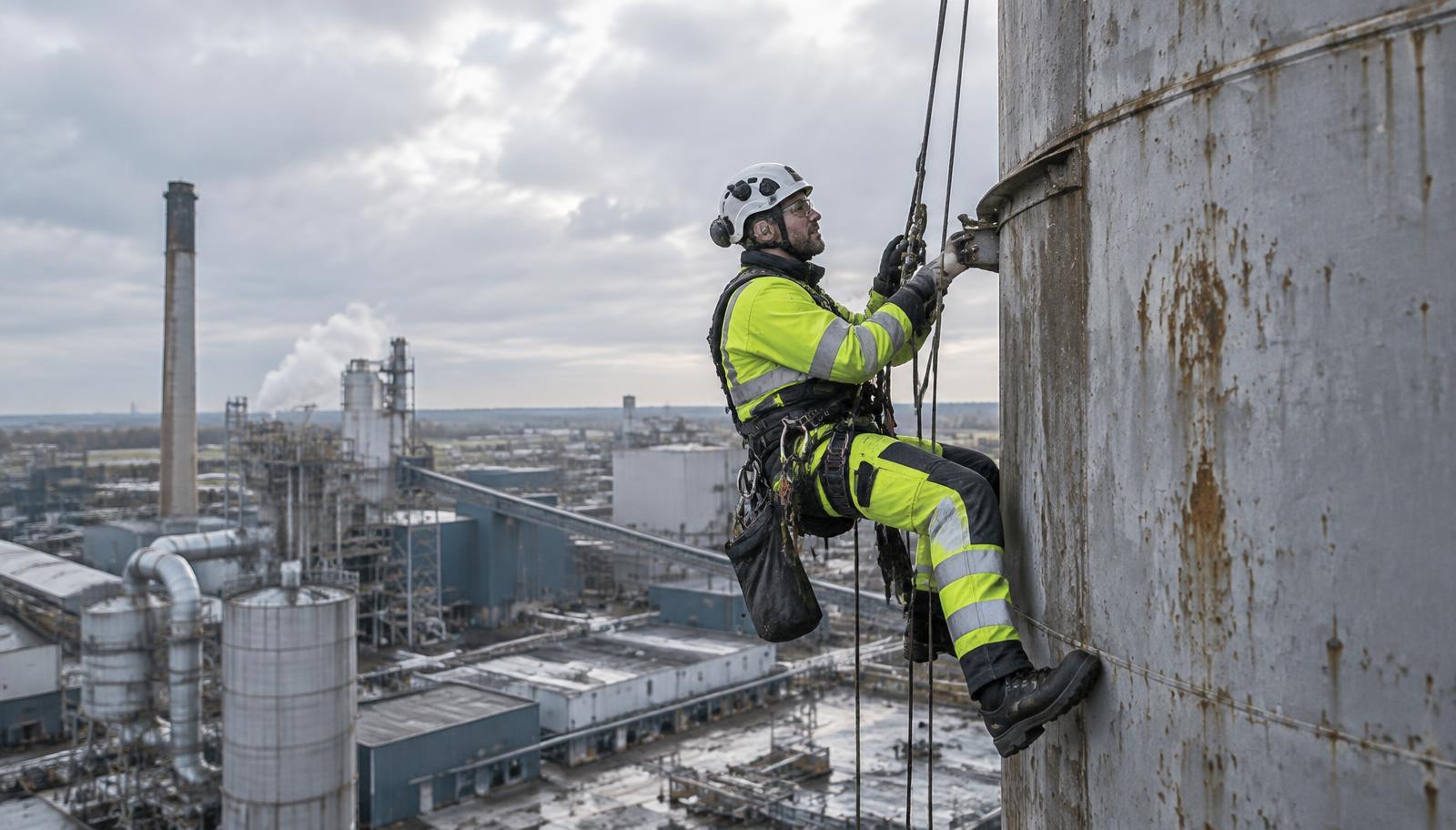
Rope access fits into a turnaround schedule wherever a task is height-dependent, relatively contained in scope, and sits on a timeline that can't absorb the days a full scaffold build would take to set up. The appeal is the ability to start work almost as soon as the team arrives on site, rather than waiting for access to be built first.
Tasks Commonly Suited to Rope Access During a Turnaround
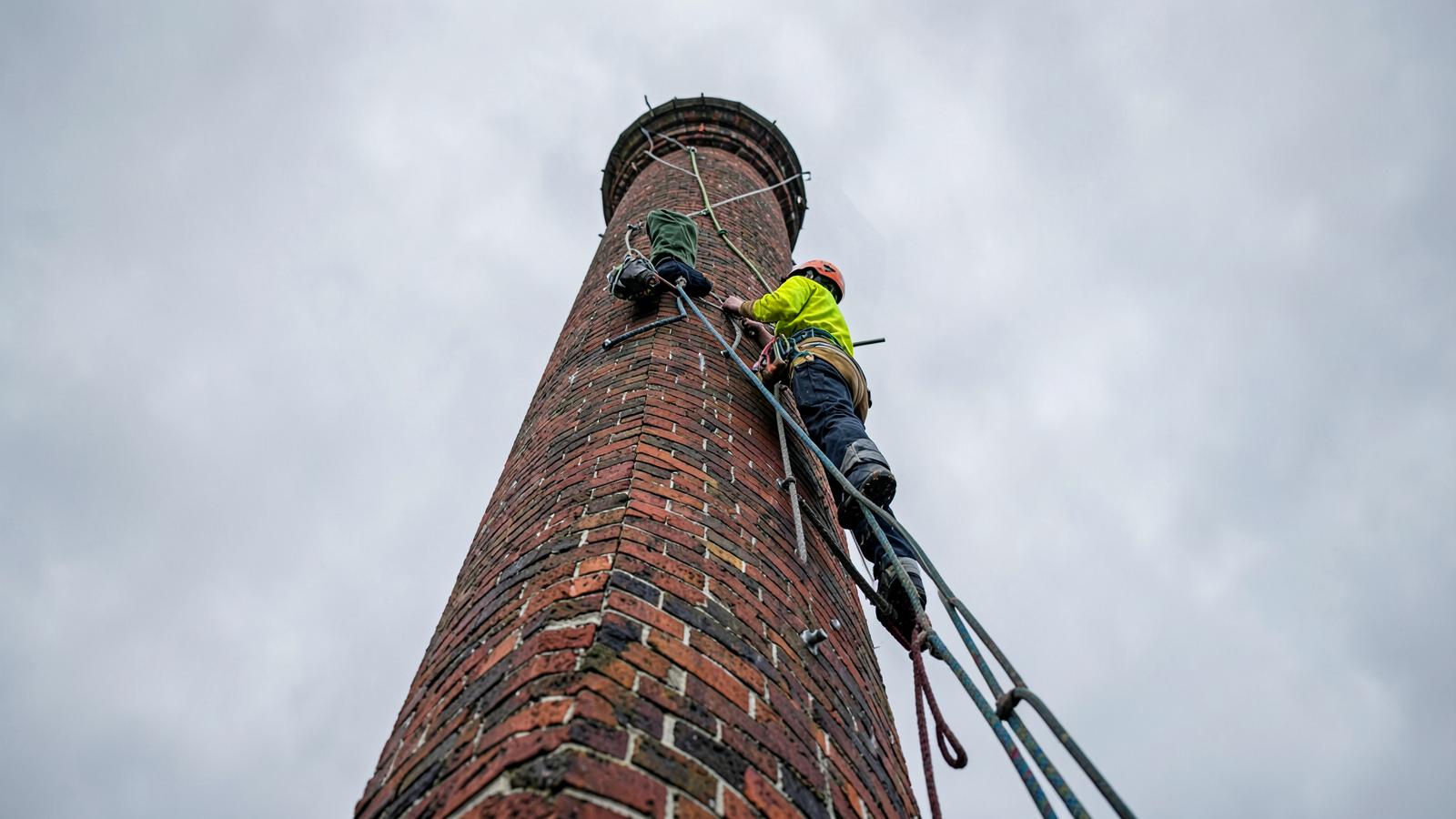
- Stack and flue inspection, particularly where the structure is only accessible while associated equipment is cold and isolated
- Targeted structural steelwork checks, where a handful of specific points need inspecting rather than an entire structure
- Roof and cladding spot repairs, identified during a wider survey but not requiring full scaffold coverage
- Lightning protection testing, which typically needs to reach roof and stack-level conductors rather than an entire elevation
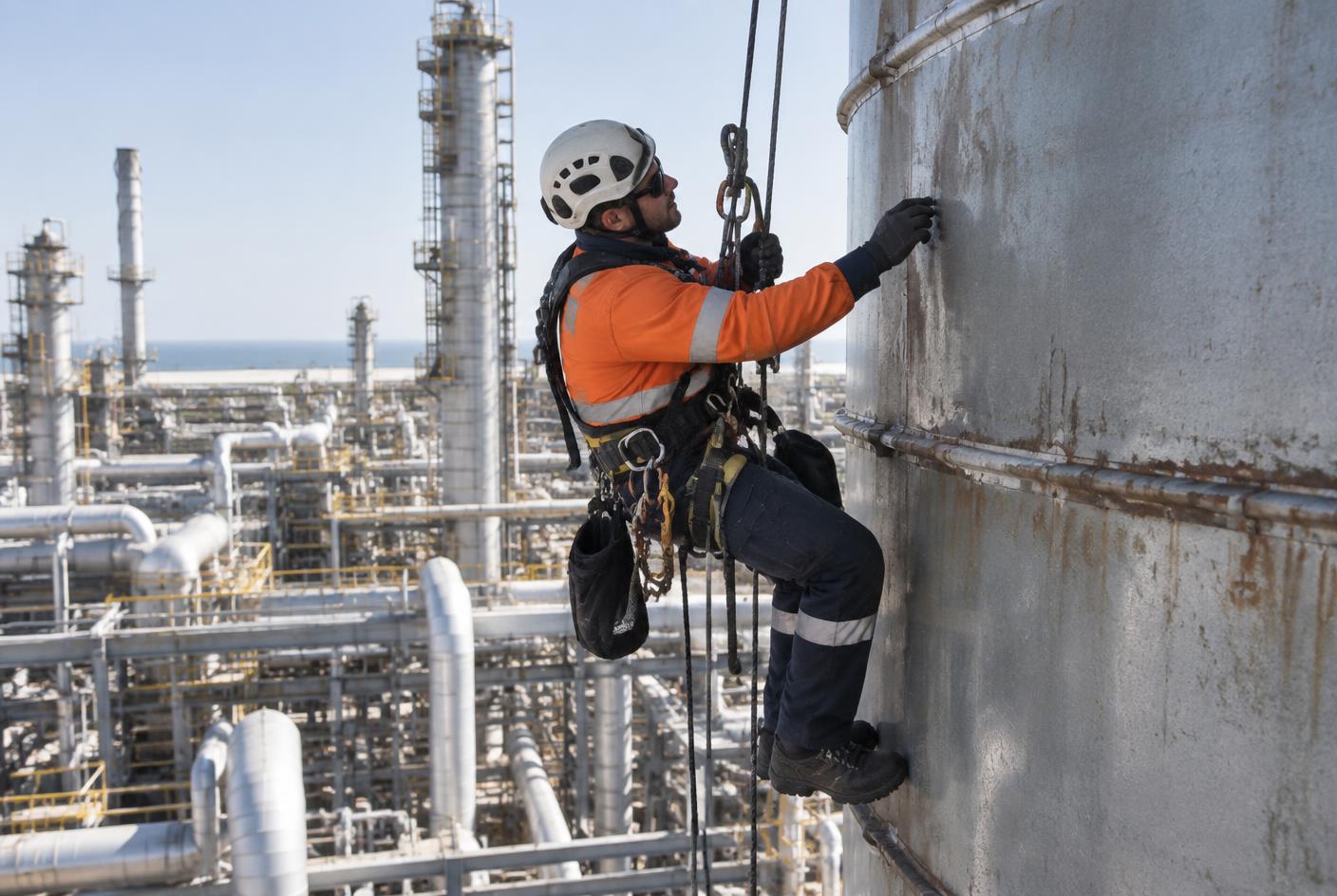
Not every height-dependent task suits this approach. Extensive structural work, or anything needing multiple trades working the same area simultaneously over several days, generally still calls for scaffolding, since the coordination benefits outweigh the slower setup.
Why Certified Access Competence Tends to Show Up on Turnaround Schedules
Certified access competence tends to show up specifically where a turnaround's fixed timeline collides with a task that's genuinely difficult to reach. Teams who combine structural repair skill with recognised rope access qualifications are, in practice, well placed for exactly this kind of work: assessing a stack or roof area, carrying out the inspection or repair, and doing so within a schedule that has little room to spare. It's less a matter of one contractor being marketed for the job and more that the combination of skills required narrows the field considerably once height, structure and a fixed deadline are all in play together.

The Planning Discipline That Keeps Height Work on Schedule
A turnaround succeeds or struggles largely on the strength of its planning, and height-dependent work is one of the clearest places that discipline gets tested. Building access requirements into the scope early, rather than discovering mid-turnaround that a stack or roof area needs specialist attention, is what keeps these tasks from becoming the item everything else waits on.
If height-dependent work is part of your next turnaround scope, we can talk through how rope access might fit your schedule. Get in touch to discuss your turnaround access needs.