According to the Health and Safety Executive's provisional 2025/26 fatal injury statistics, falls through fragile roofing materials account for more roofing deaths than any other single cause, and a significant proportion of those killed are general maintenance staff and builders working on roofs without specialist training. For anyone responsible for an industrial building, that statistic reframes what "fixing the roof" actually involves. The access method behind the repair carries its own risk, particularly on ageing metal and sheeted roofs.
Industrial roof repairs cover the range of fixes needed on metal, sheeted and profiled industrial roofing systems, from corroded sheeting to failed fasteners and degraded rooflights. Unlike flat membrane roofing, industrial roofs are usually built from profiled steel or fibre cement sheets fixed to a structural frame, and the ways they fail are correspondingly different.
This guide covers six of the most common problems on industrial roofs, how each is typically fixed, and where the physical access needed to fix industrial roof problems safely becomes as important as the repair itself.
What Makes Industrial Roof Repairs Different from Flat Roof Work?
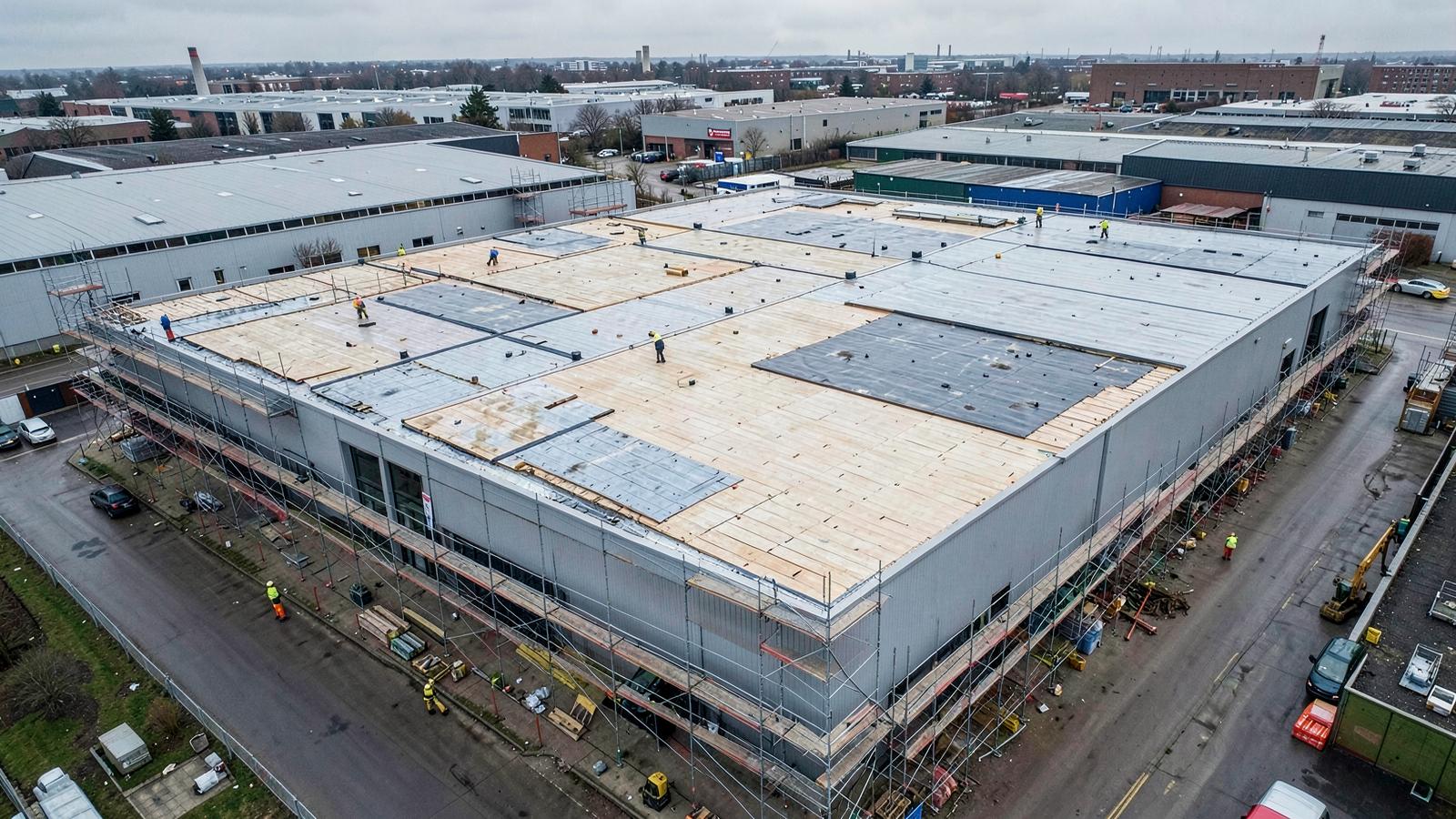
Industrial roof repairs differ from flat membrane roofing because the roofing system itself is different: profiled metal or fibre cement sheets, fixed with mechanical fasteners, rather than a continuous waterproof membrane. A single failed fastener or a corroded sheet edge on an industrial roof can let water in just as effectively as a membrane split, but the diagnosis and repair method are entirely different.
Age is also a bigger factor here than on many flat roofs. A large share of the UK's industrial building stock was built with roof sheeting decades ago, and older sheets, particularly older fibre cement types, bring their own specific risks around fragility that need to be factored into any repair plan before work even starts.
The Six Most Common Industrial Roof Problems
1. Corroded or Perished Metal Sheeting
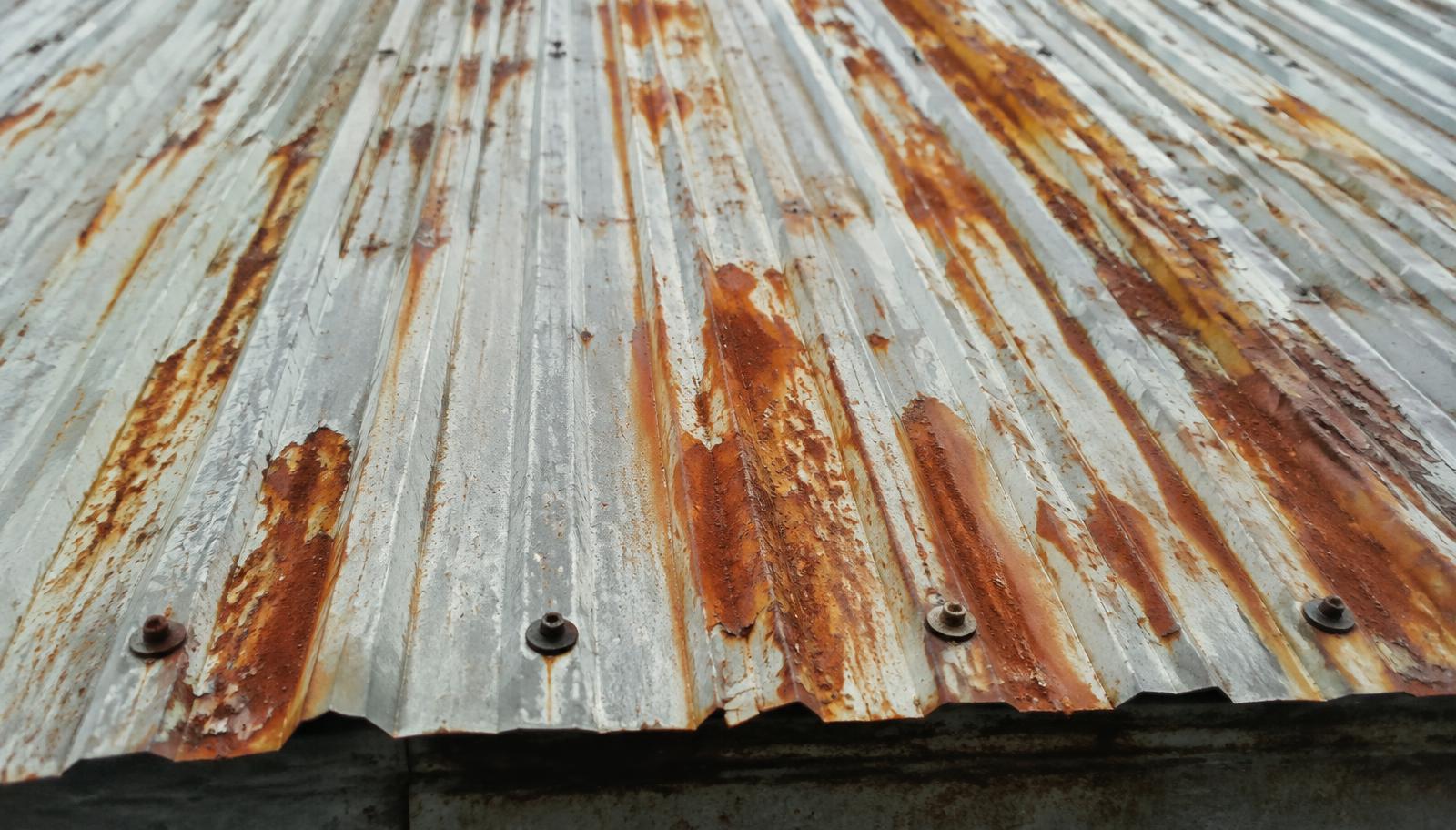
Corrosion is one of the most frequent reasons for industrial metal roof repair, particularly where the original protective coating has worn through or wasn't specified to match the site's environment. Coastal, industrial and heavily polluted environments accelerate this process considerably, sometimes cutting a sheet's expected lifespan by years. Small areas of surface corrosion can often be treated and recoated, but once corrosion has perforated the sheet, the affected panels need replacing rather than patching.
2. Failed Fasteners and Fixings
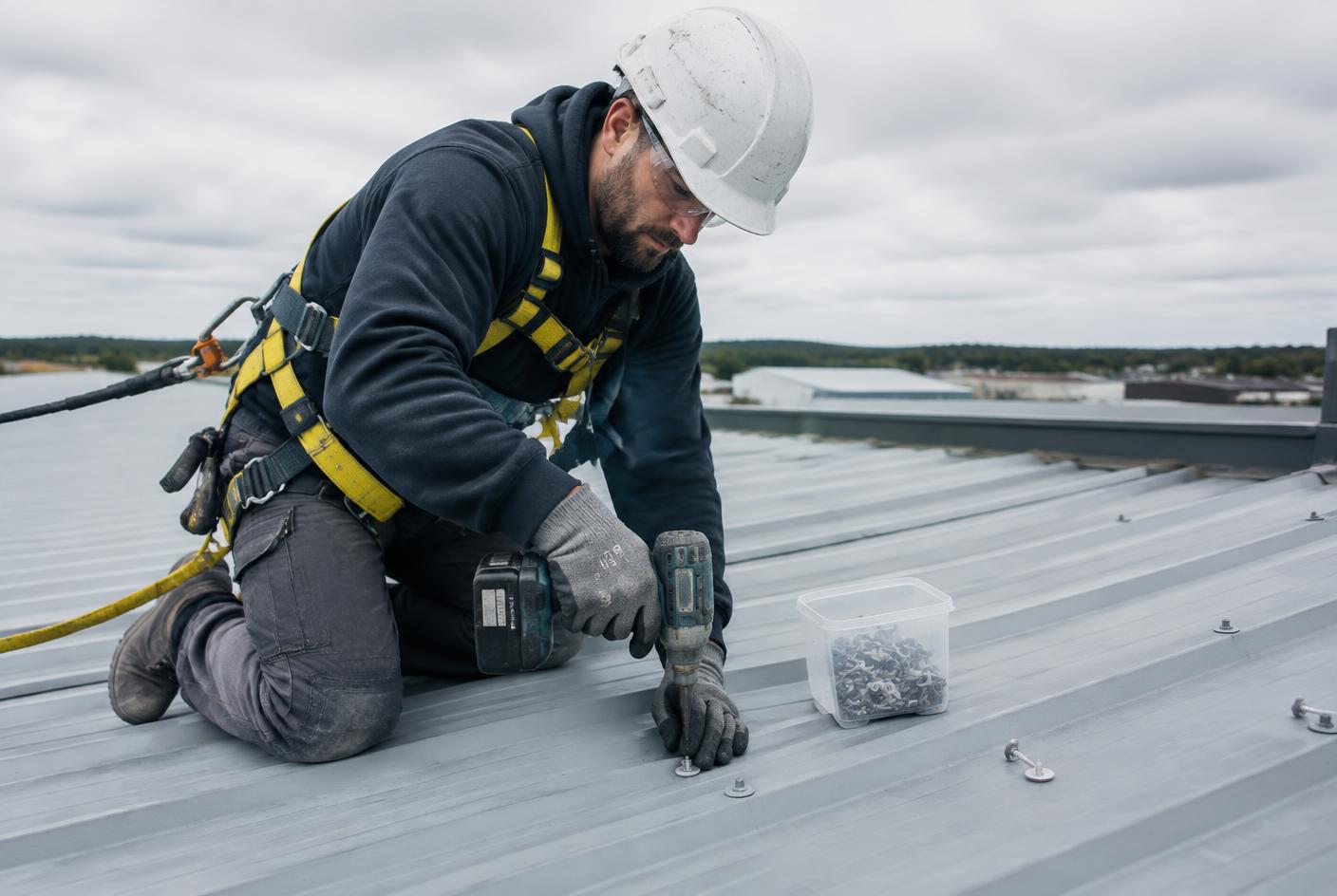
Roof sheets are held in place by mechanical fasteners that, over time, can back out, corrode, or pull through the sheet material entirely, particularly in exposed, high-wind locations. A single failed fastener creates a weak point that worsens with every subsequent wind loading cycle. The fix usually involves replacing the fastener with a correctly specified type and washer, though widespread fastener failure across a roof area often points to a broader specification issue worth addressing at once rather than fastener by fastener.
3. Leaking Side and End Laps
Where roof sheets overlap, at both the side laps between adjacent sheets and the end laps where sheets join along a slope, sealant and mechanical fixing can degrade over time, creating a common source of industrial roof leak repair callouts. These laps are engineered to shed water, not stop it entirely, which is why a failing lap seal often shows up as a leak only during heavy or wind-driven rain rather than constantly. Repair typically means resealing or refixing the lap correctly, though a lap that keeps failing in the same spot can indicate the original roof pitch or sheet overlap wasn't sufficient for the location.
4. Rooflight Degradation
Polycarbonate and GRP rooflights degrade with UV exposure over time, becoming brittle, yellowed, and prone to cracking or leaking at their fixing points. A degraded rooflight is also a safety hazard in its own right, since aged rooflights are a well-documented cause of falls through fragile roofing materials. Repair generally means replacing the rooflight unit entirely rather than attempting a surface fix, since a rooflight that has lost structural integrity from UV degradation won't regain it from a sealant repair.
5. Blocked or Failing Valley Gutters
Valley gutters, the low points between roof pitches where water is channelled to outlets, are prone to debris blockage and, over time, corrosion or splitting at their joints. A blocked valley gutter causes water to back up and overflow rather than drain away, often showing up as a leak some distance from the actual blockage. Repair ranges from a straightforward clear-out to gutter lining or replacement where corrosion has compromised the material itself.
6. Coating and Paint System Breakdown
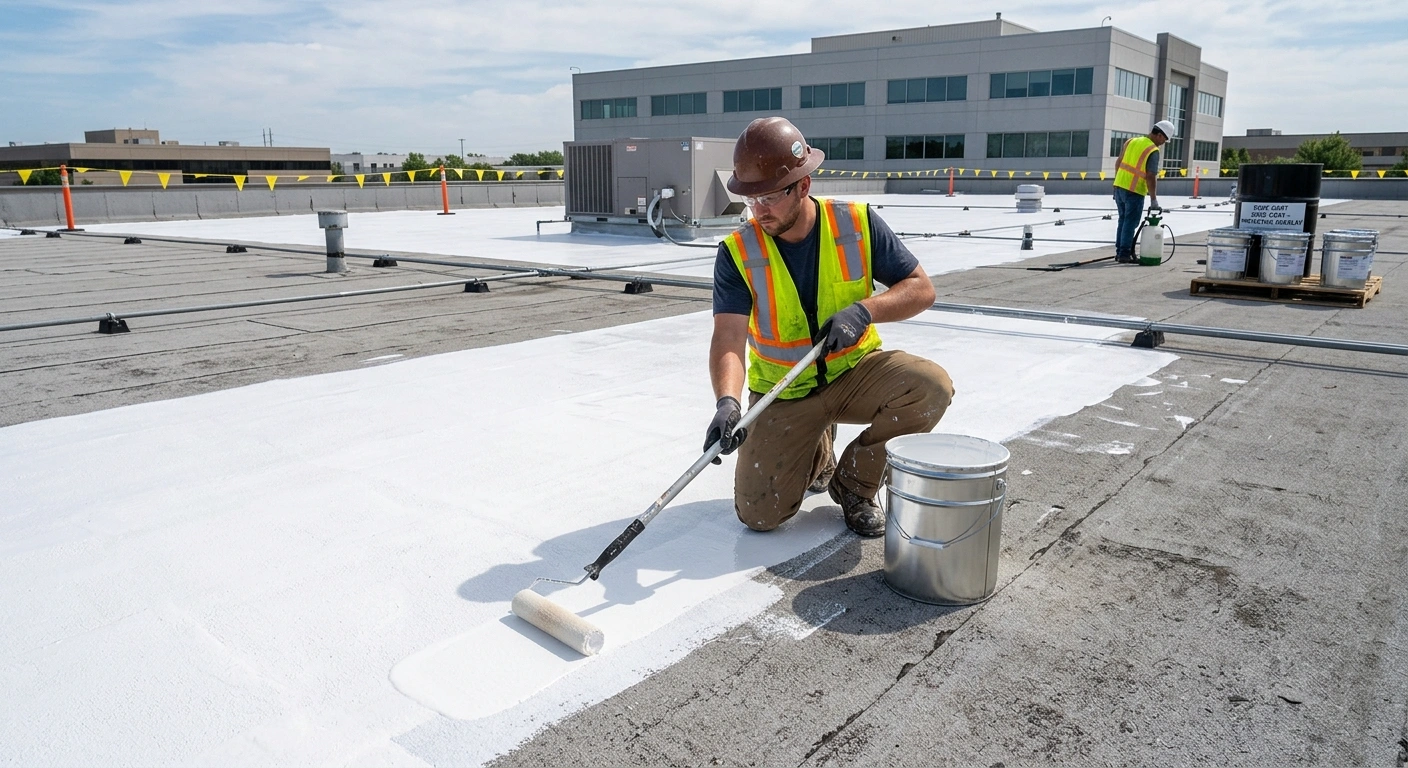
The protective coating on a metal roof, whether a factory-applied finish or a later-applied liquid coating, eventually chalks, fades and loses its protective properties, exposing the underlying metal to accelerated corrosion. Coating breakdown is often the earliest visible sign that a roof needs attention, well before any actual leak appears. Recoating at this stage, cleaning, priming and reapplying a suitable protective system, is usually far cheaper than waiting for corrosion to set in and requiring sheet replacement instead.
Industrial Roof Problems at a Glance
| Problem | Typical Cause | Typical Fix |
|---|---|---|
| Corroded metal sheeting | Coating failure, environmental exposure | Recoat surface corrosion; replace perforated sheets |
| Failed fasteners | Age, wind loading, incorrect original specification | Replace fastener and washer; review specification if widespread |
| Leaking side/end laps | Sealant degradation, insufficient overlap | Reseal or refix; assess pitch/overlap if recurring |
| Rooflight degradation | UV exposure, age | Replace rooflight unit |
| Valley gutter failure | Debris blockage, corrosion, joint splitting | Clear, reline, or replace as needed |
| Coating breakdown | UV exposure, age, original coating quality | Clean, prime and recoat |
How Does a Typical Industrial Roofing Repair Process Work?
A typical industrial roofing repair process starts with a proper survey rather than jumping straight to a fix, since several of the six problems above can look similar from the ground but need very different repairs. Correctly diagnosing which of the six problems is actually causing a leak or defect is what determines whether the fix takes an hour or a week.
- Survey the roof and identify the actual defect, distinguishing between the possible causes rather than assuming based on where a leak appears inside.
- Assess the wider roof condition, since an isolated repair on a roof with widespread coating or fastener issues may only delay a larger job.
- Confirm the safest access method for the task, based on roof pitch, sheet condition and whether any areas are fragile.
- Carry out the repair, using materials and fixings matched to the existing system rather than mismatched replacements.
- Check adjacent areas while access is already in place, since related defects, such as fastener issues near a failed lap, often cluster together.
Why Does Access Matter So Much on Industrial Metal Roofs?
Access matters on industrial metal roofs because many of the repairs above, replacing sheeting, refixing laps, recoating large areas, involve standing on or moving across a surface that isn't always as sound as it looks. A roof that appears structurally fine from the ground can include fragile rooflights, corroded sections, or sheeting that won't safely bear weight, none of which is obvious until someone is actually up there.
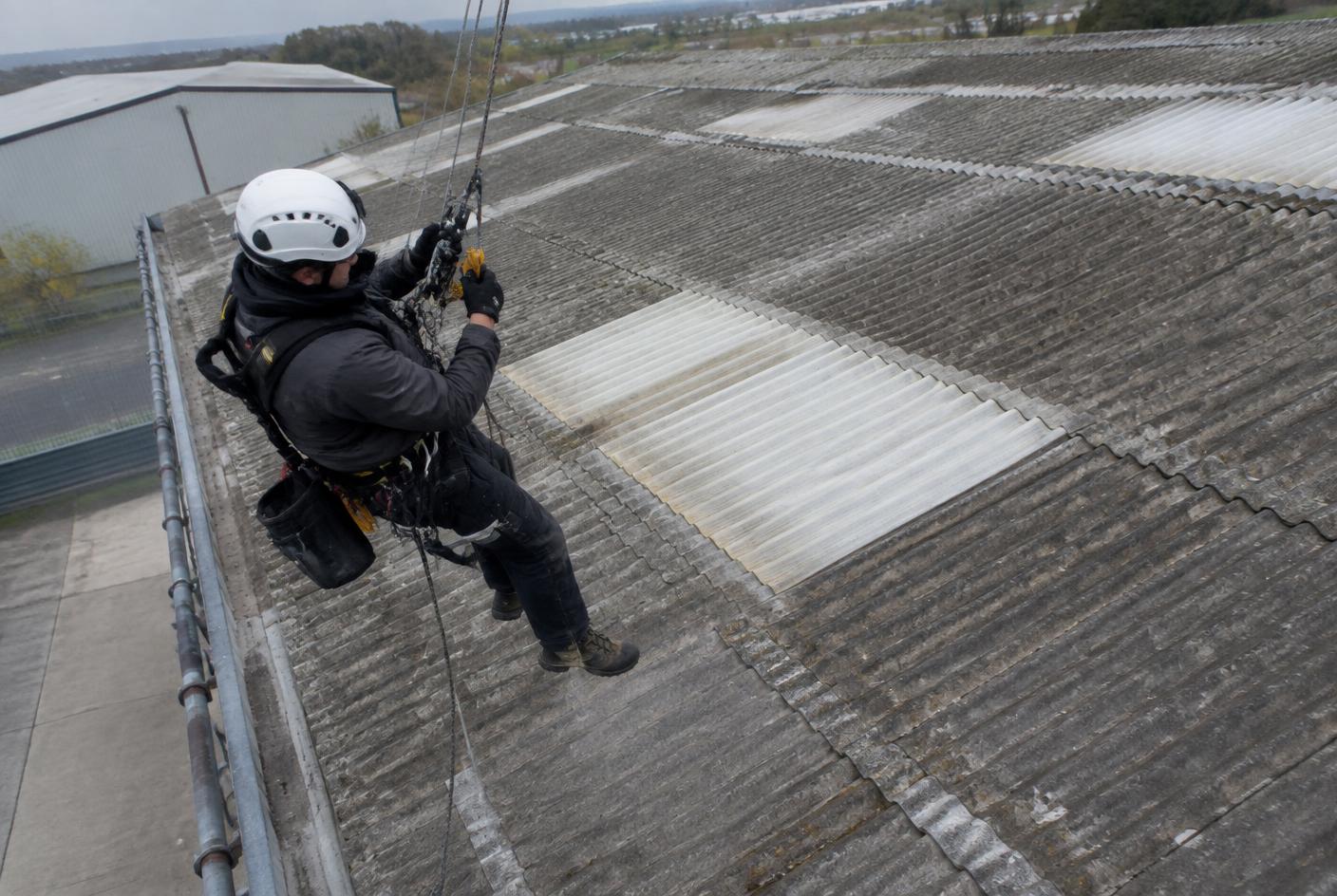
Older fibre cement sheeting in particular carries a fragility risk that isn't always visible during a walk-round inspection, which is part of why industrial roof sheeting repair work is treated differently from repairs on newer, known-good roofing systems. Crawling boards, distributed load equipment, or roped access from above the roof plane are all methods used specifically to avoid putting weight directly on sheeting whose condition hasn't yet been confirmed.
Common Precautions Before Work Begins
- Identifying fragile areas before anyone accesses the roof, rather than discovering them by weight-testing in real time
- Using roof ladders, crawling boards or edge protection appropriate to the roof type and pitch
- Confirming sheet material and age, since older fibre cement sheeting carries different risk considerations than modern steel systems
- Assessing whether rope access from above avoids the fragility question entirely, particularly on roofs with known problem areas
Teams that combine structural roofing knowledge with formal height access training tend to be better placed to make these calls correctly, since the decision about how to safely reach a repair is, in practice, inseparable from understanding what's actually wrong with the roof in the first place.
Getting the Diagnosis Right Before the Repair Starts
The six problems covered here rarely announce themselves clearly, a leak inside a building can point to any of several possible causes on the roof above it, which is why an accurate survey matters more than the repair itself in most cases. Getting the diagnosis right, and matching the access method to the actual condition of the roof rather than assuming it from the ground, is what keeps a repair from becoming a repeat callout a few months later.
Spotted one of these problems on your industrial roof, or not sure what's causing a leak? Get in touch for a survey and repair quote.