Closing an operational industrial site for weeks to replace its roof is rarely an option any facilities manager can actually put forward. According to Fluke Corporation's 2025 downtime research, conducted with Censuswide, 68% of UK manufacturers suffered unplanned downtime in the past year, at an average cost of £1.36 million per hour for larger manufacturers, a figure that makes the idea of a voluntary, weeks-long production stoppage for roofing work a non-starter for most sites. That leaves an obvious question: can an industrial roof replacement actually happen on a live site, or is that an idea that only works on paper?
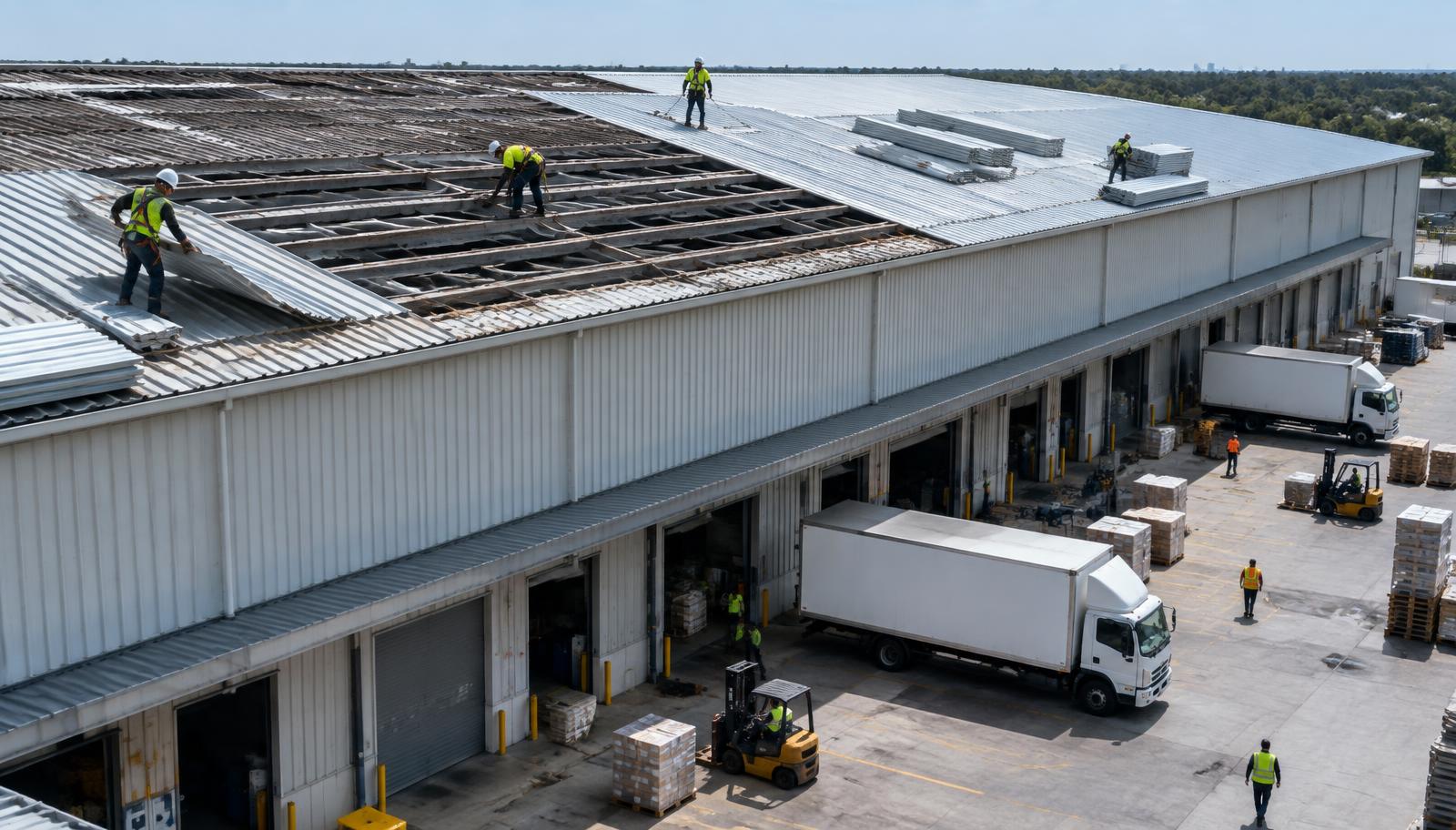
Industrial roof replacement on a live site means removing and renewing the roof covering while the building beneath continues to operate, as opposed to a vacant possession project where the whole structure sits empty for the duration. It's a different discipline from replacing a roof on an empty shell, with its own sequencing, protection measures and access constraints.
This guide looks at what changes when a replacement happens live, what it typically costs, and what actually makes the difference between a live re-roof that goes smoothly and one that doesn't.
What Actually Changes When a Roof Is Replaced on a Live Site?
What changes on a live site is almost everything about how the work is sequenced, protected and timed, even though the roofing system being installed is often identical to what would go on an empty building. The roof covering itself doesn't change; the conditions it has to be installed under change considerably.
The Main Differences From a Vacant-Building Project
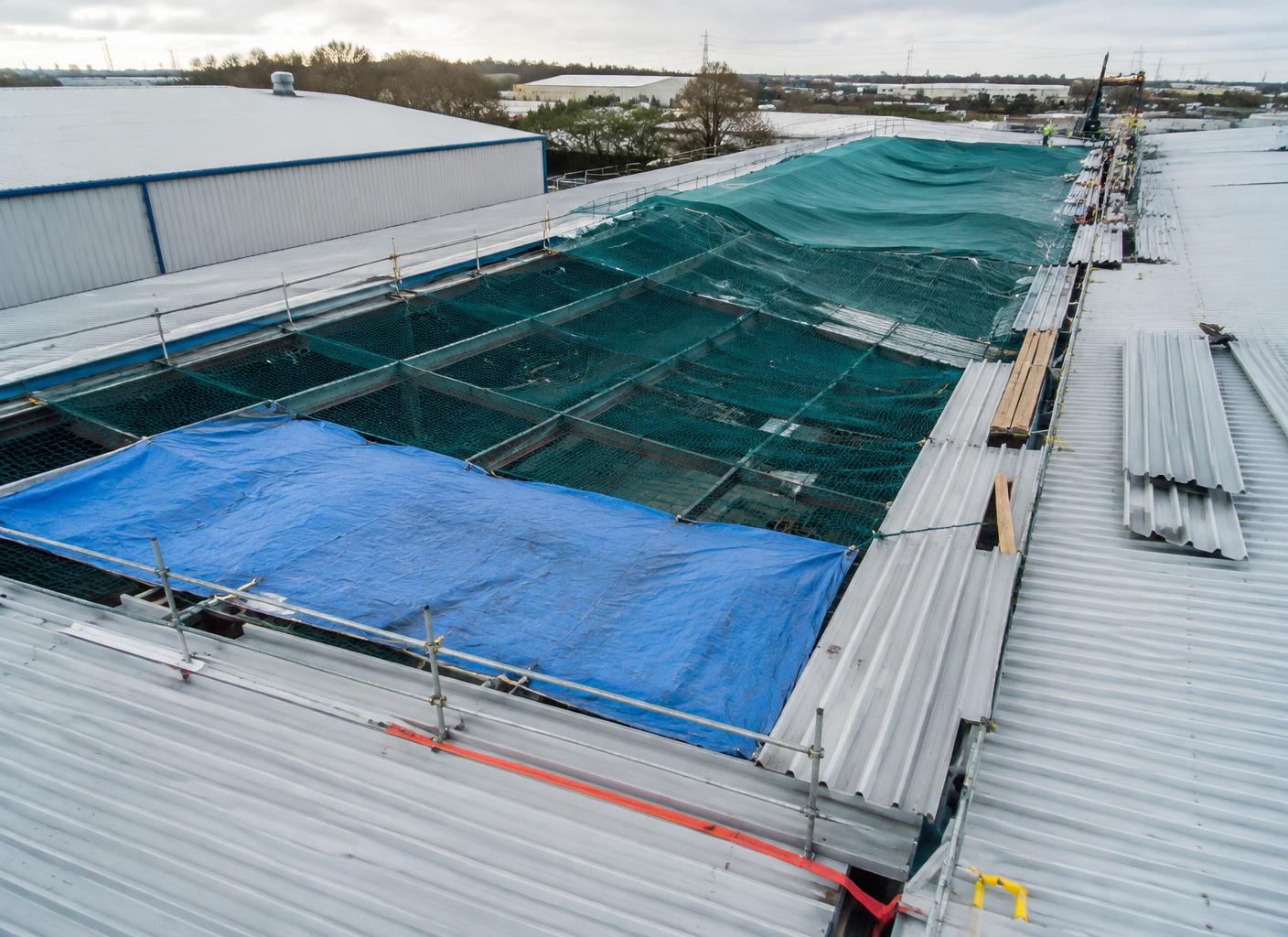
- Phasing replaces continuous working, splitting the roof into sections small enough to keep the building weathertight between shifts
- Debris control becomes a daily task, keeping falling material, screws and dust away from people, equipment and stock below
- Working hours are often restricted, particularly where noise or overhead work would disrupt production
- Access routes have to work around live traffic, whether vehicles, forklifts, or pedestrian movement that can't be rerouted for weeks
Is Industrial Flat Roof Replacement More Complicated on a Live Site Than Metal?
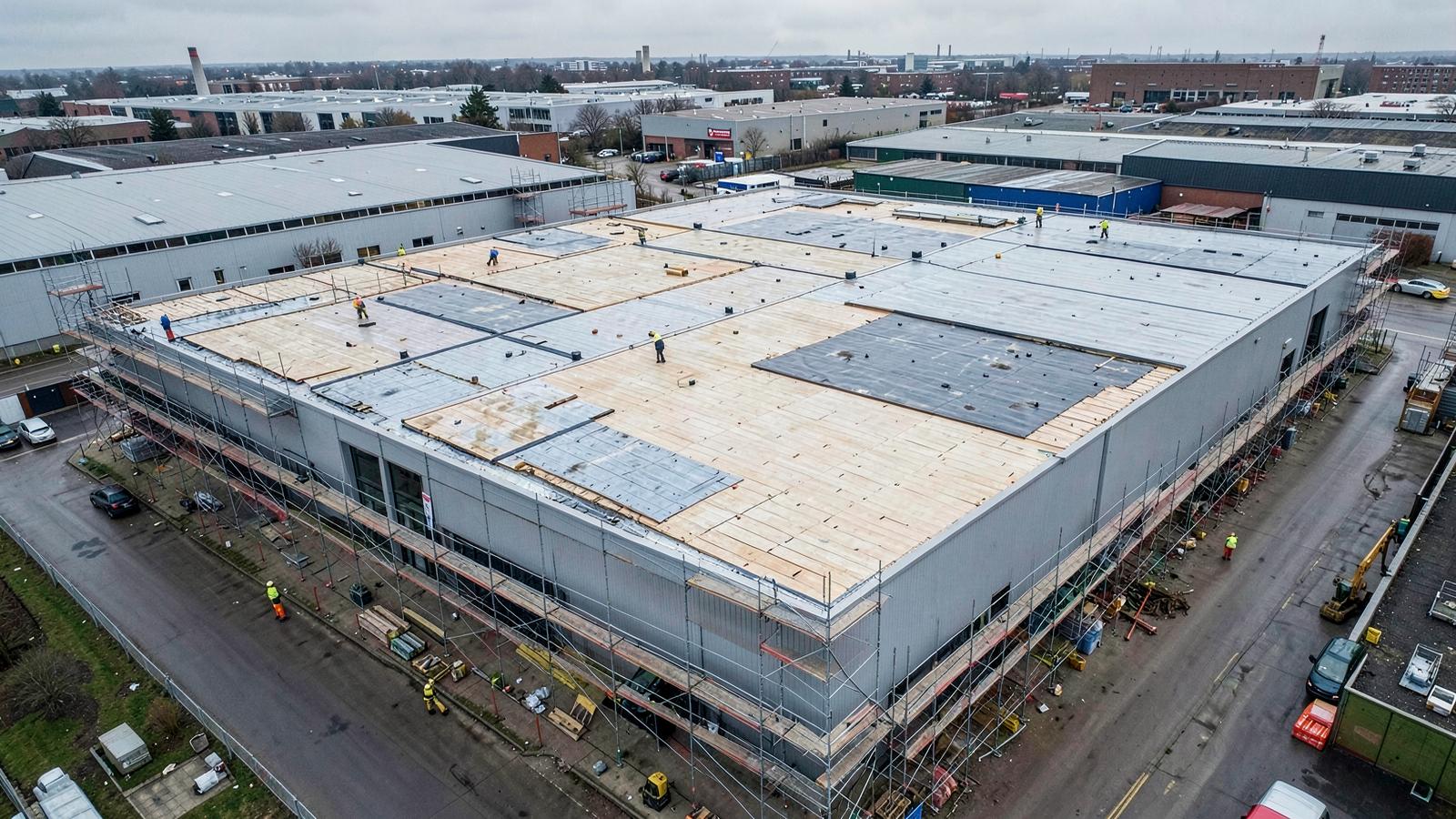
Industrial flat roof replacement and industrial metal roof replacement both face the same live-site constraints, but the practical challenges differ because of how each system is installed. Flat roofing often needs continuous membrane runs to stay watertight, which makes phasing more technically demanding than with a sheeted roof, where individual panels can be replaced section by section.
Why the Two Systems Phase Differently
A profiled metal roof lends itself reasonably well to phased replacement, since sheets are discrete units that can be removed and refitted in manageable sections without leaving large open gaps. Flat roofing, by contrast, needs each phase to reach a genuinely weathertight stopping point before work pauses, which takes more careful planning around joints and upstands.
What Does Industrial Roof Replacement Cost on a Live Site Compared to a Vacant Building?
Industrial roof replacement cost on a live site is typically higher than the same project on an empty building, largely because of the additional time, supervision and protection measures rather than the roofing materials themselves. The £90 to £180 per square metre range often quoted for industrial roof replacement assumes reasonably unrestricted access; live-site conditions tend to push a project toward the upper end of that range or beyond.
What Drives the Cost Difference
| Cost Factor | Vacant Building | Live Site |
|---|---|---|
| Working hours | Continuous, weather permitting | Often restricted around operations |
| Debris protection | Standard site measures | Internal sheeting, additional netting |
| Programme duration | Shorter, single continuous phase | Longer, split into weathertight phases |
| Supervision | Standard site management | Additional coordination with site operations |
| Access planning | Set once for the project | Ongoing, working around live site traffic |
How Do You Actually Replace Industrial Roof Coverings Without Stopping Production?
Replacing industrial roof coverings on a live site without stopping production comes down to disciplined sequencing and clear coordination between the roofing contractor and the site's operations team. The roof section being worked on at any given moment has to be small enough that a sudden weather change doesn't put the building or its contents at risk.
The Typical Sequence
- Survey and section the roof, dividing the area into phases sized to what can realistically be made weathertight within a single working period.
- Agree working hours and access routes with site operations, confirming when work can happen and how materials move without crossing live traffic.
- Install temporary protection before removing any covering, including internal debris netting and weather protection for the open section.
- Complete each phase to a genuinely weathertight point, rather than leaving an area part-finished if conditions or timing force an early stop.
- Review progress against the schedule regularly, since live-site programmes are more vulnerable to small delays compounding than a vacant-building project.
Where Does Access Planning Fit Into a Live-Site Replacement?
Access planning fits into a live-site replacement as one of the factors that most directly determines whether the phasing plan actually holds together in practice. Scaffolding erected around an operational building has to account for site traffic, loading bays and existing structures in a way a vacant site doesn't require.
When Rope Access Supports the Phasing Plan
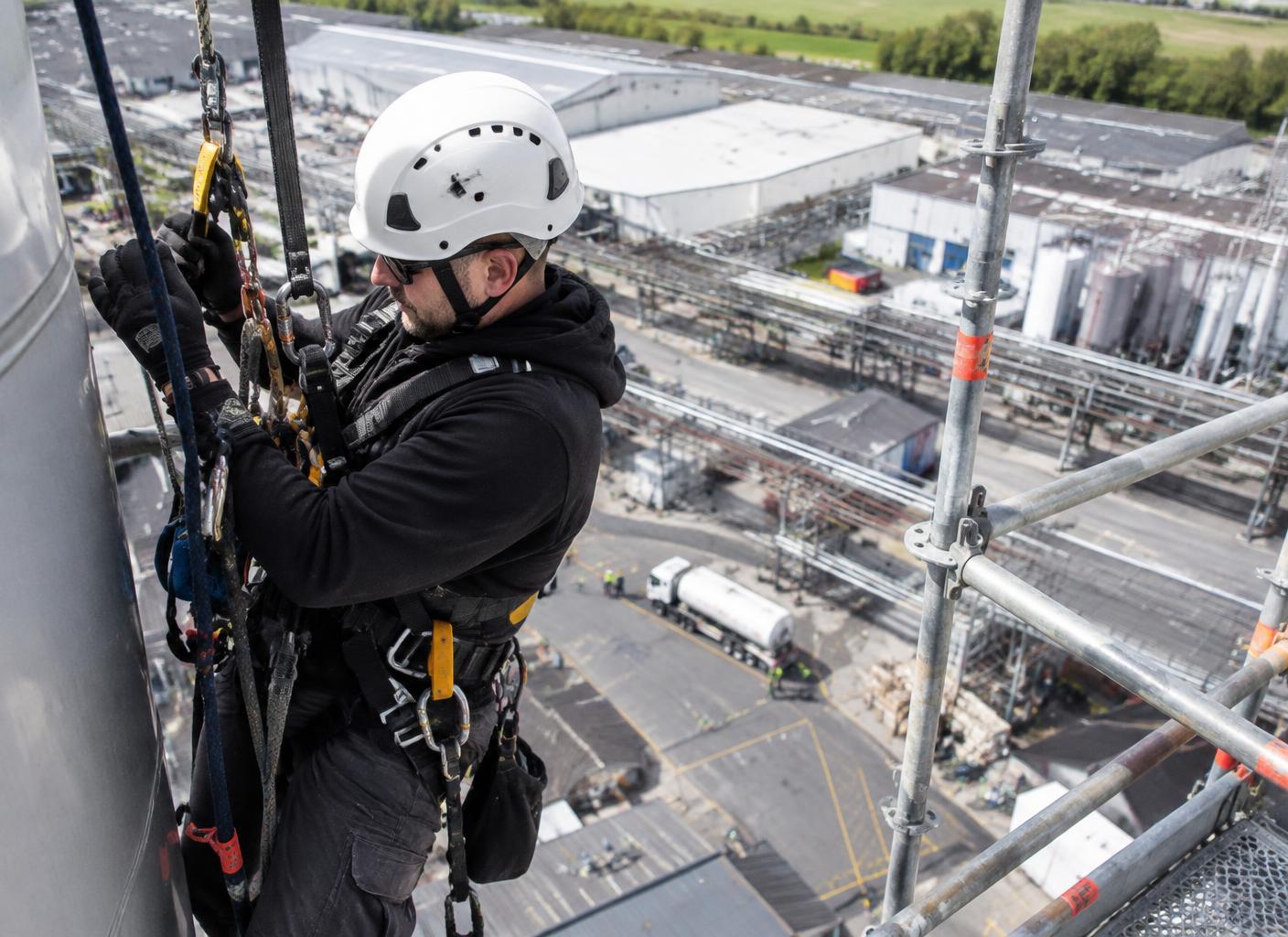
On sites where full scaffolding isn't practical, whether due to restricted ground space or live vehicle routes beneath the work area, rope access is sometimes used alongside scaffolding for the more targeted parts of the job. Steeplejacks or teams with rope access training bring a practical advantage here, since sections of a live-site replacement often need to be assessed or worked on quickly, without the days of setup a full scaffold move would require each time the work area shifts.
The Verdict: Yes, It's Real, But It Depends on Getting the Sequencing Right
A live-site industrial roof replacement is a realistic project, but only when phasing, protection and access planning are treated with the same seriousness as the roofing specification itself. Getting the sequencing wrong turns a manageable live-site project into one with recurring weather exposure and mounting delay, while getting it right lets a building stay in full operation throughout.
Weighing up a live-site re-roof and want to talk through what phasing could look like for your building? Get in touch for a no-obligation survey and quote.